Science · Book club
The Five C's of Cinematography book club questions
Here are 12 book club questions for The Five C's of Cinematography by Joseph Mascelli, ordered to open easily and end somewhere worth arguing about. Copy them, print them, or bring them up one at a time.
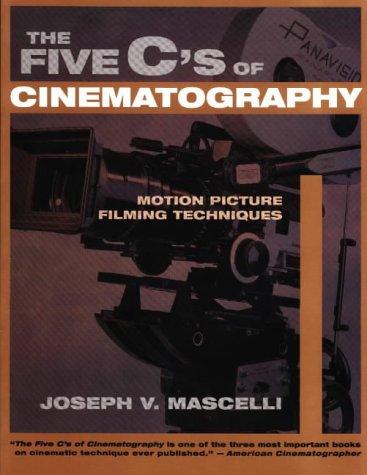
The Five C's of Cinematography is the most widely used introductory text on film technique in American film schools, still in print more than sixty years after its first publication.
Joseph Mascelli · 1965 · 4h 15m
Full summary and key takeaways →The 12 questions
- 1.
Think of a scene from a film you admire. Can you identify which of Mascelli's five C's are most actively at work in it?
- 2.
The 180-degree rule is sometimes called the continuity system. Directors who break it — Godard, Eisenstein — do so for specific effects. What does violating the rule actually feel like in a scene you've seen?
- 3.
Mascelli treats filmmaking as a grammar with rules. Is that the right model? Or is film technique better understood as a set of conventions that can be learned and broken?
- 4.
He argues that close-ups lose their power if overused. Has overuse of close-ups in contemporary television and film changed how they affect you?
- 5.
The book says camera angle conveys psychological meaning automatically — viewers read low angles as powerful, high angles as powerless. How reliable is that effect across different cultures and audiences?
- 6.
Continuity editing is designed to be invisible. Why is the goal invisibility? Are there filmmaking traditions that deliberately make editing visible, and why?
- 7.
How do the compositional principles from this book apply to still photography, video, or even slide presentations?
- 8.
The book was published in 1965. How has digital acquisition, handheld camera work, and streaming changed the visual grammar Mascelli describes?
- 9.
What is the relationship between technical facility with these rules and personal visual style? Does knowing the grammar constrain or liberate?
- 10.
Mascelli focuses on how shots work rather than what they mean. What's missing from a purely technical account of visual storytelling?
- 11.
Think of a film where the cinematography itself feels like a character — where the camera work shapes the meaning rather than just recording it. What techniques make that possible?
- 12.
If you were teaching someone to shoot their first short film, which of the five C's would you start with?
How to run the discussion
- Pick six to eight, not all of them. An hour of real discussion covers fewer questions than anyone expects, and racing the list is what makes a book club feel like homework.
- Open with what people noticed, not what they concluded. Asking for a verdict first hardens opinions before anyone has heard each other.
- Let the disagreement run. The questions below that split a room are the ones worth the time; the ones everyone answers the same way can be skipped.
- Ask the quiet person a specific question. A direct, narrow question is far easier to answer than an open invitation to contribute.
Themes worth steering toward
If the conversation stalls, these are the threads that usually restart it.
Common questions
What are good book club questions for The Five C's of Cinematography?
Here are 12 book club questions for The Five C's of Cinematography by Joseph Mascelli, ordered to open easily and end somewhere worth arguing about. The strongest openers ask what each reader noticed rather than what they concluded, and the discussion usually turns on cinematography, visual storytelling, camera technique.
How long should a book club discussion of The Five C's of Cinematography last?
Most groups run 60 to 90 minutes of actual discussion. That is roughly six to eight questions, not all of them, so pick the ones that suit your group rather than working down the list in order.
What are the main themes in The Five C's of Cinematography?
Cinematography, Visual storytelling, Camera technique, Film grammar, Composition. Those are the threads most likely to divide a room, which makes them the useful places to steer a discussion that has gone quiet.
Picking the next one? See books like The Five C's of Cinematography or questions for other book club picks.
