Self-help · Book club
The Future of Happiness book club questions
Here are 11 book club questions for The Future of Happiness by Amy Blankson, ordered to open easily and end somewhere worth arguing about. Copy them, print them, or bring them up one at a time.
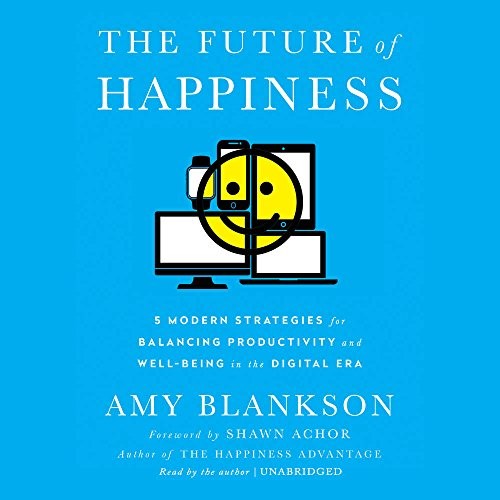
The Future of Happiness tackles a question that most positive psychology books sidestep: how do you cultivate well-being in an environment designed to capture your attention and monetize your anxiety?
Amy Blankson · 2017 · 4h 0m
Full summary and key takeaways →The 11 questions
- 1.
Blankson argues for intentional technology use rather than reduction. In your own life, is that distinction meaningful, or do you find less is still the answer?
- 2.
Which PERMA pillar does technology most reliably support for you — positive emotion, engagement, relationships, meaning, or accomplishment? Which does it most often undermine?
- 3.
When did you last audit your notification settings? If you did it this week, what would you change?
- 4.
Passive versus active social media use is a recurring theme. How much of your current social media time is passive consumption versus genuine connection?
- 5.
Blankson rejects both techno-optimism and digital-detox framing. Do you find that middle ground genuinely useful, or does it feel like a compromise that satisfies neither position?
- 6.
Which technology habit do you most wish you'd designed more intentionally from the start?
- 7.
Digital wellness apps promise to help you be healthier and more mindful. Have you used one that actually helped? One that added anxiety rather than reducing it?
- 8.
What would your ideal relationship with your smartphone look like on a Tuesday morning? How does it compare to reality?
- 9.
Blankson applies her framework to workplaces as well as individuals. If your team redesigned its communication norms around well-being rather than availability, what would change first?
- 10.
How do you handle the fact that the technology companies designing your digital environment have incentives that differ sharply from your well-being?
- 11.
Which has had more impact on your technology habits: deliberate choices you've made, or social norms and defaults you've absorbed?
How to run the discussion
- Pick six to eight, not all of them. An hour of real discussion covers fewer questions than anyone expects, and racing the list is what makes a book club feel like homework.
- Open with what people noticed, not what they concluded. Asking for a verdict first hardens opinions before anyone has heard each other.
- Let the disagreement run. The questions below that split a room are the ones worth the time; the ones everyone answers the same way can be skipped.
- Ask the quiet person a specific question. A direct, narrow question is far easier to answer than an open invitation to contribute.
Themes worth steering toward
If the conversation stalls, these are the threads that usually restart it.
Common questions
What are good book club questions for The Future of Happiness?
Here are 11 book club questions for The Future of Happiness by Amy Blankson, ordered to open easily and end somewhere worth arguing about. The strongest openers ask what each reader noticed rather than what they concluded, and the discussion usually turns on happiness, technology, well-being.
How long should a book club discussion of The Future of Happiness last?
Most groups run 60 to 90 minutes of actual discussion. That is roughly six to eight questions, not all of them, so pick the ones that suit your group rather than working down the list in order.
What are the main themes in The Future of Happiness?
Happiness, Technology, Well-being, Mindfulness, Productivity. Those are the threads most likely to divide a room, which makes them the useful places to steer a discussion that has gone quiet.
Picking the next one? See books like The Future of Happiness or questions for other book club picks.
