The Future of Happiness by Amy Blankson is a 2017 self-help book about happiness, technology, well-being. Technology is not inherently good or bad for well-being — its effect depends almost entirely on how intentionally you engage with it.
Summary
The Future of Happiness tackles a question that most positive psychology books sidestep: how do you cultivate well-being in an environment designed to capture your attention and monetize your anxiety? Amy Blankson, a co-founder of GoodThink and a sister of Shawn Achor, argues that technology is neither the enemy of happiness nor a neutral tool — it's a force that can be deliberately shaped to support well-being or to undermine it, depending almost entirely on how consciously you engage with it.
Blankson draws on the PERMA framework developed by Martin Seligman — positive emotions, engagement, relationships, meaning, and accomplishment — and asks how each pillar fares in a world of smartphones, social media, and always-on connectivity. The answers are mixed. Technology can enhance relationships through communication and shared experiences, but it can also fragment attention in ways that make genuine connection harder. It can support accomplishment through tracking and feedback, but it can also turn every goal into a performance anxiety trigger.
The practical middle section of the book covers five strategies Blankson calls "be ready," "be present," "be engaged," "be connected," and "be good." Each chapter applies the strategy to specific technology behaviors: notification management, social media use, digital wellness tools, online communities, and using technology for prosocial ends. The advice is concrete without being prescriptive — Blankson doesn't tell people to put their phones away so much as to design their digital environment with the same intentionality they'd bring to physical environment design.
The book's strongest contribution is framing. Blankson rejects both the techno-optimist and digital-detox camps and offers instead a middle path: the goal isn't to use less technology but to use it more deliberately. For readers already fluent in positive psychology, the PERMA application to digital life is the freshest part. The prescriptions themselves are solid if not always novel. This is practical rather than theoretical reading, best consumed alongside a commitment to actually audit one or two technology habits.
Talk to The Future of Happiness like its author wrote you back.
Get the ideas that fit your life — not generic summaries.
- Chat with the book
- Audiobook-style main ideas
- Adapts to your life and goals
- Helps you take action
Key takeaways
- 1.
Technology is not inherently good or bad for well-being — its effect depends almost entirely on how intentionally you engage with it.
- 2.
The PERMA framework applies directly to digital life: technology can enhance positive emotions, engagement, relationships, meaning, and accomplishment — or erode each.
- 3.
Passive social media consumption is consistently linked to lower well-being; active, connective use tends to be neutral or positive.
- 4.
Notification design is attention design. Default settings optimize for platform engagement, not for your well-being. You have to override them deliberately.
- 5.
Being 'present' in a digital world means practicing selective attention — choosing when to engage fully with technology and when to disengage — rather than continuous partial availability.
- 6.
Digital wellness tools — apps for meditation, sleep tracking, exercise — can support positive habits, but they can also add another layer of performance anxiety to basic health behaviors.
- 7.
Prosocial technology use — contributing to communities, volunteering via apps, connecting people — correlates with higher life satisfaction than self-focused consumption.
- 8.
The goal is not a technology detox but intentional design: building a digital environment that supports the life you're trying to live rather than undermining it.
Discussion questions
Use these on your own, with a book club, or as chat starters in Superbook. Book club version, ready to copy or print →
- 1.
Blankson argues for intentional technology use rather than reduction. In your own life, is that distinction meaningful, or do you find less is still the answer?
- 2.
Which PERMA pillar does technology most reliably support for you — positive emotion, engagement, relationships, meaning, or accomplishment? Which does it most often undermine?
- 3.
When did you last audit your notification settings? If you did it this week, what would you change?
- 4.
Passive versus active social media use is a recurring theme. How much of your current social media time is passive consumption versus genuine connection?
- 5.
Blankson rejects both techno-optimism and digital-detox framing. Do you find that middle ground genuinely useful, or does it feel like a compromise that satisfies neither position?
- 6.
Which technology habit do you most wish you'd designed more intentionally from the start?
- 7.
Digital wellness apps promise to help you be healthier and more mindful. Have you used one that actually helped? One that added anxiety rather than reducing it?
- 8.
What would your ideal relationship with your smartphone look like on a Tuesday morning? How does it compare to reality?
- 9.
Blankson applies her framework to workplaces as well as individuals. If your team redesigned its communication norms around well-being rather than availability, what would change first?
- 10.
How do you handle the fact that the technology companies designing your digital environment have incentives that differ sharply from your well-being?
- 11.
Which has had more impact on your technology habits: deliberate choices you've made, or social norms and defaults you've absorbed?
Themes
Frequently asked questions
-
What is The Future of Happiness about?
It applies positive psychology — specifically the PERMA framework — to digital life, arguing that well-being in a technology-saturated world requires intentional design of your digital environment rather than either embracing all technology uncritically or retreating from it.
-
Is The Future of Happiness worth reading?
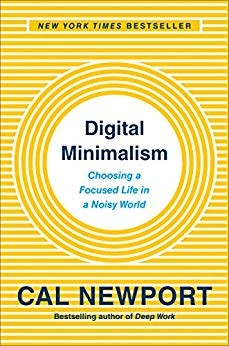
For readers interested in positive psychology who haven't thought systematically about how technology interacts with well-being, yes. If you've already read Digital Minimalism or similar books, some ground will feel familiar, but the PERMA lens is a useful addition.
-
How long is The Future of Happiness?
Roughly 240 pages, readable in about four hours. It's structured around five practical strategies and reads quickly, though the practical exercises reward slowing down.
-
Who should read this book?
People who find themselves unsatisfied with both "embrace technology" and "quit social media" advice. Also useful for managers and HR professionals designing digital work environments, and for parents thinking about technology and children's well-being.
-
What's the most actionable idea in the book?
The notification audit. Reviewing every app's notification settings and disabling the ones that interrupt rather than serve you takes under an hour and changes the baseline texture of your day more immediately than almost anything else in the book.