Science · Book club
The Gene: An Intimate History book club questions
Here are 12 book club questions for The Gene: An Intimate History by Siddhartha Mukherjee, ordered to open easily and end somewhere worth arguing about. Copy them, print them, or bring them up one at a time.
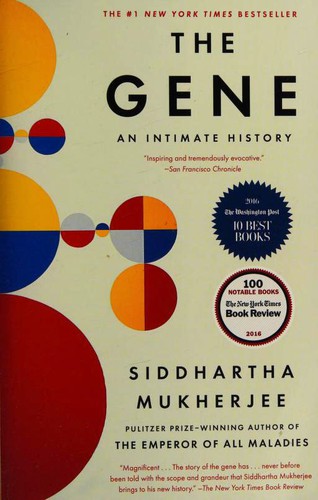
The Gene is Siddhartha Mukherjee's account of the gene — what it is, how it was discovered, and what humanity has done and might yet do with that knowledge.
Siddhartha Mukherjee · 2016 · 12h 45m
Full summary and key takeaways →The 12 questions
- 1.
Mukherjee describes eugenics as a scientific idea that became a political program. At what point did the science stop and the ideology begin, and is that line always this blurry?
- 2.
The book traces Rosalind Franklin's contribution to the double-helix discovery and how it was used without her consent. How does that history affect how you think about credit in science more broadly?
- 3.
Mukherjee draws a distinction between treating disease and enhancing traits. Where would you draw that line, and do you think it can be held?
- 4.
If genetic testing revealed that you carried a variant strongly associated with early-onset Alzheimer's, would you want to know? Would your answer change if you were planning to have children?
- 5.
The Asilomar conference in 1975 was a rare case of scientists voluntarily pausing their own work to assess risks. What conditions made that possible, and do you think it could happen with CRISPR today?
- 6.
Mukherjee's family history of mental illness shapes his perspective on psychiatric genetics throughout the book. How does a writer's personal stake in a subject change how you read their arguments?
- 7.
The book describes how genes interact with environment to produce traits. What's a belief you held about genetic determinism that the book challenged or confirmed?
- 8.
CRISPR germline editing would affect every future descendant of an edited embryo. What governance structures, if any, do you think could meaningfully regulate that kind of decision?
- 9.
Mukherjee writes that the history of genetics has been one of confident overreach followed by correction. What areas of current genetics research seem most likely, in retrospect, to look like overreach?
- 10.
The book spends considerable time on the political capture of genetics. Are there areas of current science you think are similarly vulnerable to that kind of capture?
- 11.
Mukherjee argues the science is moving faster than the ethical frameworks. What would it actually take to slow the science, and who would bear the cost of that delay?
- 12.
If it became possible to screen embryos for polygenic scores predicting intelligence or mental health risk, who should decide whether that screening is offered, required, or forbidden?
How to run the discussion
- Pick six to eight, not all of them. An hour of real discussion covers fewer questions than anyone expects, and racing the list is what makes a book club feel like homework.
- Open with what people noticed, not what they concluded. Asking for a verdict first hardens opinions before anyone has heard each other.
- Let the disagreement run. The questions below that split a room are the ones worth the time; the ones everyone answers the same way can be skipped.
- Ask the quiet person a specific question. A direct, narrow question is far easier to answer than an open invitation to contribute.
Themes worth steering toward
If the conversation stalls, these are the threads that usually restart it.
Common questions
What are good book club questions for The Gene: An Intimate History?
Here are 12 book club questions for The Gene: An Intimate History by Siddhartha Mukherjee, ordered to open easily and end somewhere worth arguing about. The strongest openers ask what each reader noticed rather than what they concluded, and the discussion usually turns on genetics, heredity, medical ethics.
How long should a book club discussion of The Gene: An Intimate History last?
Most groups run 60 to 90 minutes of actual discussion. That is roughly six to eight questions, not all of them, so pick the ones that suit your group rather than working down the list in order.
What are the main themes in The Gene: An Intimate History?
Genetics, Heredity, Medical ethics, Evolution, Identity, Scientific history. Those are the threads most likely to divide a room, which makes them the useful places to steer a discussion that has gone quiet.
Picking the next one? See books like The Gene: An Intimate History or questions for other book club picks.
