Literary fiction · Book club
The God of Small Things book club questions
Here are 13 book club questions for The God of Small Things by Arundhati Roy, ordered to open easily and end somewhere worth arguing about. Copy them, print them, or bring them up one at a time.
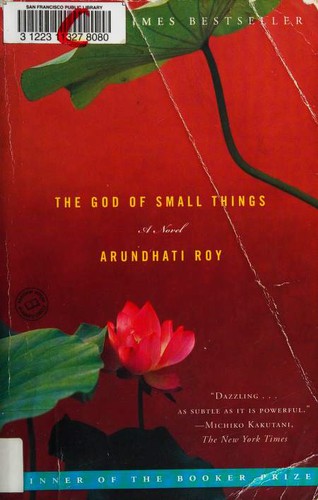
The God of Small Things opens in 1993, with Rahel returning to her childhood home in Ayemenem, Kerala, to visit her twin brother Estha.
Arundhati Roy · 1997 · 6h 45m
Full summary and key takeaways →The 13 questions
- 1.
Roy names her rules for social transgression 'the Love Laws.' What are those laws in this novel — where are they visible, and who enforces them?
- 2.
Baby Kochamma is arguably the novel's most active villain — she lies to protect herself. But is she the source of the catastrophe or just a trigger?
- 3.
The Communist Party in the novel is progressive in stated ideology and complicit in Velutha's fate. What is Roy saying about the limits of political ideology when it confronts caste?
- 4.
Both Ammu and Velutha know the affair will have consequences. Do they make their choice with full knowledge? Does the novel ask you to judge them?
- 5.
The children — Rahel and Estha — are damaged for life by events they participated in without understanding. Where does responsibility for that damage lie?
- 6.
Roy's prose style is very distinctive — capitalization, invented words, sentence fragments. Did you find it immersive or distracting?
- 7.
The novel was banned in Kerala and Roy was charged under obscenity laws. Which parts of the novel seem designed to be transgressive, and do they feel transgressive or necessary?
- 8.
The 1969 sections and the 1993 sections are in dialogue throughout. What has changed in twenty-five years — for Kerala, for the characters, for India?
- 9.
Estha and Rahel's childhood is presented with both beauty and horror. How does Roy balance those registers without sentimentalizing childhood or making it merely traumatic?
- 10.
Sophie Mol, the English-raised cousin, is an innocent bystander whose death becomes the lever for everything that follows. What does her presence in the story mean?
- 11.
The novel won the Booker Prize as a debut novel, which was extraordinary. Does the ambition of the novel feel assured or overwrought to you?
- 12.
Roy went on to become primarily a political essayist. Does knowing that affect how you read the novel's political dimensions?
- 13.
Compared to The White Tiger, another Booker-winning Indian novel with caste at its center, what does each book do differently with the same subject?
How to run the discussion
- Pick six to eight, not all of them. An hour of real discussion covers fewer questions than anyone expects, and racing the list is what makes a book club feel like homework.
- Open with what people noticed, not what they concluded. Asking for a verdict first hardens opinions before anyone has heard each other.
- Let the disagreement run. The questions below that split a room are the ones worth the time; the ones everyone answers the same way can be skipped.
- Ask the quiet person a specific question. A direct, narrow question is far easier to answer than an open invitation to contribute.
Themes worth steering toward
If the conversation stalls, these are the threads that usually restart it.
Common questions
What are good book club questions for The God of Small Things?
Here are 13 book club questions for The God of Small Things by Arundhati Roy, ordered to open easily and end somewhere worth arguing about. The strongest openers ask what each reader noticed rather than what they concluded, and the discussion usually turns on caste and its violence, forbidden love, postcolonial india.
How long should a book club discussion of The God of Small Things last?
Most groups run 60 to 90 minutes of actual discussion. That is roughly six to eight questions, not all of them, so pick the ones that suit your group rather than working down the list in order.
What are the main themes in The God of Small Things?
Caste and its violence, Forbidden love, Postcolonial India, Memory and childhood, Political complicity. Those are the threads most likely to divide a room, which makes them the useful places to steer a discussion that has gone quiet.
Picking the next one? See books like The God of Small Things or questions for other book club picks.
