History · Book club
The Gray Lady Winked book club questions
Here are 11 book club questions for The Gray Lady Winked by Ashley Rindsberg, ordered to open easily and end somewhere worth arguing about. Copy them, print them, or bring them up one at a time.
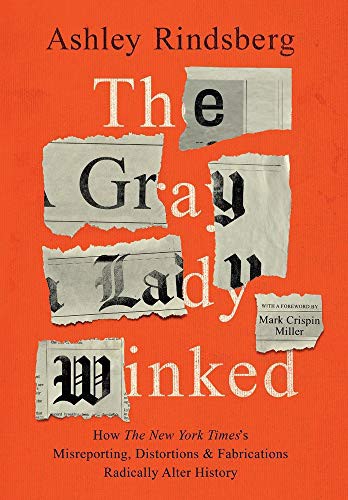
The Gray Lady Winked is a critical history of the New York Times, focused on cases where the paper's reporting was demonstrably wrong, selectively presented, or actively misleading.
Ashley Rindsberg · 2021 · 5h 0m
Full summary and key takeaways →The 11 questions
- 1.
Rindsberg argues that the Times's failures cluster around a specific set of institutional pressures: access to power, elite readership alignment, belief in its own indispensability. Do those pressures apply to other prestigious institutions in other fields?
- 2.
Walter Duranty knew what was happening in Ukraine and chose not to report it. Is that kind of omission morally equivalent to fabrication, or is there a meaningful difference?
- 3.
The Jayson Blair case was eventually caught through reporting by Times staffers. What does that internal correction say about the institution's self-correcting capacity?
- 4.
The Iraq War WMD reporting is the most politically contested case in the book. How do you think about assigning responsibility for failures that emerged from a mix of government deception and journalistic credulity?
- 5.
Rindsberg's own perspective in the book is critical and at times openly hostile to the Times. How should readers weigh critique that comes from a position of clear animus versus critique that claims false neutrality?
- 6.
What would a media institution that genuinely corrected errors proportionately — as prominently as the original story — look like, and what structural changes would it require?
- 7.
The Times has enormous influence on what other media cover. Does that amplification effect change the moral weight of its errors compared to a smaller publication?
- 8.
Herbert Matthews's reporting on Castro was sympathetic because he believed in the revolution. How do reporters' personal political sympathies typically shape coverage, and is the solution more explicit disclosure or something else?
- 9.
What's the right standard for evaluating journalism retrospectively? Should we judge based on what reporters could reasonably have known at the time, or based on outcomes?
- 10.
The book focuses exclusively on the Times. Would the same methodology applied to other prestigious outlets — the BBC, the Washington Post, major networks — produce a similar pattern of failure?
- 11.
If you read the Times regularly, has this book changed how you approach its coverage? If not, what would it take to change your reading habits?
How to run the discussion
- Pick six to eight, not all of them. An hour of real discussion covers fewer questions than anyone expects, and racing the list is what makes a book club feel like homework.
- Open with what people noticed, not what they concluded. Asking for a verdict first hardens opinions before anyone has heard each other.
- Let the disagreement run. The questions below that split a room are the ones worth the time; the ones everyone answers the same way can be skipped.
- Ask the quiet person a specific question. A direct, narrow question is far easier to answer than an open invitation to contribute.
Themes worth steering toward
If the conversation stalls, these are the threads that usually restart it.
Common questions
What are good book club questions for The Gray Lady Winked?
Here are 11 book club questions for The Gray Lady Winked by Ashley Rindsberg, ordered to open easily and end somewhere worth arguing about. The strongest openers ask what each reader noticed rather than what they concluded, and the discussion usually turns on media criticism, journalism ethics, historical accuracy.
How long should a book club discussion of The Gray Lady Winked last?
Most groups run 60 to 90 minutes of actual discussion. That is roughly six to eight questions, not all of them, so pick the ones that suit your group rather than working down the list in order.
What are the main themes in The Gray Lady Winked?
Media criticism, Journalism ethics, Historical accuracy, Institutional failure, Press and power. Those are the threads most likely to divide a room, which makes them the useful places to steer a discussion that has gone quiet.
Picking the next one? See books like The Gray Lady Winked or questions for other book club picks.
