Psychology · Book club
The Happiness Advantage book club questions
Here are 12 book club questions for The Happiness Advantage by Shawn Achor, ordered to open easily and end somewhere worth arguing about. Copy them, print them, or bring them up one at a time.
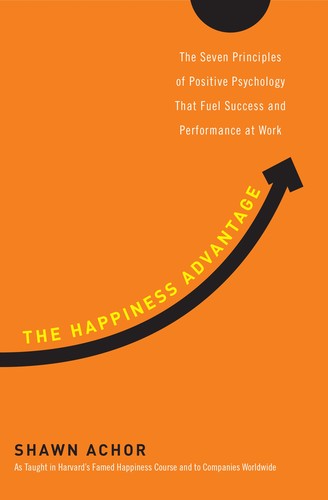
Shawn Achor's core claim inverts a common assumption about success and happiness.
Shawn Achor · 2010 · 4h 20m
Full summary and key takeaways →The 12 questions
- 1.
Achor argues that success doesn't produce happiness — happiness enables success. Does this match your experience, or can you think of counterexamples?
- 2.
The Tetris Effect describes a scanning habit. What has your brain been trained to scan for in your daily work environment?
- 3.
Which of the seven principles describes a problem you actually have rather than an abstract concept?
- 4.
The 20-Second Rule is about friction design. What's one behavior you want to start that could be made easier by removing two minutes of setup?
- 5.
Achor says social connection is the greatest predictor of happiness. How much time do you deliberately invest in relationships versus leaving them to chance?
- 6.
Think of a difficult period in your life. Did it produce growth, and if so, did that happen automatically or because of something you did or believed?
- 7.
The book's research base is real but popularized. How do you calibrate trust in books that translate academic findings for a general audience?
- 8.
Which of the five specific interventions — gratitude journaling, positive reflection, meditation, exercise, kindness — have you tried? Which did you abandon, and why?
- 9.
The Zorro Circle suggests starting with a small sphere of control when overwhelmed. When have you experienced the recovery that can come from a small, concrete win?
- 10.
Achor distinguishes between fleeting pleasure and sustained happiness. Where in your life are you optimizing for one when you want the other?
- 11.
The book is used extensively in corporate training programs. Does repackaging positive psychology for the workplace change what it means or how it functions?
- 12.
What's one belief you hold about your work or your capacity that, if you changed it, would change your performance?
How to run the discussion
- Pick six to eight, not all of them. An hour of real discussion covers fewer questions than anyone expects, and racing the list is what makes a book club feel like homework.
- Open with what people noticed, not what they concluded. Asking for a verdict first hardens opinions before anyone has heard each other.
- Let the disagreement run. The questions below that split a room are the ones worth the time; the ones everyone answers the same way can be skipped.
- Ask the quiet person a specific question. A direct, narrow question is far easier to answer than an open invitation to contribute.
Themes worth steering toward
If the conversation stalls, these are the threads that usually restart it.
Common questions
What are good book club questions for The Happiness Advantage?
Here are 12 book club questions for The Happiness Advantage by Shawn Achor, ordered to open easily and end somewhere worth arguing about. The strongest openers ask what each reader noticed rather than what they concluded, and the discussion usually turns on happiness, positive psychology, performance.
How long should a book club discussion of The Happiness Advantage last?
Most groups run 60 to 90 minutes of actual discussion. That is roughly six to eight questions, not all of them, so pick the ones that suit your group rather than working down the list in order.
What are the main themes in The Happiness Advantage?
Happiness, Positive psychology, Performance, Mindset, Resilience. Those are the threads most likely to divide a room, which makes them the useful places to steer a discussion that has gone quiet.
Picking the next one? See books like The Happiness Advantage or questions for other book club picks.
