Science · Book club
The Hidden Life of Trees book club questions
Here are 11 book club questions for The Hidden Life of Trees by Peter Wohlleben, ordered to open easily and end somewhere worth arguing about. Copy them, print them, or bring them up one at a time.
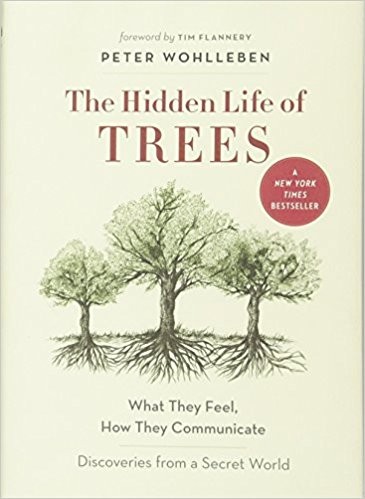
Peter Wohlleben spent decades as a forester in the Eifel mountains of Germany, and The Hidden Life of Trees is his account of what scientific research and sustained observation have revealed about trees as social organisms.
Peter Wohlleben · 2015 · 4h 30m
Full summary and key takeaways →The 11 questions
- 1.
Wohlleben uses anthropomorphic language deliberately. Did that choice help you engage with the science, or did it make you skeptical of the underlying claims?
- 2.
The book argues that managed plantation forests are fundamentally different ecosystems from old-growth forests. How does that reframe how you think about timber forestry?
- 3.
Have you ever experienced a forest differently after learning something about how it works? Did reading this book change how you want to experience time outdoors?
- 4.
The wood wide web has entered popular culture significantly since Wohlleben published this book. How do you evaluate popular enthusiasm for a scientific concept that is still actively researched?
- 5.
Wohlleben argues that trees in communities behave in ways that look like care for offspring and neighbors. Does the mechanism matter — do you need to attribute intentionality to find the behavior interesting?
- 6.
The book implies that old-growth forest protection should be a higher conservation priority than it currently is. Do you find that argument persuasive from what Wohlleben presents?
- 7.
Several forest ecologists criticized the book's language as overreaching. How do you weigh the value of accessible, engaging framing against scientific precision?
- 8.
Crown shyness — the gaps that form between neighboring tree canopies — is one of the stranger phenomena in the book. What did you make of it?
- 9.
Wohlleben spent his career managing forests commercially before shifting his views. How did that background shape what he noticed and how he writes about it?
- 10.
The book connects forest health to carbon storage and climate. Does that framing affect how you think about deforestation policy?
- 11.
If trees genuinely function as social communities, does that have ethical implications for how we treat forests? Or does the mechanism have to be more like conscious experience to create ethical obligations?
How to run the discussion
- Pick six to eight, not all of them. An hour of real discussion covers fewer questions than anyone expects, and racing the list is what makes a book club feel like homework.
- Open with what people noticed, not what they concluded. Asking for a verdict first hardens opinions before anyone has heard each other.
- Let the disagreement run. The questions below that split a room are the ones worth the time; the ones everyone answers the same way can be skipped.
- Ask the quiet person a specific question. A direct, narrow question is far easier to answer than an open invitation to contribute.
Themes worth steering toward
If the conversation stalls, these are the threads that usually restart it.
Common questions
What are good book club questions for The Hidden Life of Trees?
Here are 11 book club questions for The Hidden Life of Trees by Peter Wohlleben, ordered to open easily and end somewhere worth arguing about. The strongest openers ask what each reader noticed rather than what they concluded, and the discussion usually turns on forest ecology, plant communication, nature.
How long should a book club discussion of The Hidden Life of Trees last?
Most groups run 60 to 90 minutes of actual discussion. That is roughly six to eight questions, not all of them, so pick the ones that suit your group rather than working down the list in order.
What are the main themes in The Hidden Life of Trees?
Forest ecology, Plant communication, Nature, Biodiversity, Interconnection. Those are the threads most likely to divide a room, which makes them the useful places to steer a discussion that has gone quiet.
Picking the next one? See books like The Hidden Life of Trees or questions for other book club picks.
