Memoir · Book club
The Hiding Place book club questions
Here are 11 book club questions for The Hiding Place by Corrie ten Boom, ordered to open easily and end somewhere worth arguing about. Copy them, print them, or bring them up one at a time.
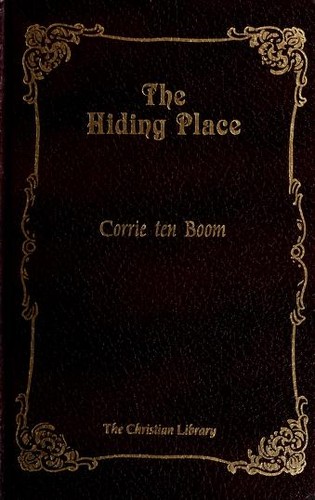
Corrie ten Boom's memoir of her family's decision to hide Jewish people in their Haarlem home during the Nazi occupation of the Netherlands, and of the arrest, imprisonment, and concentration camp ordeal that followed, has been continuously in print since its 1971 publication and is one of the most widely read Christian testimonies of the twentieth century.
Corrie ten Boom · 1971 · 5h 40m
Full summary and key takeaways →The 11 questions
- 1.
Casper ten Boom says he would consider it an honor to give his life for God's people. Does the book show the full weight of that statement, or does it make the decision seem too easy?
- 2.
Betsie is portrayed as almost saintly — serene and forgiving even in the camps. Do you find this portrayal convincing, or does it idealize her in ways that make her less human?
- 3.
The forgiveness scene with the former guard is the book's most famous passage. What do you make of Corrie's account of it? Is the experience she describes theologically coherent, psychologically plausible, or both?
- 4.
The book is explicitly Christian testimony. Does the theological framework help or hinder the memoir's accessibility to non-Christian readers?
- 5.
The hiding place held six people. Is there a moral difference between hiding six people and hiding sixty? How do you evaluate the scale of what the ten Booms did?
- 6.
Many Dutch people collaborated with the occupation, and some were responsible for the ten Booms' arrest. How does the memoir handle the existence of collaborators and bystanders among the Dutch?
- 7.
Corrie survived and Betsie did not. How does the memoir handle the question of why one survived and not the other?
- 8.
Betsie's vision of a post-war house — formed in Ravensbrück — is presented as prophetic. How do you interpret that claim?
- 9.
The book was written with collaborators more than twenty years after the events. How does that temporal distance and that collaborative process affect what you take it to be?
- 10.
The Ravensbrück section is full of lice, which Betsie interprets as providential because the guards won't inspect their barracks. What does this passage suggest about the memoir's view of providence?
- 11.
Is there something troubling about a narrative that finds meaning in the Holocaust? Or is meaning-making the only available response to catastrophe?
How to run the discussion
- Pick six to eight, not all of them. An hour of real discussion covers fewer questions than anyone expects, and racing the list is what makes a book club feel like homework.
- Open with what people noticed, not what they concluded. Asking for a verdict first hardens opinions before anyone has heard each other.
- Let the disagreement run. The questions below that split a room are the ones worth the time; the ones everyone answers the same way can be skipped.
- Ask the quiet person a specific question. A direct, narrow question is far easier to answer than an open invitation to contribute.
Themes worth steering toward
If the conversation stalls, these are the threads that usually restart it.
Common questions
What are good book club questions for The Hiding Place?
Here are 11 book club questions for The Hiding Place by Corrie ten Boom, ordered to open easily and end somewhere worth arguing about. The strongest openers ask what each reader noticed rather than what they concluded, and the discussion usually turns on faith, survival, resistance.
How long should a book club discussion of The Hiding Place last?
Most groups run 60 to 90 minutes of actual discussion. That is roughly six to eight questions, not all of them, so pick the ones that suit your group rather than working down the list in order.
What are the main themes in The Hiding Place?
Faith, Survival, Resistance, Forgiveness, Courage. Those are the threads most likely to divide a room, which makes them the useful places to steer a discussion that has gone quiet.
Picking the next one? See books like The Hiding Place or questions for other book club picks.
