History · Book club
The Histories book club questions
Here are 12 book club questions for The Histories by Herodotus, ordered to open easily and end somewhere worth arguing about. Copy them, print them, or bring them up one at a time.
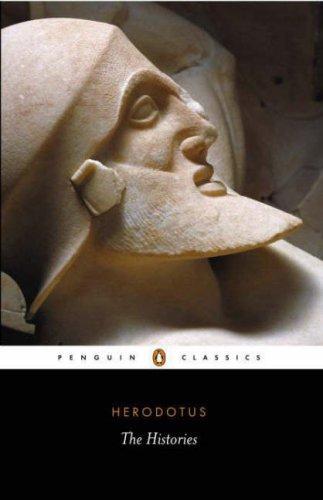
Herodotus wrote The Histories in the fifth century BCE as an inquiry into the causes of the wars between Greece and Persia that had recently convulsed the Mediterranean world.
Herodotus · 1858 · 13h 15m
Full summary and key takeaways →The 12 questions
- 1.
Herodotus says he is 'obliged to report what is said but not obliged to believe it.' Does this methodological honesty make him a better or worse historical source than writers who simply assert facts?
- 2.
The theme of hubris — powerful men ignoring wise advice and suffering for it — runs through the whole work. Is this a genuine historical pattern Herodotus observed, or a moral framework he imposed on events?
- 3.
Herodotus is far more interested in the cultures he describes than Thucydides. Does that broader curiosity make The Histories more or less useful as history?
- 4.
The Thermopylae story has been appropriated by many political movements since antiquity. What does Herodotus himself seem to think the Spartans were defending, and does that match modern uses of the story?
- 5.
Herodotus describes women, slaves, and non-Greeks with more attention than most ancient writers. Does his ethnographic curiosity translate into anything like moral equality?
- 6.
The Persian Wars are presented as a contest between freedom and slavery, yet Athens itself relied on enslaved labor and controlled an empire. Does Herodotus acknowledge this tension?
- 7.
Croesus is warned that his happiness will not last, loses everything, and eventually becomes an adviser to Cyrus. What does his arc suggest about Herodotus' view of knowledge and fate?
- 8.
Which battle in the Persian Wars do you think Herodotus considers the most important? Does his own emphasis match the historical consensus?
- 9.
Herodotus describes dozens of foreign peoples with what looks like genuine curiosity. How does reading ancient ethnography change how you think about cultural description in your own time?
- 10.
The oracle at Delphi appears throughout the work, usually giving advice that proves correct when correctly interpreted. What role does religion play in Herodotus' historical explanations?
- 11.
Modern readers often prefer Thucydides for his analytical rigor. What would we lose if we read only Thucydides and not Herodotus?
- 12.
Herodotus ends his work without a formal conclusion. What does the open ending suggest about his view of history as an ongoing process rather than a resolved narrative?
How to run the discussion
- Pick six to eight, not all of them. An hour of real discussion covers fewer questions than anyone expects, and racing the list is what makes a book club feel like homework.
- Open with what people noticed, not what they concluded. Asking for a verdict first hardens opinions before anyone has heard each other.
- Let the disagreement run. The questions below that split a room are the ones worth the time; the ones everyone answers the same way can be skipped.
- Ask the quiet person a specific question. A direct, narrow question is far easier to answer than an open invitation to contribute.
Themes worth steering toward
If the conversation stalls, these are the threads that usually restart it.
Common questions
What are good book club questions for The Histories?
Here are 12 book club questions for The Histories by Herodotus, ordered to open easily and end somewhere worth arguing about. The strongest openers ask what each reader noticed rather than what they concluded, and the discussion usually turns on war, empire, cultural diversity.
How long should a book club discussion of The Histories last?
Most groups run 60 to 90 minutes of actual discussion. That is roughly six to eight questions, not all of them, so pick the ones that suit your group rather than working down the list in order.
What are the main themes in The Histories?
War, Empire, Cultural diversity, Fate and hubris, Ethnography. Those are the threads most likely to divide a room, which makes them the useful places to steer a discussion that has gone quiet.
Picking the next one? See books like The Histories or questions for other book club picks.
