History · Book club
History of the Peloponnesian War book club questions
Here are 12 book club questions for History of the Peloponnesian War by Thucydides, ordered to open easily and end somewhere worth arguing about. Copy them, print them, or bring them up one at a time.
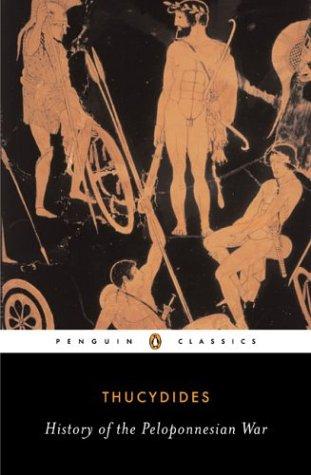
Thucydides' account of the twenty-seven-year conflict between Athens and Sparta stands as the founding document of political realism and the first work of history that treats evidence and causation as problems to be solved rather than stories to be told.
Thucydides · 1628 · 12h 0m
Full summary and key takeaways →The 12 questions
- 1.
Thucydides argues the real cause of the war was Athenian power growth, not the specific incidents that triggered it. Do you find this structural explanation satisfying, or does it explain too much?
- 2.
The Melian Dialogue ends with the Athenians slaughtering the Melians. Does the dialogue make Athens look more or less culpable than a simple narrative account would?
- 3.
Pericles argues Athens is worth dying for in the Funeral Oration. How does his argument hold up against what Athens actually does over the course of the war?
- 4.
Thucydides was exiled by Athens for military failure. How does that biography shape your reading of his account of Athenian self-destruction?
- 5.
The 'Thucydides Trap' has been applied to US-China relations. Do you think the structural logic Thucydides describes translates across 2,400 years of changed political context?
- 6.
Cleon, the demagogue who advocates for mass punishment of Mytilene, is presented without sympathy. What's the difference between Thucydides' editorial voice and simple bias?
- 7.
The plague chapters describe how catastrophe breaks down the norms that hold societies together. What parallels have you seen in more recent collective crises?
- 8.
Thucydides never explicitly moralizes. Does the absence of explicit judgment make the history more or less powerful as a moral argument?
- 9.
The Sicilian Expedition is approved by democratic vote despite expert opposition. What does Thucydides seem to think about democracy's capacity for strategic self-discipline?
- 10.
Where in the modern world do you see the dynamic Thucydides describes — allies becoming burdens, neutral parties being coerced, and great powers convincing themselves their aggression is defensive?
- 11.
The narrative breaks off unfinished. Does the incompleteness change how you think about what Thucydides was trying to accomplish?
- 12.
What does Thucydides mean when he says he writes for 'those who wish to understand clearly the events which happened in the past and which human nature being what it is will at some time or other recur'?
How to run the discussion
- Pick six to eight, not all of them. An hour of real discussion covers fewer questions than anyone expects, and racing the list is what makes a book club feel like homework.
- Open with what people noticed, not what they concluded. Asking for a verdict first hardens opinions before anyone has heard each other.
- Let the disagreement run. The questions below that split a room are the ones worth the time; the ones everyone answers the same way can be skipped.
- Ask the quiet person a specific question. A direct, narrow question is far easier to answer than an open invitation to contribute.
Themes worth steering toward
If the conversation stalls, these are the threads that usually restart it.
Common questions
What are good book club questions for History of the Peloponnesian War?
Here are 12 book club questions for History of the Peloponnesian War by Thucydides, ordered to open easily and end somewhere worth arguing about. The strongest openers ask what each reader noticed rather than what they concluded, and the discussion usually turns on war, power, democracy.
How long should a book club discussion of History of the Peloponnesian War last?
Most groups run 60 to 90 minutes of actual discussion. That is roughly six to eight questions, not all of them, so pick the ones that suit your group rather than working down the list in order.
What are the main themes in History of the Peloponnesian War?
War, Power, Democracy, Human nature, Empire. Those are the threads most likely to divide a room, which makes them the useful places to steer a discussion that has gone quiet.
Picking the next one? See books like History of the Peloponnesian War or questions for other book club picks.
