Fantasy · Book club
The Hobbit book club questions
Here are 11 book club questions for The Hobbit by J.R.R. Tolkien, ordered to open easily and end somewhere worth arguing about. Copy them, print them, or bring them up one at a time.
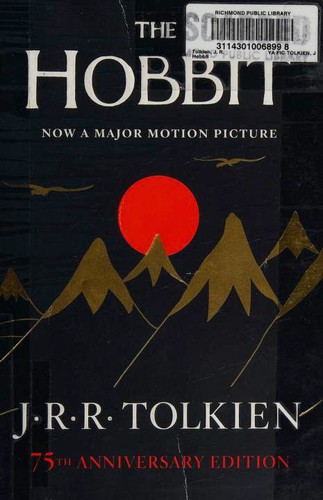
Bilbo Baggins is a thoroughly respectable hobbit who has no interest in adventures, danger, or anything that might interfere with his meals.
J.R.R. Tolkien · 1937 · 6h 20m
Full summary and key takeaways →The 11 questions
- 1.
Bilbo is selected as the expedition's burglar by Gandalf, over the dwarves' objections, for reasons that aren't entirely clear. By the end of the book, is the selection vindicated, and in what way?
- 2.
Thorin's dragon-sickness — the sudden possessiveness and irrationality that overcomes him when he reclaims his treasure — is described as an almost physical transformation. Does the novel explain it adequately, or does it need more psychological grounding?
- 3.
Bilbo steals the Arkenstone from Thorin and gives it to Bard and the elves as a bargaining chip. Is that the right thing to do? Does the novel clearly endorse it?
- 4.
Gollum's riddle contest operates under rules that Bilbo arguably breaks. The book treats Bilbo's winning as legitimate. Do you agree, and what does that say about how the book views cleverness versus fair play?
- 5.
The dwarves treat Bilbo as a servant and specialist for most of the journey, and he saves them repeatedly. At what point, if any, do they fully accept him as an equal?
- 6.
Smaug's conversation with Bilbo is the novel's most surprising chapter — the dragon is intelligent, vain, and genuinely dangerous precisely because he can reason. What does the scene add to the book that a dumber dragon couldn't?
- 7.
The Hobbit is narrated in a voice that speaks to the reader directly and maintains a tone of gentle reassurance. Does that narrative voice limit the book, or is it exactly right for what it is?
- 8.
Bilbo uses the Ring mostly to avoid being killed. He is never shown resisting its pull or being harmed by it. Does that make his later willingness to give it up in The Lord of the Rings more impressive, or does it make the Ring's power seem inconsistent?
- 9.
The eagles arrive at the Battle of Five Armies to tip the outcome, as they do repeatedly in Tolkien. Is that a satisfying narrative device, or does it undercut the stakes by creating a pattern of deus ex machina?
- 10.
The Hobbit was written as a children's book and The Lord of the Rings as an adult one. Does it feel like a children's book to you? What specifically marks the difference in tone and intent?
- 11.
Bilbo returns home to find his reputation damaged and his neighbors presuming him dead. He is permanently changed by the adventure but cannot fully share it. Is that a sad ending or a satisfying one?
How to run the discussion
- Pick six to eight, not all of them. An hour of real discussion covers fewer questions than anyone expects, and racing the list is what makes a book club feel like homework.
- Open with what people noticed, not what they concluded. Asking for a verdict first hardens opinions before anyone has heard each other.
- Let the disagreement run. The questions below that split a room are the ones worth the time; the ones everyone answers the same way can be skipped.
- Ask the quiet person a specific question. A direct, narrow question is far easier to answer than an open invitation to contribute.
Themes worth steering toward
If the conversation stalls, these are the threads that usually restart it.
Common questions
What are good book club questions for The Hobbit?
Here are 11 book club questions for The Hobbit by J.R.R. Tolkien, ordered to open easily and end somewhere worth arguing about. The strongest openers ask what each reader noticed rather than what they concluded, and the discussion usually turns on reluctant heroism, greed and dragon-sickness, home and adventure.
How long should a book club discussion of The Hobbit last?
Most groups run 60 to 90 minutes of actual discussion. That is roughly six to eight questions, not all of them, so pick the ones that suit your group rather than working down the list in order.
What are the main themes in The Hobbit?
Reluctant heroism, Greed and dragon-sickness, Home and adventure, Unexpected courage. Those are the threads most likely to divide a room, which makes them the useful places to steer a discussion that has gone quiet.
Picking the next one? See books like The Hobbit or questions for other book club picks.
