Psychology · Book club
The (Honest) Truth About Dishonesty book club questions
Here are 11 book club questions for The (Honest) Truth About Dishonesty by Dan Ariely, ordered to open easily and end somewhere worth arguing about. Copy them, print them, or bring them up one at a time.
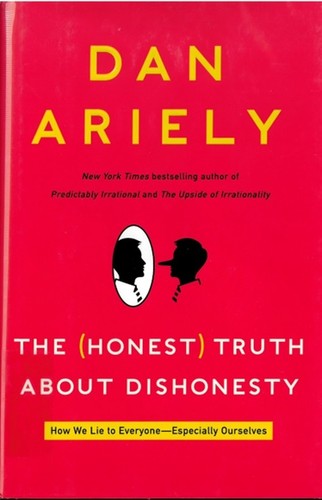
Dan Ariely is a behavioral economist at Duke who studies irrational behavior, and this book applies that framework to a question most people prefer not to examine too closely: why do people cheat?
Dan Ariely · 2012 · 4h 40m
Full summary and key takeaways →The 11 questions
- 1.
Ariely argues that most people cheat within their fudge factor — a little, not a lot. Does that match your observation of behavior in organizations you have been part of?
- 2.
The moral reminder experiments suggest that cuing moral identity before an opportunity reduces cheating. What structures in your own environment already function this way, and what structures are conspicuously absent?
- 3.
He shows that seeing a peer cheat — especially one who is clearly part of your in-group — increases your own cheating. What does that suggest about moral climate in teams and organizations?
- 4.
Ariely discusses conflict of interest in professional settings. Can you identify a case in your own professional life where you believe your judgment was unintentionally biased by incentive?
- 5.
The experiment with tokens instead of cash showed that psychological distance from money increases dishonesty. How does the abstraction of financial instruments in modern economies interact with this finding?
- 6.
Signing an honor code at the top of a form works; signing at the bottom does not. What design changes in forms or processes would make the most difference in real systems?
- 7.
He distinguishes between external deterrence (surveillance, punishment) and identity-based deterrence (making dishonesty inconsistent with self-image). Which do you think is more scalable?
- 8.
Think of an organization you know well. What features of its culture expand or contract the fudge factor for its members?
- 9.
Ariely discusses his own experience with self-deception. What do you think is the category of thing you most regularly tell yourself is okay when it isn't?
- 10.
The book suggests that many people who behave dishonestly at the margins are not primarily motivated by greed. What are the implications for how we design incentives and accountability?
- 11.
If you were redesigning an institution — a university, a company, a government agency — to minimize dishonesty, what three changes would you make based on this research?
How to run the discussion
- Pick six to eight, not all of them. An hour of real discussion covers fewer questions than anyone expects, and racing the list is what makes a book club feel like homework.
- Open with what people noticed, not what they concluded. Asking for a verdict first hardens opinions before anyone has heard each other.
- Let the disagreement run. The questions below that split a room are the ones worth the time; the ones everyone answers the same way can be skipped.
- Ask the quiet person a specific question. A direct, narrow question is far easier to answer than an open invitation to contribute.
Themes worth steering toward
If the conversation stalls, these are the threads that usually restart it.
Common questions
What are good book club questions for The (Honest) Truth About Dishonesty?
Here are 11 book club questions for The (Honest) Truth About Dishonesty by Dan Ariely, ordered to open easily and end somewhere worth arguing about. The strongest openers ask what each reader noticed rather than what they concluded, and the discussion usually turns on dishonesty, behavioral economics, ethics.
How long should a book club discussion of The (Honest) Truth About Dishonesty last?
Most groups run 60 to 90 minutes of actual discussion. That is roughly six to eight questions, not all of them, so pick the ones that suit your group rather than working down the list in order.
What are the main themes in The (Honest) Truth About Dishonesty?
Dishonesty, Behavioral economics, Ethics, Self-image, Decision-making. Those are the threads most likely to divide a room, which makes them the useful places to steer a discussion that has gone quiet.
Picking the next one? See books like The (Honest) Truth About Dishonesty or questions for other book club picks.
