Science · Book club
The Hot Zone book club questions
Here are 12 book club questions for The Hot Zone by Richard Preston, ordered to open easily and end somewhere worth arguing about. Copy them, print them, or bring them up one at a time.
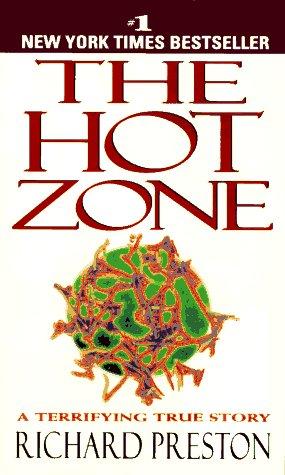
The Hot Zone is Richard Preston's account of the discovery of filoviruses — Marburg and Ebola — and, more urgently, the 1989 outbreak of a closely related virus in a primate facility in Reston, Virginia, twenty miles from Washington DC.
Richard Preston · 1994 · 6h 0m
Full summary and key takeaways →The 12 questions
- 1.
Preston writes about Ebola in highly visceral terms. Did that technique make the science more or less credible to you? What does sensationalism cost a nonfiction account?
- 2.
The Reston outbreak involved multiple failures of communication and institutional coordination. What kind of system would have caught these failures earlier?
- 3.
Given that the reservoir host of Ebola is still not confirmed, what does it say about public health preparedness that we've had this knowledge gap for decades?
- 4.
Preston argues that human expansion into tropical ecosystems is the underlying driver of emerging infectious disease. Where does individual behavior intersect with that structural argument?
- 5.
The Army researchers entered a building with an unknown filovirus in suits that had a non-trivial failure rate. Would you have done it? What's the right way to make that kind of risk decision?
- 6.
How has reading this book — published in 1994 — changed or confirmed your understanding of how COVID-19 unfolded more than two decades later?
- 7.
The people who were exposed in Reston and survived didn't know what they'd been exposed to until later. What ethical obligations do institutions have to disclose exposure in real time?
- 8.
Preston's descriptions of hemorrhagic fever are clinically graphic. Do you think that detail serves a public health purpose, or does it primarily serve to frighten?
- 9.
The Reston virus was airborne among monkeys. How do you think about the role of luck in the outcomes of outbreak events?
- 10.
What's the gap between the level of biosafety infrastructure described in this book and what you'd expect the government to have in place now?
- 11.
If the Reston outbreak had involved a human-lethal airborne strain, what do you think would have happened? What does the book suggest about containment capacity?
- 12.
Preston ends on an ambivalent note about the rainforest and the virus as natural forces. What's your reaction to that framing?
How to run the discussion
- Pick six to eight, not all of them. An hour of real discussion covers fewer questions than anyone expects, and racing the list is what makes a book club feel like homework.
- Open with what people noticed, not what they concluded. Asking for a verdict first hardens opinions before anyone has heard each other.
- Let the disagreement run. The questions below that split a room are the ones worth the time; the ones everyone answers the same way can be skipped.
- Ask the quiet person a specific question. A direct, narrow question is far easier to answer than an open invitation to contribute.
Themes worth steering toward
If the conversation stalls, these are the threads that usually restart it.
Common questions
What are good book club questions for The Hot Zone?
Here are 12 book club questions for The Hot Zone by Richard Preston, ordered to open easily and end somewhere worth arguing about. The strongest openers ask what each reader noticed rather than what they concluded, and the discussion usually turns on infectious disease, epidemics, biosafety.
How long should a book club discussion of The Hot Zone last?
Most groups run 60 to 90 minutes of actual discussion. That is roughly six to eight questions, not all of them, so pick the ones that suit your group rather than working down the list in order.
What are the main themes in The Hot Zone?
Infectious disease, Epidemics, Biosafety, Virology, Human vulnerability. Those are the threads most likely to divide a room, which makes them the useful places to steer a discussion that has gone quiet.
Picking the next one? See books like The Hot Zone or questions for other book club picks.
