Mystery · Book club
The Hound of the Baskervilles book club questions
Here are 12 book club questions for The Hound of the Baskervilles by Arthur Conan Doyle, ordered to open easily and end somewhere worth arguing about. Copy them, print them, or bring them up one at a time.
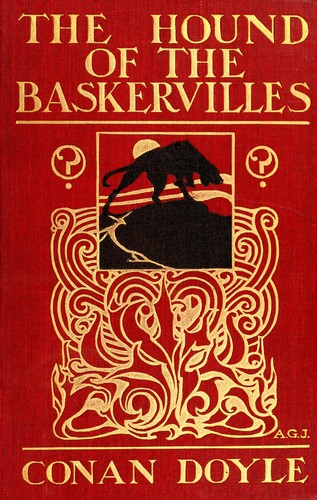
The Baskerville family has been haunted for generations by the legend of a spectral hound — a creature of supernatural vengeance said to pursue the heirs of a wicked ancestor across the Dartmoor fog.
Arthur Conan Doyle · 1902 · 4h 0m
Full summary and key takeaways →The 12 questions
- 1.
Conan Doyle maintains the possibility of a supernatural explanation longer than most readers expect. At what point did you become certain it was a rational crime — or did you?
- 2.
Watson functions as the reader's surrogate for most of this novel, investigating without Holmes. Does he acquit himself better or worse than the short stories typically allow?
- 3.
Holmes's deception of Watson — concealing that he is already on the moors — is one of his more ethically questionable moves. Is that justified by results, or is it a betrayal of the partnership?
- 4.
The villain is ultimately motivated by inheritance. How does the novel connect the Gothic premise to the thoroughly Victorian preoccupation with money, estate, and family lineage?
- 5.
The moors are an almost independent character in the novel. Would the book work transplanted to a different setting — a city, a sea voyage — or is Dartmoor essential?
- 6.
Conan Doyle contrasts the rational Holmes with the fearful, superstition-inclined community on the moor. Is the novel endorsing rational demystification, or is it more ambivalent about what gets lost when the supernatural is explained away?
- 7.
Compared to the short stories in Adventures of Sherlock Holmes, does the novel format suit the material better, or do you find the extended length padded?
- 8.
The identity of the villain requires a coincidence of physical resemblance. Does that stretch your credulity, or does the novel earn the reveal through other means?
- 9.
Sir Charles Baskerville is dead before the novel begins. How does his absence shape the investigation and the atmosphere — what does it mean to solve a crime for someone who can't benefit from the solution?
- 10.
The novel was written after Conan Doyle had killed Holmes at Reichenbach Falls and before he officially resurrected him. Does that context change how you read Holmes's role in the story?
- 11.
Several adaptations (especially the Jeremy Brett and the 2012 BBC Sherlock) are very well-regarded. If you've seen one, where did it improve on the novel — and where did the novel do something the adaptation missed?
- 12.
Holmes solves the case partly because he is willing to endure discomfort — living rough on the moor — in ways his clients and even Watson cannot. What does that willingness say about his character versus the formal genius the short stories usually celebrate?
How to run the discussion
- Pick six to eight, not all of them. An hour of real discussion covers fewer questions than anyone expects, and racing the list is what makes a book club feel like homework.
- Open with what people noticed, not what they concluded. Asking for a verdict first hardens opinions before anyone has heard each other.
- Let the disagreement run. The questions below that split a room are the ones worth the time; the ones everyone answers the same way can be skipped.
- Ask the quiet person a specific question. A direct, narrow question is far easier to answer than an open invitation to contribute.
Themes worth steering toward
If the conversation stalls, these are the threads that usually restart it.
Common questions
What are good book club questions for The Hound of the Baskervilles?
Here are 12 book club questions for The Hound of the Baskervilles by Arthur Conan Doyle, ordered to open easily and end somewhere worth arguing about. The strongest openers ask what each reader noticed rather than what they concluded, and the discussion usually turns on superstition versus reason, isolation and the moors, inheritance and greed.
How long should a book club discussion of The Hound of the Baskervilles last?
Most groups run 60 to 90 minutes of actual discussion. That is roughly six to eight questions, not all of them, so pick the ones that suit your group rather than working down the list in order.
What are the main themes in The Hound of the Baskervilles?
Superstition versus reason, Isolation and the moors, Inheritance and greed, Identity and disguise, Legend and reality. Those are the threads most likely to divide a room, which makes them the useful places to steer a discussion that has gone quiet.
Picking the next one? See books like The Hound of the Baskervilles or questions for other book club picks.
