Biography · Book club
The House of Getty book club questions
Here are 11 book club questions for The House of Getty by Russell Miller, ordered to open easily and end somewhere worth arguing about. Copy them, print them, or bring them up one at a time.
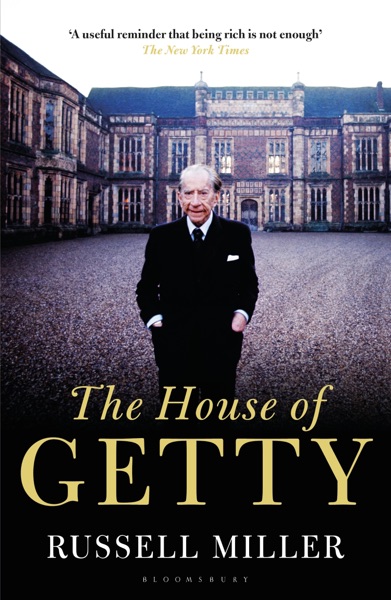
The House of Getty is Russell Miller's investigative biography of J.
Russell Miller · 1985 · 7h 20m
Full summary and key takeaways →The 11 questions
- 1.
J. Paul Getty was famously frugal despite being the world's richest man. Miller suggests this wasn't hypocrisy but a form of control. Do you find that explanation convincing?
- 2.
How do you read the pay-phone story? Is it a revealing detail about character, or is it the kind of anecdote that gets attached to any rich eccentric because it confirms what we already believe?
- 3.
The kidnapping chapter raises the question of what obligations money creates. Did Getty have a duty to pay the ransom immediately, or does the book's account make his hesitation understandable in any way?
- 4.
Miller traces the damage that J. Paul Getty's emotional unavailability did to his children. How much of what the next generation suffered was caused by money, and how much would have happened in any family with this patriarch?
- 5.
The Getty Museum became one of the world's great art institutions, largely because of the trust structure that controlled its endowment. What does that say about the relationship between the intentions of a founder and the outcomes an institution produces?
- 6.
Miller had limited cooperation from the family while writing this book. How does that affect your reading of it — does the distance from the subjects make it more objective, or less complete?
- 7.
J. Paul Getty spent his final decades isolated in England, running a global oil company by telex, rarely seeing his family. What was he protecting himself from, and at what cost?
- 8.
The book was written in 1985. The subsequent decades brought further Getty family tragedies — drug addiction, accidents, more legal battles. Does the pattern Miller identifies feel like prophecy in retrospect?
- 9.
Miller argues that the wealth distorted every relationship it touched. Can you think of counterexamples — wealthy dynasties or individuals where inherited wealth didn't produce these pathologies? What was different?
- 10.
The Getty story is often told as a cautionary tale. What is the actual lesson — don't be rich, don't be miserly, don't have children, don't neglect your estate planning?
- 11.
How does the Getty family story compare to other great American dynasties — the Rockefellers, the Kennedys, the Mellons? Is there something specifically distorting about oil money versus other kinds of inherited wealth?
How to run the discussion
- Pick six to eight, not all of them. An hour of real discussion covers fewer questions than anyone expects, and racing the list is what makes a book club feel like homework.
- Open with what people noticed, not what they concluded. Asking for a verdict first hardens opinions before anyone has heard each other.
- Let the disagreement run. The questions below that split a room are the ones worth the time; the ones everyone answers the same way can be skipped.
- Ask the quiet person a specific question. A direct, narrow question is far easier to answer than an open invitation to contribute.
Themes worth steering toward
If the conversation stalls, these are the threads that usually restart it.
Common questions
What are good book club questions for The House of Getty?
Here are 11 book club questions for The House of Getty by Russell Miller, ordered to open easily and end somewhere worth arguing about. The strongest openers ask what each reader noticed rather than what they concluded, and the discussion usually turns on wealth, dynasty, dysfunction.
How long should a book club discussion of The House of Getty last?
Most groups run 60 to 90 minutes of actual discussion. That is roughly six to eight questions, not all of them, so pick the ones that suit your group rather than working down the list in order.
What are the main themes in The House of Getty?
Wealth, Dynasty, Dysfunction, Oil industry, Family. Those are the threads most likely to divide a room, which makes them the useful places to steer a discussion that has gone quiet.
Picking the next one? See books like The House of Getty or questions for other book club picks.
