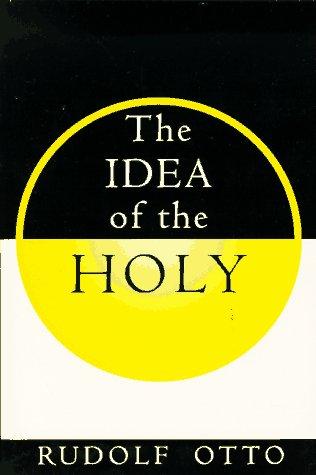
The Idea of the Holy by Rudolf Otto is a 1917 religion & spirituality book about the sacred, numinous experience, religious consciousness. The 'numinous' names the distinctive quality of religious experience that cannot be reduced to moral, rational, or aesthetic categories — it is irreducibly different.
Summary
The Idea of the Holy is Rudolf Otto's analysis of the non-rational dimension of religious experience — the distinctive quality of encounter with what he calls the "numinous," an experience that cannot be reduced to any moral, rational, or aesthetic category but is the core of what religion is actually about. Published in 1917 in German as Das Heilige and translated into English in 1923, it became one of the most influential texts in 20th-century religious studies and theology.
Otto's central move is to isolate the holy from its rational and ethical components. The holy in ordinary usage means something like "morally perfect" or "belonging to God," but Otto argues this moralization obscures the original, irreducibly different quality of religious experience. He coins the term "numinous" from the Latin numen (divine will) to name this quality, and analyzes it through several key components. The mysterium is the object's complete otherness — it is wholly other, beyond all ordinary categories. The tremendum is the awe and dread it evokes — not ordinary fear but the "creature-feeling" of standing before something overwhelming in power. The fascinans is the simultaneous attraction, the allure that draws one toward the terrifying, overwhelming presence.
Otto traces the numinous across religious traditions — in the holiness attributed to the God of the Hebrew Bible, the daemonic in early religion, the wrath and majesty of the divine in Islam and Christianity, the "sunyata" (emptiness) of Buddhist teaching, and the Brahman of the Upanishads. He argues that despite the enormous differences between these traditions, the same structure of numinous experience can be identified across all of them. The rational and ethical articulation of this experience in theology and morality is always secondary — a schematization of something that preceded and exceeds it.
The book has been criticized for treating religious experience as a sui generis category immune from social and historical analysis. It has also been enormously generative: C. S. Lewis, Mircea Eliade, and Paul Tillich are among the many thinkers who built significantly on Otto's framework. For anyone trying to understand why religion persists and what religious experience actually involves, it remains essential.
Talk to The Idea of the Holy like its author wrote you back.
Get the ideas that fit your life — not generic summaries.
- Chat with the book
- Audiobook-style main ideas
- Adapts to your life and goals
- Helps you take action
Key takeaways
- 1.
The 'numinous' names the distinctive quality of religious experience that cannot be reduced to moral, rational, or aesthetic categories — it is irreducibly different.
- 2.
The mysterium tremendum et fascinans: religious experience involves the wholly other (mysterium), awe-dread (tremendum), and simultaneous attraction (fascinans).
- 3.
The creature-feeling — the sense of one's own utter smallness and dependence before an overwhelming presence — is the psychological correlate of the numinous.
- 4.
Rational and ethical dimensions of religion (theology, morality) are always secondary schematizations of numinous experience, not its source.
- 5.
The numinous is not the same as the terrifying or the uncanny, but has a distinctive quality of 'wholly otherness' that marks it as sacred.
- 6.
Religious traditions across cultures reflect encounters with the same structure of numinous experience, despite their very different theological and institutional forms.
- 7.
The holy in its fullest sense combines the numinous (non-rational core) with the ethical and rational dimensions — neither alone is the complete category.
- 8.
Aesthetic experience — especially music and architecture — can evoke something approaching the numinous, which is why art and religion are so persistently intertwined.
Discussion questions
Use these on your own, with a book club, or as chat starters in Superbook. Book club version, ready to copy or print →
- 1.
Otto coins the term 'numinous' to name something he says cannot be fully described. Have you ever had an experience that felt like what he is pointing at?
- 2.
He argues that the moral and rational dimensions of religion are secondary to the numinous experience at its core. Is that a description of how religion actually works, or an idealization?
- 3.
The mysterium tremendum et fascinans — awe-dread combined with attraction — sounds contradictory. Can you think of experiences, religious or secular, that have this structure?
- 4.
Otto treats the numinous as a sui generis category — its own unique thing, not reducible to psychology or sociology. Is that methodological independence justified?
- 5.
The 'creature-feeling' — the sense of utter smallness before an overwhelming presence — is described as fundamental. Is that recognizable from your own experience or from testimony you've encountered?
- 6.
Otto traces the numinous across traditions from Hebrew Scripture to Buddhism. Does the cross-cultural comparison illuminate the concept or stretch it too far?
- 7.
He argues that sublime art and architecture can evoke something approaching the numinous. What piece of music, art, or architecture has most nearly approached that for you?
- 8.
The idea that religious experience has a non-rational core that precedes and exceeds theological articulation challenges both fundamentalism and atheism. How does it challenge each?
- 9.
Otto published this in 1917, during World War I. Does that historical context speak to the book's insistence on something beyond moral and rational categories?
- 10.
C. S. Lewis drew heavily on Otto's concept of the numinous in his writings. How does it show up in Mere Christianity or The Problem of Pain?
- 11.
Is Otto's framework useful for understanding why religious experience persists even among people who have rejected doctrinal religion?
Themes
Frequently asked questions
-
What does 'numinous' mean?
Otto's coined term for the distinctive quality of religious experience — the sense of encounter with something wholly other, overwhelming in power, and simultaneously terrifying and attractive. It cannot be reduced to moral, rational, or aesthetic categories and is, Otto argues, the irreducible core of what the holy is.
-
What is the mysterium tremendum et fascinans?
Otto's Latin phrase for the structure of numinous experience: the mysterium (the wholly other, beyond ordinary categories), the tremendum (the awe-dread that overwhelms the creature), and the fascinans (the simultaneous attraction that draws one toward the terrifying presence). Together they constitute the full quality of the numinous.
-
Is this book written from a Christian perspective?
It draws primarily on Christian theology and the Hebrew Bible but is explicitly comparative, tracing the numinous across Islam, Hinduism, Buddhism, and early religion. Otto was a Christian theologian, and his sympathies are evident, but the framework is meant to be universal.
-
How important is this book to religious studies?
Very. It is one of the founding texts of the phenomenology of religion and directly influenced Mircea Eliade's The Sacred and the Profane, Paul Tillich's theology, and C. S. Lewis's writing on the numinous in Christianity. It remains assigned in religious studies programs worldwide.
-
Is it difficult to read?
Moderately. Otto's prose is clear but dense, and the argument requires sustained attention. The core concepts (numinous, mysterium tremendum, creature-feeling) are introduced in the first half of the book; the second half applies them comparatively and can be read more selectively.
Similar books
The Varieties of Religious Experience
William James
The Perennial Philosophy
Aldous Huxley
A New Earth: Awakening to Your Life's Purpose
Eckhart Tolle
The Courage to Be
Paul Tillich
