Science · Book club
The Immortal Life of Henrietta Lacks book club questions
Here are 12 book club questions for The Immortal Life of Henrietta Lacks by Rebecca Skloot, ordered to open easily and end somewhere worth arguing about. Copy them, print them, or bring them up one at a time.
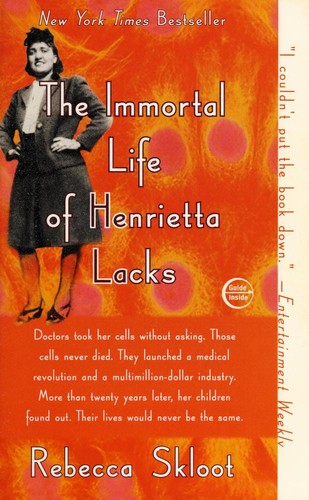
In 1951, a Black woman named Henrietta Lacks died of cervical cancer at Johns Hopkins Hospital.
Rebecca Skloot · 2010 · 7h 15m
Full summary and key takeaways →The 12 questions
- 1.
Henrietta's cells were taken under a standard practice of the time, not out of malice. Does intent change how you judge what happened to her and her family?
- 2.
The Lacks family received no compensation while HeLa cells generated enormous commercial value. What would a fair resolution look like — and is it still possible decades later?
- 3.
Skloot spent years building trust with Deborah Lacks to write this book. What are the ethics of a journalist inserting herself so deeply into a family's grief and story?
- 4.
The book raises the question of who owns tissue removed from your body during a medical procedure. What do you think the answer should be, and why?
- 5.
Deborah's desire to know her mother was complicated by what she found. How did learning about HeLa change — or not change — her understanding of who Henrietta was as a person?
- 6.
Informed consent has evolved significantly since 1951, but the book suggests it is still imperfect. What limitations do you see in how consent works in medicine or research today?
- 7.
Hopkins and the researchers who used HeLa were following the norms of their era. At what point does following accepted norms stop being a defense?
- 8.
Skloot depicts the Lacks family dealing with institutions — hospitals, researchers, journalists — that repeatedly failed to treat them as full participants in their own story. What would those encounters have looked like if handled well?
- 9.
The same cells that helped eradicate polio came from a woman who was not given the chance to volunteer them. How do you hold both of those things at once?
- 10.
Race appears throughout the book as a structural force rather than individual prejudice. Where in the story did you feel it most sharply, and why?
- 11.
Consumer genetic testing companies now collect and sometimes sell genetic data from millions of customers. How does the HeLa story change how you think about what you agree to when you submit a DNA sample?
- 12.
Deborah never had access to the education or resources to fully understand what had been done or to advocate for herself. How does that shape what justice would mean in her case?
How to run the discussion
- Pick six to eight, not all of them. An hour of real discussion covers fewer questions than anyone expects, and racing the list is what makes a book club feel like homework.
- Open with what people noticed, not what they concluded. Asking for a verdict first hardens opinions before anyone has heard each other.
- Let the disagreement run. The questions below that split a room are the ones worth the time; the ones everyone answers the same way can be skipped.
- Ask the quiet person a specific question. A direct, narrow question is far easier to answer than an open invitation to contribute.
Themes worth steering toward
If the conversation stalls, these are the threads that usually restart it.
Common questions
What are good book club questions for The Immortal Life of Henrietta Lacks?
Here are 12 book club questions for The Immortal Life of Henrietta Lacks by Rebecca Skloot, ordered to open easily and end somewhere worth arguing about. The strongest openers ask what each reader noticed rather than what they concluded, and the discussion usually turns on medical ethics, race and medicine, scientific exploitation.
How long should a book club discussion of The Immortal Life of Henrietta Lacks last?
Most groups run 60 to 90 minutes of actual discussion. That is roughly six to eight questions, not all of them, so pick the ones that suit your group rather than working down the list in order.
What are the main themes in The Immortal Life of Henrietta Lacks?
Medical ethics, Race and medicine, Scientific exploitation, Cell biology, Family legacy. Those are the threads most likely to divide a room, which makes them the useful places to steer a discussion that has gone quiet.
Picking the next one? See books like The Immortal Life of Henrietta Lacks or questions for other book club picks.
