Sports psychology · Book club
The Inner Game of Tennis book club questions
Here are 12 book club questions for The Inner Game of Tennis by W. Timothy Gallwey, ordered to open easily and end somewhere worth arguing about. Copy them, print them, or bring them up one at a time.
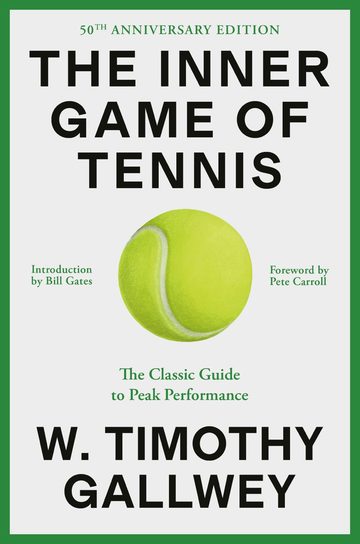
The Inner Game of Tennis is Timothy Gallwey's short, influential argument that the biggest obstacle to performing and learning is not a lack of technique but the interference of our own minds.
W. Timothy Gallwey · 1974 · 3h 0m
Full summary and key takeaways →The 12 questions
- 1.
Gallwey says the inner opponent is tougher than the outer one. In an activity you care about, what does your inner opponent say to you?
- 2.
Can you recall a time you performed better when you stopped trying so hard? What allowed you to relax?
- 3.
When you make a mistake, how quickly do you judge yourself, and how does that judgment affect what happens next?
- 4.
Self 1 is the instructing, critical voice. Whose voice does yours sound like, and is it actually helping you?
- 5.
Where in your life are you over-coaching yourself with verbal instructions instead of trusting your body or your instincts?
- 6.
Gallwey teaches nonjudgmental awareness. What would it look like to simply observe your performance this week without labeling it good or bad?
- 7.
Think of a skill you learned effortlessly as a child. What was different about how you learned it then versus how you learn now?
- 8.
Relaxed concentration is the state the book aims for. When have you felt it, and what conditions seemed to produce it?
- 9.
The book claims we learn better from images and feel than from instructions. How could you use imagery to improve something you're working on?
- 10.
Gallwey reframes the opponent as someone who draws out your best. How would treating a rival or obstacle that way change how you approach it?
- 11.
Where does performance anxiety show up for you — sport, speaking, work — and how much of it is really Self 1's chatter?
- 12.
The book applies far beyond tennis. Which part of your life is most sabotaged by self-doubt, and what would quieting that voice make possible?
How to run the discussion
- Pick six to eight, not all of them. An hour of real discussion covers fewer questions than anyone expects, and racing the list is what makes a book club feel like homework.
- Open with what people noticed, not what they concluded. Asking for a verdict first hardens opinions before anyone has heard each other.
- Let the disagreement run. The questions below that split a room are the ones worth the time; the ones everyone answers the same way can be skipped.
- Ask the quiet person a specific question. A direct, narrow question is far easier to answer than an open invitation to contribute.
Themes worth steering toward
If the conversation stalls, these are the threads that usually restart it.
Common questions
What are good book club questions for The Inner Game of Tennis?
Here are 12 book club questions for The Inner Game of Tennis by W. Timothy Gallwey, ordered to open easily and end somewhere worth arguing about. The strongest openers ask what each reader noticed rather than what they concluded, and the discussion usually turns on performance psychology, learning, concentration.
How long should a book club discussion of The Inner Game of Tennis last?
Most groups run 60 to 90 minutes of actual discussion. That is roughly six to eight questions, not all of them, so pick the ones that suit your group rather than working down the list in order.
What are the main themes in The Inner Game of Tennis?
Performance psychology, Learning, Concentration, Self-awareness, Letting go. Those are the threads most likely to divide a room, which makes them the useful places to steer a discussion that has gone quiet.
Picking the next one? See books like The Inner Game of Tennis or questions for other book club picks.
