Economics · Book club
The Intelligent Investor book club questions
Here are 12 book club questions for The Intelligent Investor by Benjamin Graham, ordered to open easily and end somewhere worth arguing about. Copy them, print them, or bring them up one at a time.
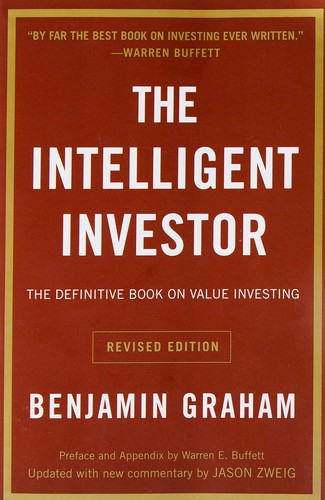
The Intelligent Investor is Benjamin Graham's case that successful investing has less to do with picking the right stocks than with managing your own behavior.
Benjamin Graham · 1949 · 6h 0m
Full summary and key takeaways →The 12 questions
- 1.
Graham's Mr. Market allegory reframes market volatility as opportunity rather than risk. How does your actual behavior during market drops compare to how Mr. Market is supposed to make you feel?
- 2.
Graham distinguishes defensive from enterprising investors. Which are you, honestly — and does your portfolio reflect that self-assessment or contradict it?
- 3.
The concept of margin of safety asks you to be wrong and still be okay. Where else in your financial life are you relying on everything going right?
- 4.
Graham wrote that the investor's chief problem — and worst enemy — is likely himself. What specific behavior of yours has cost you money in the markets?
- 5.
If you stopped looking at your portfolio for a year, what would actually change? What does your answer reveal about whether you're investing or speculating?
- 6.
Graham argues that most investors should accept average market returns through diversification. What would you have to give up — intellectually or emotionally — to act on that advice?
- 7.
The book distinguishes between the price of a stock and the value of the underlying business. How do you actually make that distinction in practice when you buy something?
- 8.
Graham's approach requires patience measured in years, not months. What in your life makes it hard to think in that time frame about money?
- 9.
Zweig's commentary in the updated edition argues that Graham's principles survived the dot-com crash, the 2008 financial crisis, and every other episode of market madness. What recent market event tested your own principles most severely?
- 10.
The book was written in an era before index funds existed. Graham's defensive investor prescription is essentially what a total-market index fund now delivers automatically. Does that change anything about how you invest?
- 11.
Graham says the intelligent investor is realistic about what they don't know. What is something you currently believe about the market that you hold with more confidence than you probably should?
- 12.
What's the difference between having conviction in a stock and being emotionally attached to it? Have you ever confused the two?
How to run the discussion
- Pick six to eight, not all of them. An hour of real discussion covers fewer questions than anyone expects, and racing the list is what makes a book club feel like homework.
- Open with what people noticed, not what they concluded. Asking for a verdict first hardens opinions before anyone has heard each other.
- Let the disagreement run. The questions below that split a room are the ones worth the time; the ones everyone answers the same way can be skipped.
- Ask the quiet person a specific question. A direct, narrow question is far easier to answer than an open invitation to contribute.
Themes worth steering toward
If the conversation stalls, these are the threads that usually restart it.
Common questions
What are good book club questions for The Intelligent Investor?
Here are 12 book club questions for The Intelligent Investor by Benjamin Graham, ordered to open easily and end somewhere worth arguing about. The strongest openers ask what each reader noticed rather than what they concluded, and the discussion usually turns on value investing, risk management, behavioral finance.
How long should a book club discussion of The Intelligent Investor last?
Most groups run 60 to 90 minutes of actual discussion. That is roughly six to eight questions, not all of them, so pick the ones that suit your group rather than working down the list in order.
What are the main themes in The Intelligent Investor?
Value investing, Risk management, Behavioral finance, Long-term thinking, Market psychology. Those are the threads most likely to divide a room, which makes them the useful places to steer a discussion that has gone quiet.
Picking the next one? See books like The Intelligent Investor or questions for other book club picks.
