The Joy Luck Club by Amy Tan is a 1989 literary fiction book about generational trauma, mother-daughter relationships, immigration and identity. The mosaic structure — sixteen stories, eight narrators — is not merely formal; it embodies the novel's argument that no single perspective can hold the full truth of a relationship, a family, or a migration.
Summary
The Joy Luck Club is structured around a mahjong game. Four Chinese immigrant women have been meeting weekly in San Francisco to play, eat, and talk — a tradition they call the Joy Luck Club. When one of them, Suyuan Woo, dies, her daughter Jing-mei (June) is asked to take her mother's place at the table. The novel unfolds from that gathering, moving back and forth between the mothers' voices — telling stories of China before and during the war — and the daughters' voices — telling stories of growing up American with mothers who seemed to speak an entirely different language.
The novel is less a narrative than a mosaic: sixteen interlinked stories told by eight women across two generations and two countries. Amy Tan is interested in translation in the broadest sense — the translation of experience across culture, language, and time, and the permanent something-lost that attends every crossing. The mothers carry stories of survival, sacrifice, and self-determination that their daughters cannot fully access; the daughters carry an American selfhood that their mothers cannot fully read. Each generation misreads the other with love, and the misreadings accumulate into lives.
Published in 1989, The Joy Luck Club arrived at a moment when Chinese-American literature was barely visible in mainstream publishing, and its commercial success — it was a bestseller for nine months — had an outsized effect on what was perceived as publishable. Tan's prose is not minimalist; it is deeply oral, shaped by the rhythms of translated speech and the cadences of women telling stories in rooms where men aren't listening. The 1993 film adaptation, directed by Wayne Wang, is faithful and effective, though it necessarily flattens the polyphony of the novel's structure.
Readers who want a single protagonist and a linear plot will find the mosaic structure disorienting. Readers who are willing to hold eight voices simultaneously will find a novel whose whole is considerably larger than any of its parts. The Joy Luck Club is not a document of Chinese-American life so much as a meditation on the costs of displacement — on what mothers cannot give their daughters because it cannot survive translation, and what daughters cannot give their mothers because the distance is too great.
Talk to The Joy Luck Club like its author wrote you back.
Get the ideas that fit your life — not generic summaries.
- Chat with the book
- Audiobook-style main ideas
- Adapts to your life and goals
- Helps you take action
Key takeaways
- 1.
The mosaic structure — sixteen stories, eight narrators — is not merely formal; it embodies the novel's argument that no single perspective can hold the full truth of a relationship, a family, or a migration.
- 2.
The mothers' stories are not origin stories that explain the daughters; they are autonomous lives in their own right, with their own stakes, and the novel insists on that autonomy even as the daughters fail to see it.
- 3.
Translation is the novel's central subject, and Tan treats it as always incomplete — something essential is always lost in the move from Chinese to English, from China to America, from mother to daughter.
- 4.
The Joy Luck Club itself — the mahjong game, the food, the gathering of women — is depicted as a technology of survival: a way of holding on to pleasure and community in conditions that threaten both.
- 5.
Each daughter's story is shaped by a misunderstanding of her mother that becomes visible only retrospectively — the structure of the novel makes this visible by giving us the mothers' own voices.
- 6.
The novel is deeply interested in what women do with suffering when they cannot speak it directly: they encode it in stories, games, objects, gestures, and indirect correction.
- 7.
American assimilation in the novel is not presented as progress or betrayal but as loss — something genuinely valuable is surrendered in the crossing, and the daughters don't always know what they've given up.
- 8.
Jing-mei's journey to China at the novel's end to meet her half-sisters is the novel's attempt at reunion across the translation gap — and Tan is honest about how incomplete that reunion is.
Discussion questions
Use these on your own, with a book club, or as chat starters in Superbook. Book club version, ready to copy or print →
- 1.
The novel gives both generations their own voice rather than filtering the mothers through the daughters. Did that structure change how you understood the mothers?
- 2.
Each mother-daughter pair has a specific, recurring misunderstanding at its center. Which pair's dynamic felt most familiar to you?
- 3.
Tan has said she wrote the novel partly to communicate across the language barrier with her own mother. Does that biographical origin show in the book? Does it matter?
- 4.
Several of the mothers' stories involve extreme suffering — forced marriage, death of children, flight from war. How does the novel hold those stories alongside the daughters' relatively ordinary American problems?
- 5.
The Joy Luck Club is considered a landmark of Chinese-American literature. Is it still the right representative text? What does it illuminate about Chinese-American experience, and what does it leave out?
- 6.
The daughters often misread their mothers as controlling or impossibly demanding. Are any of those readings fair? Which daughters, if any, do see their mothers clearly?
- 7.
Language is a barrier between the generations — some mothers don't speak English well, some daughters don't speak Mandarin or Cantonese. What does the novel suggest is lost when a shared language isn't available?
- 8.
The 1993 film is one of the most successful literary adaptations of its era. What is lost in the translation from novel to film — and what, if anything, does the film add?
- 9.
The women's strength in the novel often comes from their refusal to perform the grief or acceptance that others expect of them. Can you give two examples of that refusal from the mothers' stories?
- 10.
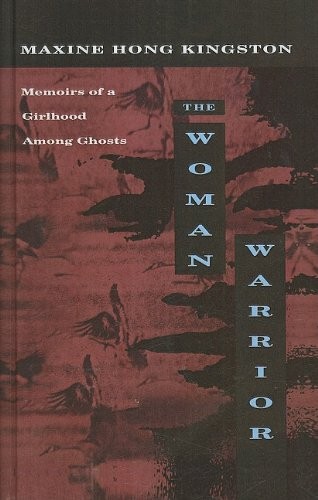
How does The Joy Luck Club compare to The Woman Warrior by Maxine Hong Kingston as a document of Chinese-American female experience? Both use fragmented structures and intergenerational stories.
- 11.
Jing-mei goes to China at the end expecting a completion she doesn't fully receive. Is the ending satisfying? What does Tan seem to be saying about whether the translation gap can ever be closed?
- 12.
The novel has been criticized by some Chinese-American critics for presenting a simplified picture of Chinese culture to Western audiences. Is that a fair critique? Does it change how you read the book?
- 13.
If you were to add a ninth voice to the novel — a granddaughter who grew up in America — what would she misunderstand about her mother and grandmother?
Themes
Frequently asked questions
-
Is The Joy Luck Club worth reading in 2026?
Yes. The novel's central concerns — intergenerational translation, the costs of immigration, mother-daughter dynamics — remain as relevant as they were in 1989. The writing is emotionally precise and the mosaic structure still rewards close reading.
-
Is The Joy Luck Club difficult to follow?
The structure is unconventional — sixteen stories told by eight narrators — and the shifts between generations and time periods require attention. Most readers find it clarifies quickly. A cheat sheet of the characters (four mother-daughter pairs) helps in the first fifty pages.
-
Is The Joy Luck Club autobiographical?
Not strictly. Tan drew on her own experience as the daughter of Chinese immigrants, and the relationship between Jing-mei and Suyuan has autobiographical echoes, but the novel is not a memoir. It is fiction using lived emotional material.
-
Should I watch the film or read the book?
Both are worthwhile. The 1993 film is one of the better literary adaptations of its era and is faithful to the novel's emotional core. However, the film necessarily simplifies the mosaic structure — if the polyphony of multiple voices is what interests you, the novel is irreplaceable.
-
Who shouldn't read The Joy Luck Club?
Readers who want a single protagonist, linear narrative, or plot-driven fiction will find the mosaic structure frustrating. The novel is also very specifically about mother-daughter dynamics; readers who find that theme overworked in contemporary fiction may not find Tan's treatment sufficiently distinctive.