The Woman Warrior: Memoirs of a Girlhood Among Ghosts by Maxine Hong Kingston is a 1976 memoir book about identity, immigration, silence. Memoir can legitimately incorporate myth and imagination without becoming fiction. Kingston's form argues that the stories we inherit and reinterpret are as much a part of our history as documented fact.
Summary
The Woman Warrior is not a conventional memoir. Published in 1976, Maxine Hong Kingston's debut book blends autobiography, Chinese folklore, and myth in a form that deliberately resists separation. The five sections move between Kingston's own childhood in Stockton, California — the daughter of Chinese immigrants running a laundry — and stories she was told, or half-told, or invented from fragments: a legendary female warrior, an aunt whose pregnancy outside marriage was a family secret, her mother's years in China as a midwife and student.
The central preoccupation is the difficulty of knowing where you come from when the stories you're given are incomplete, contradictory, or designed to keep you silent. Kingston's mother tells her "no name woman" — the story of the aunt who drowned herself in the family well — with the explicit instruction that it is never to be spoken of. Kingston speaks of it. The act of writing the book is itself a form of transgression and inheritance: claiming the right to narrate what was meant to remain hidden.
The mythological sections — particularly the warrior woman Fa Mu Lan, whose story Kingston reimagines with herself as protagonist — are not escapist interludes but structural arguments. Kingston is asking what it means to be a woman raised on stories of female strength and simultaneously told that girls are worthless. The tension between those two inheritances is what the book holds in suspension throughout.
The Woman Warrior is difficult in the way that rewards patience. Kingston's genre-blurring was disorienting to some readers in 1976 and is occasionally still misread as fiction rather than memoir. It is one of the most assigned texts in American literature courses because it forces questions about the nature of memoir itself — about the difference between facts and truth, between speaking and silence, between cultures that coexist inside one person. Those questions have not aged.
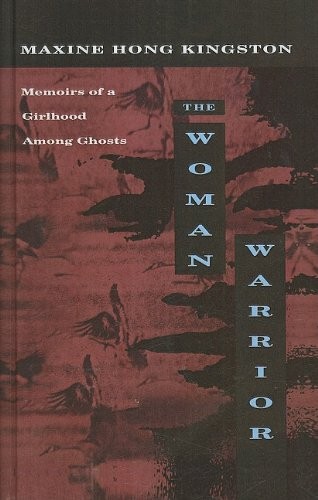
Talk to The Woman Warrior: Memoirs of a Girlhood Among Ghosts like its author wrote you back.
Get the ideas that fit your life — not generic summaries.
- Chat with the book
- Audiobook-style main ideas
- Adapts to your life and goals
- Helps you take action
Key takeaways
- 1.
Memoir can legitimately incorporate myth and imagination without becoming fiction. Kingston's form argues that the stories we inherit and reinterpret are as much a part of our history as documented fact.
- 2.
Silence is not neutral. In Kingston's account, the silences imposed on Chinese-American women — the stories left untold, the instructions not to speak — are active forms of control.
- 3.
Immigration creates a doubled consciousness that is not resolved by assimilation. Kingston is neither fully American nor fully Chinese, and the book neither mourns nor celebrates that condition — it inhabits it.
- 4.
The 'no name woman' — the aunt erased from family memory — is the book's moral anchor. Kingston's refusal to keep the silence is the most direct statement of what she believes writing is for.
- 5.
The warrior woman myth gives Kingston an image of female power that her actual community repeatedly denied her. The gap between the myth and the lived experience is where the book lives.
- 6.
Kingston's mother, Brave Orchid, is both oppressor and model — a woman of enormous capability and will who imposes on her daughter exactly the constraints she herself had to resist.
- 7.
The book demonstrates that genre categories are often cultural rather than natural. What counts as memoir, history, or fiction is shaped by whose stories are considered worth documenting.
Discussion questions
Use these on your own, with a book club, or as chat starters in Superbook. Book club version, ready to copy or print →
- 1.
Kingston blurs the line between autobiography and myth throughout the book. Did that feel like a formal experiment, a cultural argument, or a distortion? What does your answer reveal about your assumptions about memoir?
- 2.
The book opens with the story of an aunt whose name is never spoken. Why does Kingston give her a voice? What does that choice cost the family narrative, and what does it restore?
- 3.
How does Brave Orchid function in the book — as a villain, a hero, or something else entirely? What do you think Kingston wants readers to feel about her mother?
- 4.
Kingston was raised on stories of the warrior woman Fa Mu Lan and simultaneously told that girls are worthless. How does she reconcile those two inheritances, and does she fully reconcile them?
- 5.
The 'ghosts' in the subtitle refer to white Americans and also to ancestral Chinese spirits. What does that doubling reveal about Kingston's sense of belonging in both worlds?
- 6.
The book was criticized by some Chinese-American readers who felt Kingston misrepresented Chinese culture. How should we read a memoir that other members of the same community dispute?
- 7.
How does Kingston's relationship to language — English, Cantonese, silence — function as a metaphor for her larger questions about identity?
- 8.
What does the book suggest about the relationship between what mothers pass down to daughters and what daughters are able to actually receive?
- 9.
Which of the five sections felt most like traditional memoir and which felt most like myth? Did that distinction matter to your experience of reading?
- 10.
Kingston describes being silenced in school — a period of muteness, then extreme loud talking. How does that episode connect to the book's larger argument about voice and silence?
- 11.
The Woman Warrior was published almost fifty years ago. Which parts feel dated and which feel entirely current?
- 12.
If you were to write your own version of this book — blending autobiography with the myths and stories from your own family's culture — what would be the first story you'd tell?
Themes
Frequently asked questions
-
Is The Woman Warrior fiction or memoir?
Kingston calls it memoir and it is classified as nonfiction, but it deliberately blends autobiography with Chinese myth and reimagined family stories. The genre instability is the point. Kingston is arguing that the stories you inherit and transform are part of your history, not separate from it.
-
How long does it take to read The Woman Warrior?
Around four hours for the 209-page book. The prose is dense and rewards slowing down. Many readers return to sections they found confusing on a first pass and find them considerably more legible on a second.
-
Who should read The Woman Warrior?
Readers interested in questions of identity, immigration, and the relationship between culture and gender. It is an essential text for anyone studying American literature, Asian-American writing, or feminist memoir. It is also appropriate for anyone who has navigated belonging between two cultures.
-
What does 'among ghosts' mean in the title?
In Kingston's account, her immigrant parents used 'ghost' to refer to white Americans — people who seemed insubstantial and alien. The title suggests growing up in a world populated by people from both worlds who feel, in different ways, like ghosts.
-
Is The Woman Warrior difficult to read?
It can be, especially in the sections that shift without warning between autobiography and myth. Readers who approach it expecting a linear narrative will find it disorienting. Readers who let the structure accumulate and make meaning across sections will find it holds together very deliberately.
Similar books
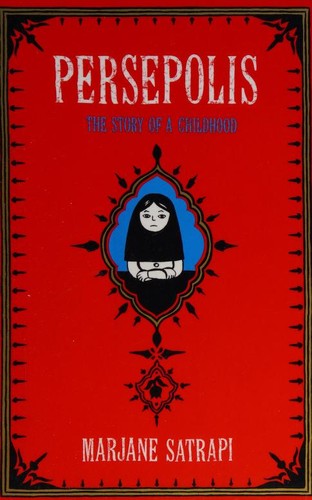
Persepolis: The Story of a Childhood
Marjane Satrapi
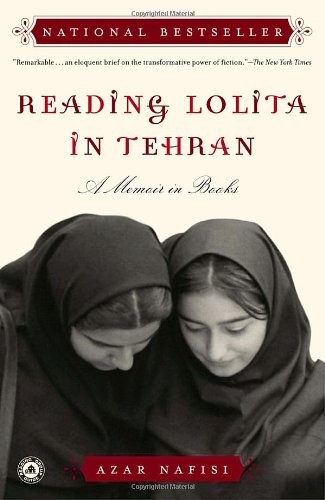
Reading Lolita in Tehran: A Memoir in Books
Azar Nafisi
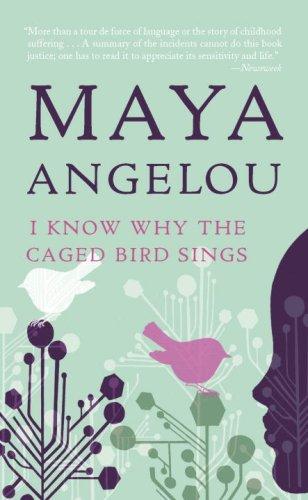
I Know Why the Caged Bird Sings
Maya Angelou
Born a Crime: Stories from a South African Childhood
Trevor Noah
