Historical fiction · Book club
The Known World book club questions
Here are 12 book club questions for The Known World by Edward P. Jones, ordered to open easily and end somewhere worth arguing about. Copy them, print them, or bring them up one at a time.
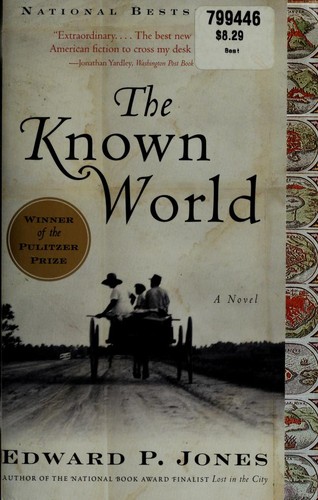
The Known World is set in antebellum Manchester County, Virginia, and concerns Henry Townsend — a formerly enslaved Black man who, after buying his freedom, becomes a slaveholder himself.
Edward P. Jones · 2003 · 8h 0m
Full summary and key takeaways →The 12 questions
- 1.
Henry Townsend was enslaved and then became a slaveholder. How does Jones ask you to understand that — as tragedy, as moral failure, as something more complicated?
- 2.
The omniscient narrator tells us what will happen to characters before they make their choices. How does that foreknowledge change how you read those choices?
- 3.
Moses, the overseer who was himself enslaved, is a deeply ambiguous figure. Is he a villain in this novel? What is Jones arguing about his behavior?
- 4.
The 'known world' of the title refers partly to a map that appears late in the novel. What does that map mean to you as a reader, and what is Jones saying about art and memory?
- 5.
How does this novel's treatment of slavery compare to Morrison's Beloved? Where does Jones land harder, and where does Morrison?
- 6.
Free Black characters in the novel hold a precarious status — subject to re-enslavement at any moment. How does Jones use their vulnerability to complicate the meaning of freedom?
- 7.
The novel covers decades in the lives of many characters. Did you find the structure panoramic and rich, or difficult to follow? How did your experience of it change as you read?
- 8.
Caldonia inherits the plantation and does not immediately free the enslaved people on it. How did you read that choice — as weakness, self-interest, something else?
- 9.
Jones spent more than a decade working on this novel. Does that show in the prose, and if so, where?
- 10.
Several white characters in the novel are portrayed with sympathy or complexity. How does Jones balance that without softening the book's moral argument?
- 11.
The ending returns to the tapestry and the map made by Alice. What work is Jones asking those objects to do?
- 12.
Would this novel be different if Jones had made Henry Townsend a white man? What is specifically lost or gained by the choice to center a Black slaveholder?
How to run the discussion
- Pick six to eight, not all of them. An hour of real discussion covers fewer questions than anyone expects, and racing the list is what makes a book club feel like homework.
- Open with what people noticed, not what they concluded. Asking for a verdict first hardens opinions before anyone has heard each other.
- Let the disagreement run. The questions below that split a room are the ones worth the time; the ones everyone answers the same way can be skipped.
- Ask the quiet person a specific question. A direct, narrow question is far easier to answer than an open invitation to contribute.
Themes worth steering toward
If the conversation stalls, these are the threads that usually restart it.
Common questions
What are good book club questions for The Known World?
Here are 12 book club questions for The Known World by Edward P. Jones, ordered to open easily and end somewhere worth arguing about. The strongest openers ask what each reader noticed rather than what they concluded, and the discussion usually turns on slavery and its moral corruption, power and its distortions, memory and consequence.
How long should a book club discussion of The Known World last?
Most groups run 60 to 90 minutes of actual discussion. That is roughly six to eight questions, not all of them, so pick the ones that suit your group rather than working down the list in order.
What are the main themes in The Known World?
Slavery and its moral corruption, Power and its distortions, Memory and consequence, Community and belonging, Freedom and its limits. Those are the threads most likely to divide a room, which makes them the useful places to steer a discussion that has gone quiet.
Picking the next one? See books like The Known World or questions for other book club picks.
