The Language Instinct by Steven Pinker is a 1994 science book about language, linguistics, evolution. Language is a biological instinct, not a cultural invention: the evidence from language acquisition, creole formation, brain damage, and cross-cultural universals all point to a specialized evolved module.
Summary
The Language Instinct is Steven Pinker's argument that language is not a cultural invention but a biological instinct — a specialized module in the human brain that evolved by natural selection, much as the eye evolved to see or the hand evolved to grasp. The book engages directly with the Standard Social Science Model, which held that the mind is largely a blank slate shaped by culture, and argues that the evidence from linguistics, neuroscience, and evolutionary biology points decisively the other way.
Pinker draws on the work of linguist Noam Chomsky — particularly the idea that all human languages share a Universal Grammar, a set of deep structural principles that children use to acquire any language from minimal input — but extends it in directions Chomsky himself would not follow. For Pinker, the existence of a universal grammar is evidence that language is a biological adaptation, shaped by selection because it conferred survival advantages on our ancestors. Chomsky resisted the adaptationist explanation; Pinker makes it the centerpiece.
The evidence Pinker marshals is diverse. Children acquire language in the same sequence across cultures regardless of the input they receive, and do so without explicit instruction. Creole languages, formed when people speaking different languages are thrown together, independently converge on similar grammatical structures. People who lose language ability through brain damage lose it in predictable, specific ways depending on what part of the brain is damaged, revealing the distinct neural architecture underlying different aspects of language. There are documented cases of language emerging spontaneously in deaf children who were never taught sign language.
Pinker is also interested in what the evolution of language tells us about human nature more broadly. Language is one of the distinctly human traits — along with theory of mind, long-term planning, and complex social cooperation — that together constitute what we mean by human nature. The Language Instinct is, among other things, an argument that human nature exists, is biologically grounded, and is worth taking seriously.
Talk to The Language Instinct like its author wrote you back.
Get the ideas that fit your life — not generic summaries.
- Chat with the book
- Audiobook-style main ideas
- Adapts to your life and goals
- Helps you take action
Key takeaways
- 1.
Language is a biological instinct, not a cultural invention: the evidence from language acquisition, creole formation, brain damage, and cross-cultural universals all point to a specialized evolved module.
- 2.
Children acquire their native language without formal instruction and despite incomplete input, suggesting they are equipped with an innate grammar acquisition device that Chomsky called Universal Grammar.
- 3.
All human languages share deep structural properties — nouns and verbs, recursive embedding of clauses, rules for agreement — that appear to reflect a universal grammatical substrate.
- 4.
Creole languages, formed when speakers of different languages must communicate, independently converge on similar grammatical structures, suggesting a universal template even when no single language is being learned.
- 5.
Brain damage produces double dissociations in language: some people lose grammar while preserving vocabulary; others lose vocabulary while preserving grammar, revealing distinct neural systems.
- 6.
Language errors — slips of the tongue, children's systematic errors in forming past tenses — reveal the rule-governed structure underlying language use and show that children are not just memorizing but computing grammar.
- 7.
Human language is uniquely recursive — sentences can be embedded inside other sentences without limit — which is what allows us to express an unlimited number of meanings from a finite vocabulary.
- 8.
The notion that language determines thought — the Sapir-Whorf hypothesis — is largely unsupported; people can think things they cannot easily express in their language, and languages can change rapidly without changing cognition.
Discussion questions
Use these on your own, with a book club, or as chat starters in Superbook. Book club version, ready to copy or print →
- 1.
Pinker argues language is a biological instinct rather than a cultural invention. What evidence in the book do you find most persuasive?
- 2.
Does the existence of a Universal Grammar change how you think about the diversity of the world's languages?
- 3.
He disagrees with Chomsky about whether language is a Darwinian adaptation. Does Chomsky's position — that language might be a byproduct of general intelligence — seem plausible to you?
- 4.
What does it mean to say that language is 'in the genes'? Does that claim seem more or less alarming than claiming that eye color is in the genes?
- 5.
The Sapir-Whorf hypothesis holds that language shapes thought. Pinker argues it is largely false. Have you had experiences that seem to support or contradict that hypothesis?
- 6.
Children's systematic errors — saying 'goed' instead of 'went' — reveal rule-following rather than memorization. What does that observation tell you about how children learn?
- 7.
Pinker makes a sustained case that human nature is real and biologically grounded. Is there a version of that claim you are comfortable with? Is there a version that worries you?
- 8.
What does the spontaneous emergence of language in deaf children who were never taught sign language tell us about where language comes from?
- 9.
Language is partly instinct and partly culture — there is a universal grammar but you still have to learn your specific language. Where exactly does the instinct end and the culture begin?
- 10.
If language is a biological adaptation, what selection pressures drove its evolution? Pinker proposes social coordination; what other hypotheses seem plausible?
- 11.
Pinker's writing is notably precise and sometimes polemical. Does his confidence about contested empirical questions strike you as appropriate or overconfident?
- 12.
How does thinking of language as a biological instinct change how you think about language learning in adults, or about communication between people with different native languages?
Themes
Frequently asked questions
-
Do I need a linguistics background to read The Language Instinct?
No. Pinker explains all linguistic concepts from scratch and writes accessibly for general readers. The book is dense in places but the argument is clear throughout. Readers with linguistics backgrounds may find some sections familiar.
-
What is the Sapir-Whorf hypothesis and does Pinker refute it?
The Sapir-Whorf hypothesis holds that the language you speak determines or strongly shapes what you can think. Pinker argues that strong versions of this hypothesis are false — people can think things they can't easily express — and that the evidence for even weak versions is limited.
-
What is Universal Grammar?
Chomsky's proposal that all human languages share deep structural properties, and that children are equipped from birth with implicit knowledge of this universal structure. Pinker accepts Universal Grammar but differs from Chomsky in arguing it is a Darwinian adaptation.
-
Is language unique to humans?
Pinker argues that while animals communicate, human language has properties — particularly recursion, the embedding of structures within structures — that are qualitatively unique. He is skeptical of claims that chimpanzees can acquire human-like language.
-
What is the most important idea in the book?
That language is a biological instinct with a specific evolved architecture, not a general-purpose cultural tool. This reframes debates about language diversity, language acquisition, and human nature in ways that cut against the blank-slate model dominant in social science.
Similar books
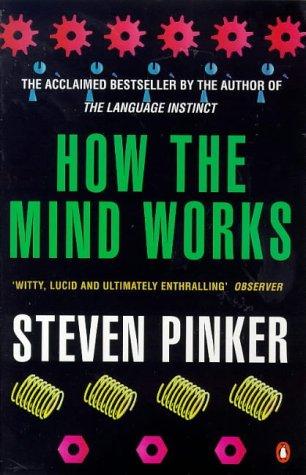
How the Mind Works
Steven Pinker

The Better Angels of Our Nature
Steven Pinker
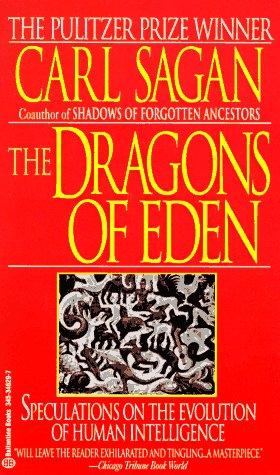
The Dragons of Eden
Carl Sagan
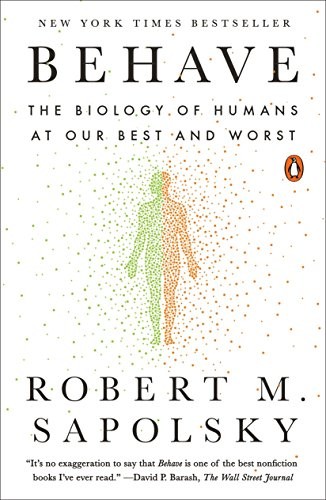
Behave: The Biology of Humans at Our Best and Worst
Robert M. Sapolsky
