Philosophy · Book club
The Language of Things book club questions
Here are 11 book club questions for The Language of Things by Deyan Sudjic, ordered to open easily and end somewhere worth arguing about. Copy them, print them, or bring them up one at a time.
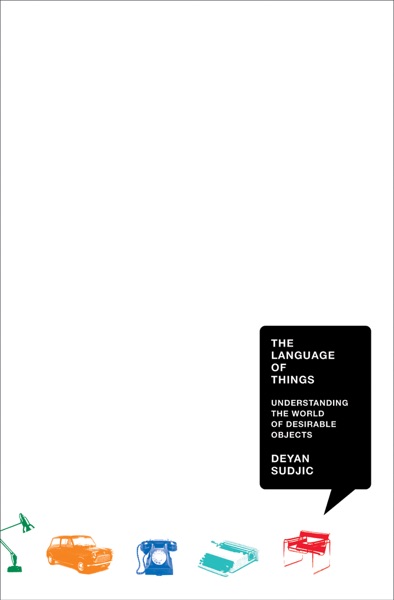
The Language of Things is Deyan Sudjic's examination of how designed objects communicate — not just what they are functionally, but what they say about identity, desire, status, and culture.
Deyan Sudjic · 2008 · 3h 15m
Full summary and key takeaways →The 11 questions
- 1.
Sudjic argues that all designed objects have a rhetoric. What does the most recently designed thing in your home say about you to someone who can read it?
- 2.
He claims modernism was not a neutral style but an ideology dressed as honesty. Do you find that convincing, or does it prove too much?
- 3.
Luxury brands are explicit about the communicative function of their goods. Is that more honest than mainstream brands who obscure it, or just more cynical?
- 4.
Sudjic traces civilian design back to military origins — watches, backpacks, clothing. Does knowing that change how you feel about the objects?
- 5.
The book argues that objects manage identity — that we use them to signal belonging or aspiration. Which objects in your own life are doing that work most visibly?
- 6.
When does designing for communication become manipulation? Is there a meaningful line between design that informs and design that seduces?
- 7.
He writes about the Design Museum's collection choices. What would belong in a museum of your current moment's design culture?
- 8.
Sudjic is deliberately essayistic rather than systematic. Does that make the book more readable or less convincing?
- 9.
The book was published in 2008. Which objects from the last fifteen years do you think most needed this kind of analysis?
- 10.
If objects communicate, what does the design of a typical smartphone communicate about how technology companies see their users?
- 11.
Sudjic identifies a gap between what something is designed to do and what it communicates. Can you think of an example where that gap is particularly large or particularly honest?
How to run the discussion
- Pick six to eight, not all of them. An hour of real discussion covers fewer questions than anyone expects, and racing the list is what makes a book club feel like homework.
- Open with what people noticed, not what they concluded. Asking for a verdict first hardens opinions before anyone has heard each other.
- Let the disagreement run. The questions below that split a room are the ones worth the time; the ones everyone answers the same way can be skipped.
- Ask the quiet person a specific question. A direct, narrow question is far easier to answer than an open invitation to contribute.
Themes worth steering toward
If the conversation stalls, these are the threads that usually restart it.
Common questions
What are good book club questions for The Language of Things?
Here are 11 book club questions for The Language of Things by Deyan Sudjic, ordered to open easily and end somewhere worth arguing about. The strongest openers ask what each reader noticed rather than what they concluded, and the discussion usually turns on design, objects and meaning, consumer culture.
How long should a book club discussion of The Language of Things last?
Most groups run 60 to 90 minutes of actual discussion. That is roughly six to eight questions, not all of them, so pick the ones that suit your group rather than working down the list in order.
What are the main themes in The Language of Things?
Design, Objects and meaning, Consumer culture, Luxury and desire, Semiotics of design. Those are the threads most likely to divide a room, which makes them the useful places to steer a discussion that has gone quiet.
Picking the next one? See books like The Language of Things or questions for other book club picks.
