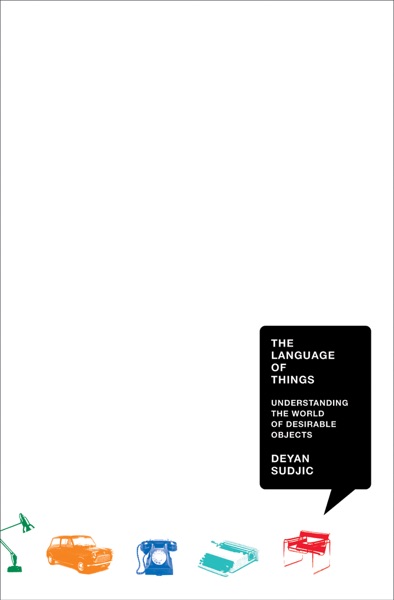
Talk to The Language of Things like its author wrote you back.
Get the ideas that fit your life — not generic summaries.
- Chat with the book
- Audiobook-style main ideas
- Adapts to your life and goals
- Helps you take action
What it argues
The Language of Things is Deyan Sudjic's examination of how designed objects communicate — not just what they are functionally, but what they say about identity, desire, status, and culture. Sudjic, the longtime director of the Design Museum in London, draws on decades of writing about design to argue that objects have a rhetoric, and that understanding it changes how you see the things around you.
The book moves through a series of lenses. Fashion and luxury goods establish a baseline: these are objects where the communicative function is openly acknowledged. A Hermès bag is not primarily about carrying things. Sudjic extends the analysis to objects where the rhetorical dimension is less obvious — modernist furniture, mass-market electronics, military hardware, cars, architecture. In each case he asks: what is this object claiming about the person who owns or uses it, and how does its design make that claim?
What it gets right
- 1.
Every designed object communicates something beyond its function. Understanding that communication is a form of literacy that changes how you experience the built environment.
- 2.
Luxury goods are the most honest about this: nobody pretends a Hermès bag is primarily about carrying things. The communicative function is the point.
- 3.
Modernism embedded a rhetoric in its aesthetic: honesty, democracy, anti-ornament. That rhetoric is no less a style or a claim than the rococo it displaced.
What it covers
Who wrote it
Deyan Sudjic is a British architecture and design critic who has served as director of the Design Museum in London since 2006. He was previously editor of Domus magazine and director of the Venice Architecture Biennale. He has written extensively on architecture, design, and urban culture, including books on Norman Foster, Rem Koolhaas, and the architecture of power. The Language of Things, published in 2008, draws on his decades of observation at the intersection of design, commerce, and identity to construct a readable semiotics of the designed world.
