Self-help · Book club
The Latte Factor book club questions
Here are 11 book club questions for The Latte Factor by David Bach, ordered to open easily and end somewhere worth arguing about. Copy them, print them, or bring them up one at a time.
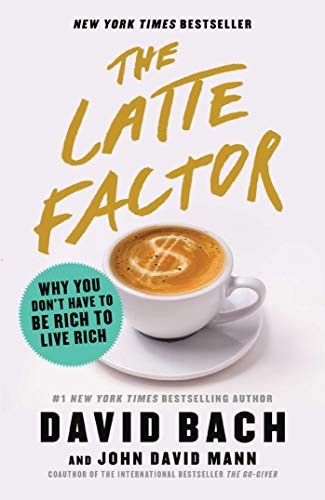
The Latte Factor is David Bach's parable-style retelling of his central financial concept, structured as a story following Zoey, a young woman who meets an older mentor in a New York coffee shop and over several days learns the principles Bach has been teaching for decades.
David Bach · 2019 · 2h 15m
Full summary and key takeaways →The 11 questions
- 1.
The Latte Factor as a concept has provoked intense debate — some find it empowering, others find it dismissive of structural economic problems. What's your honest reaction to the core argument?
- 2.
Bach says most people can find their own Latte Factor by tracking spending for a week. What did you spend on automatic, unthinking purchases in the last week?
- 3.
The parable format — following Zoey over several days — is designed to create emotional identification with the character's learning process. Did it work for you? Does fictional framing make financial principles more or less persuasive?
- 4.
The book is deliberately incomplete on implementation. Does that work as a design choice — creating motivation without overwhelming — or does it leave readers without what they actually need?
- 5.
Bach's critics argue that telling people to skip lattes to afford retirement misdirects attention from systemic issues like wages, healthcare costs, and student debt. How do you weigh individual behavior change against structural factors in personal finance?
- 6.
If you calculated your own Latte Factor — your equivalent small daily expense — redirected to investment for 30 years, what would the number be? And what would you actually have to give up to redirect it?
- 7.
The mentor in the story models a life that seems possible rather than glamorous — he is comfortable, free, and has time. Is that vision of financial success more motivating than the aspirational wealth-display narratives more common in financial media?
- 8.
Bach argues that automation is more powerful than willpower. In what financial area of your life would automation produce the biggest improvement with the least effort?
- 9.
The book ends with Zoey making a specific decision about her financial situation. What specific decision would a version of that conversation inspire you to make in your own life?
- 10.
The Latte Factor was first articulated in The Automatic Millionaire (2003). The concept has been discussed for over twenty years. What does its longevity in financial discourse tell you about why it resonates, and why it also provokes resistance?
- 11.
Bach chose a parable format rather than a how-to guide. What other financial books have you read that successfully used narrative or story to teach financial principles, and what made them work?
How to run the discussion
- Pick six to eight, not all of them. An hour of real discussion covers fewer questions than anyone expects, and racing the list is what makes a book club feel like homework.
- Open with what people noticed, not what they concluded. Asking for a verdict first hardens opinions before anyone has heard each other.
- Let the disagreement run. The questions below that split a room are the ones worth the time; the ones everyone answers the same way can be skipped.
- Ask the quiet person a specific question. A direct, narrow question is far easier to answer than an open invitation to contribute.
Themes worth steering toward
If the conversation stalls, these are the threads that usually restart it.
Common questions
What are good book club questions for The Latte Factor?
Here are 11 book club questions for The Latte Factor by David Bach, ordered to open easily and end somewhere worth arguing about. The strongest openers ask what each reader noticed rather than what they concluded, and the discussion usually turns on small savings, compounding, conscious spending.
How long should a book club discussion of The Latte Factor last?
Most groups run 60 to 90 minutes of actual discussion. That is roughly six to eight questions, not all of them, so pick the ones that suit your group rather than working down the list in order.
What are the main themes in The Latte Factor?
Small savings, Compounding, Conscious spending, Financial awakening, Pay yourself first. Those are the threads most likely to divide a room, which makes them the useful places to steer a discussion that has gone quiet.
Picking the next one? See books like The Latte Factor or questions for other book club picks.
