Business · Book club
The Leadership Pipeline book club questions
Here are 11 book club questions for The Leadership Pipeline by Ram Charan, Stephen Drotter, and James Noel, ordered to open easily and end somewhere worth arguing about. Copy them, print them, or bring them up one at a time.
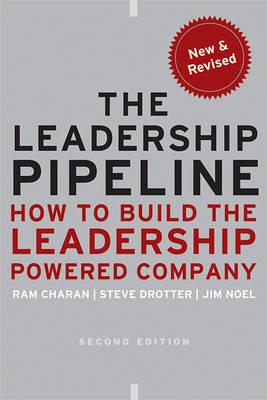
The Leadership Pipeline describes a framework for how leaders develop through six distinct career passages, each requiring a fundamental shift in time application, work values, and skill requirements.
Ram Charan, Stephen Drotter, and James Noel · 2000 · 5h 0m
Full summary and key takeaways →The 11 questions
- 1.
Which passage in the pipeline model best describes where you are now? What does the model say you should be valuing that you aren't yet?
- 2.
Think of a manager you've seen fail. Looking back, which passage were they clogged in, and what made it hard to see at the time?
- 3.
The model assumes people want to move up the pipeline. What does it mean for someone who is genuinely content at their current level?
- 4.
GE's talent management system is the implicit backdrop here. How much of the framework transfers to smaller organizations or ones with flatter structures?
- 5.
How does your organization currently assess whether someone has completed a passage, rather than simply served time in a role?
- 6.
The authors argue that functional managers must learn to value the whole business, not just their own function. What does that actually look like in practice?
- 7.
First-time managers are often told to delegate but rarely helped to see why they still do individual work. What emotional or cultural factors keep people doing the work of the level below?
- 8.
Enterprise leaders work primarily through context-setting and culture. What does that mean concretely, and how would you know if someone was doing it well or poorly?
- 9.
The framework is largely built on GE in the 1970s. What aspects of modern knowledge work — remote teams, flat hierarchies, project-based roles — does it fail to account for?
- 10.
If you were designing a leadership development program using this framework, what would you do differently from what your current organization does?
- 11.
The book treats readiness for each passage as something that can be assessed and developed. Is that realistic, or are some transitions primarily a matter of temperament?
How to run the discussion
- Pick six to eight, not all of them. An hour of real discussion covers fewer questions than anyone expects, and racing the list is what makes a book club feel like homework.
- Open with what people noticed, not what they concluded. Asking for a verdict first hardens opinions before anyone has heard each other.
- Let the disagreement run. The questions below that split a room are the ones worth the time; the ones everyone answers the same way can be skipped.
- Ask the quiet person a specific question. A direct, narrow question is far easier to answer than an open invitation to contribute.
Themes worth steering toward
If the conversation stalls, these are the threads that usually restart it.
Common questions
What are good book club questions for The Leadership Pipeline?
Here are 11 book club questions for The Leadership Pipeline by Ram Charan, Stephen Drotter, and James Noel, ordered to open easily and end somewhere worth arguing about. The strongest openers ask what each reader noticed rather than what they concluded, and the discussion usually turns on leadership development, succession planning, management.
How long should a book club discussion of The Leadership Pipeline last?
Most groups run 60 to 90 minutes of actual discussion. That is roughly six to eight questions, not all of them, so pick the ones that suit your group rather than working down the list in order.
What are the main themes in The Leadership Pipeline?
Leadership development, Succession planning, Management, Organizational design, Career transitions. Those are the threads most likely to divide a room, which makes them the useful places to steer a discussion that has gone quiet.
Picking the next one? See books like The Leadership Pipeline or questions for other book club picks.
