Business · Book club
The Lean Startup book club questions
Here are 12 book club questions for The Lean Startup by Eric Ries, ordered to open easily and end somewhere worth arguing about. Copy them, print them, or bring them up one at a time.
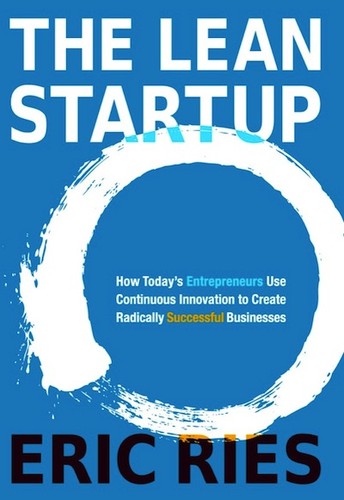
The Lean Startup is Eric Ries's argument that the biggest cause of startup failure is not building the wrong product — it's spending months or years building something before finding out whether anyone wants it.
Eric Ries · 2011 · 5h 0m
Full summary and key takeaways →The 12 questions
- 1.
Ries argues that the biggest waste in startups is building the wrong thing. Where in your own work — or life — are you executing carefully on an untested assumption?
- 2.
Think of an MVP you could build for a project you're working on right now. What is the single riskiest assumption it needs to test?
- 3.
What is the difference between a pivot and giving up? Has a project you abandoned ever been one when it should have been the other?
- 4.
Ries distinguishes vanity metrics from actionable ones. Which metric in your current work feels important but probably isn't telling you what you think it is?
- 5.
The book argues that a failed experiment is not a failure if it produces validated learning. Does the culture you work in actually treat it that way?
- 6.
Innovation accounting asks you to establish a baseline, then show improvement toward an ideal. What would that baseline look like for something you're trying to change?
- 7.
Ries claims that writing a business plan creates false confidence in predictions that can't yet be tested. When has a plan you wrote turned out to be more fiction than forecast?
- 8.
The five whys technique is meant to connect symptoms to root causes. Think of a recurring problem in your work. What does five layers of 'why' reveal?
- 9.
Which growth engine — sticky, viral, or paid — does a business you're familiar with actually rely on? Does its strategy match that engine?
- 10.
Ries says startups should be willing to pivot but not let that become an excuse for constant thrashing. How do you tell the difference in practice?
- 11.
The book was written for Silicon Valley software startups in 2011. Which ideas translate well to your context, and which require significant adjustment?
- 12.
If you had to apply the build-measure-learn loop to one non-business area of your life — a relationship, a health habit, a skill — how would you design the experiment?
How to run the discussion
- Pick six to eight, not all of them. An hour of real discussion covers fewer questions than anyone expects, and racing the list is what makes a book club feel like homework.
- Open with what people noticed, not what they concluded. Asking for a verdict first hardens opinions before anyone has heard each other.
- Let the disagreement run. The questions below that split a room are the ones worth the time; the ones everyone answers the same way can be skipped.
- Ask the quiet person a specific question. A direct, narrow question is far easier to answer than an open invitation to contribute.
Themes worth steering toward
If the conversation stalls, these are the threads that usually restart it.
Common questions
What are good book club questions for The Lean Startup?
Here are 12 book club questions for The Lean Startup by Eric Ries, ordered to open easily and end somewhere worth arguing about. The strongest openers ask what each reader noticed rather than what they concluded, and the discussion usually turns on entrepreneurship, validated learning, innovation.
How long should a book club discussion of The Lean Startup last?
Most groups run 60 to 90 minutes of actual discussion. That is roughly six to eight questions, not all of them, so pick the ones that suit your group rather than working down the list in order.
What are the main themes in The Lean Startup?
Entrepreneurship, Validated learning, Innovation, Iteration, Product development. Those are the threads most likely to divide a room, which makes them the useful places to steer a discussion that has gone quiet.
Picking the next one? See books like The Lean Startup or questions for other book club picks.
