Memoir · Book club
The Liars' Club book club questions
Here are 11 book club questions for The Liars' Club by Mary Karr, ordered to open easily and end somewhere worth arguing about. Copy them, print them, or bring them up one at a time.
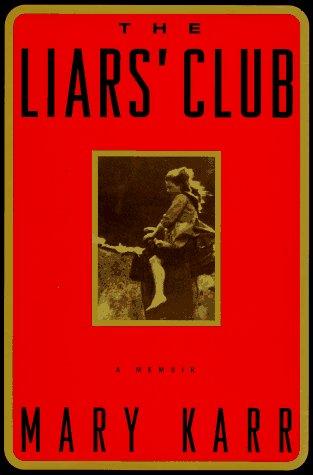
Mary Karr's debut memoir about growing up in the oil-refinery town of Leechfield, Texas in the 1960s is widely credited with sparking the memoir boom of the 1990s.
Mary Karr · 1995 · 6h 0m
Full summary and key takeaways →The 11 questions
- 1.
Karr describes both parents with complexity and apparent love despite the damage they caused. Do you find that balance convincing, or does it sometimes feel forced?
- 2.
The memoir withholds the worst incident until the final chapters. Does that structural choice feel honest or manipulative? Does the distinction matter?
- 3.
What does the Liars' Club — the storytelling group — represent in the book? Is it purely nostalgic, or does Karr see something complicated in it?
- 4.
Karr's prose is highly stylized, drawing on oral tradition and regional speech. Does the style feel appropriate to the material, or does literary language create a distance from the rawness?
- 5.
The book opens with a scene whose full meaning only becomes clear at the end. Did that structure affect how you read the early chapters on rereading or reflection?
- 6.
How does the memoir handle the difference between what Karr experienced as a child and what she understands as an adult narrator?
- 7.
Charlie, the mother, is a deeply ambivalent figure. How does Karr avoid either pathologizing her or excusing her?
- 8.
The book is set in a specific class context — oil-refinery Texas in the 1960s. How much does class shape the story versus how much is the story universal?
- 9.
The Liars' Club is often credited with starting the memoir boom. What about it might have made other writers think: I can do that with my life?
- 10.
How does Karr handle the ethics of writing about living people — her parents, her sister — who had no control over how they were portrayed?
- 11.
The book ends with a kind of reconciliation scene. Does it feel earned?
How to run the discussion
- Pick six to eight, not all of them. An hour of real discussion covers fewer questions than anyone expects, and racing the list is what makes a book club feel like homework.
- Open with what people noticed, not what they concluded. Asking for a verdict first hardens opinions before anyone has heard each other.
- Let the disagreement run. The questions below that split a room are the ones worth the time; the ones everyone answers the same way can be skipped.
- Ask the quiet person a specific question. A direct, narrow question is far easier to answer than an open invitation to contribute.
Themes worth steering toward
If the conversation stalls, these are the threads that usually restart it.
Common questions
What are good book club questions for The Liars' Club?
Here are 11 book club questions for The Liars' Club by Mary Karr, ordered to open easily and end somewhere worth arguing about. The strongest openers ask what each reader noticed rather than what they concluded, and the discussion usually turns on family, trauma, texas.
How long should a book club discussion of The Liars' Club last?
Most groups run 60 to 90 minutes of actual discussion. That is roughly six to eight questions, not all of them, so pick the ones that suit your group rather than working down the list in order.
What are the main themes in The Liars' Club?
Family, Trauma, Texas, Memory, Survival. Those are the threads most likely to divide a room, which makes them the useful places to steer a discussion that has gone quiet.
Picking the next one? See books like The Liars' Club or questions for other book club picks.
