Self-help · Book club
The Life-Changing Magic of Tidying Up book club questions
Here are 12 book club questions for The Life-Changing Magic of Tidying Up by Marie Kondo, ordered to open easily and end somewhere worth arguing about. Copy them, print them, or bring them up one at a time.
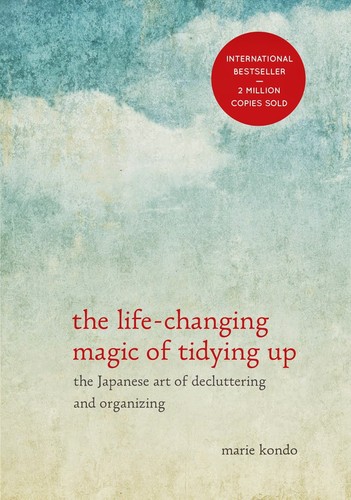
Marie Kondo's premise is that disorganization is not a logistics problem but a decision problem.
Marie Kondo · 2014 · 3h 15m
Full summary and key takeaways →The 12 questions
- 1.
Kondo argues that clutter is accumulated decision avoidance. What category of possessions in your home has the most unresolved decisions in it?
- 2.
Have you ever experienced the clarity she describes after clearing a space? What changed in how you used the room?
- 3.
The 'spark joy' criterion works well for some items and feels awkward for others. Where does it break down for you?
- 4.
Kondo recommends doing the full process once rather than tidying incrementally. What would it take to actually commit to that in your home?
- 5.
What's the object you've held onto longest that you know you don't need? What's the story behind keeping it?
- 6.
Her approach is deeply individual — she resists tidying someone else's possessions on their behalf. What does that suggest about the limits of organizing for a household rather than just yourself?
- 7.
The book claims tidying changes your relationship to your career and your future. Do you believe that, or does it feel overstated?
- 8.
How do shared spaces — a home with a partner, children, or roommates — interact with a method built around individual joy?
- 9.
Kondo's category sequence puts sentimental items last. What's the logic, and do you think that ordering matters?
- 10.
Many people report rebound — decluttering and then gradually re-accumulating. What does Kondo say causes this, and do you find her explanation convincing?
- 11.
What would your home look like if every object in it had been chosen deliberately rather than accumulated by default?
- 12.
The KonMari method has been called both liberating and privileged — keeping only what sparks joy is easier when you can afford to replace things. How does that critique land for you?
How to run the discussion
- Pick six to eight, not all of them. An hour of real discussion covers fewer questions than anyone expects, and racing the list is what makes a book club feel like homework.
- Open with what people noticed, not what they concluded. Asking for a verdict first hardens opinions before anyone has heard each other.
- Let the disagreement run. The questions below that split a room are the ones worth the time; the ones everyone answers the same way can be skipped.
- Ask the quiet person a specific question. A direct, narrow question is far easier to answer than an open invitation to contribute.
Themes worth steering toward
If the conversation stalls, these are the threads that usually restart it.
Common questions
What are good book club questions for The Life-Changing Magic of Tidying Up?
Here are 12 book club questions for The Life-Changing Magic of Tidying Up by Marie Kondo, ordered to open easily and end somewhere worth arguing about. The strongest openers ask what each reader noticed rather than what they concluded, and the discussion usually turns on decluttering, minimalism, simplicity.
How long should a book club discussion of The Life-Changing Magic of Tidying Up last?
Most groups run 60 to 90 minutes of actual discussion. That is roughly six to eight questions, not all of them, so pick the ones that suit your group rather than working down the list in order.
What are the main themes in The Life-Changing Magic of Tidying Up?
Decluttering, Minimalism, Simplicity, Space, Intentionality. Those are the threads most likely to divide a room, which makes them the useful places to steer a discussion that has gone quiet.
Picking the next one? See books like The Life-Changing Magic of Tidying Up or questions for other book club picks.
