Economics · Book club
The Little Book of Behavioral Investing book club questions
Here are 12 book club questions for The Little Book of Behavioral Investing by James Montier, ordered to open easily and end somewhere worth arguing about. Copy them, print them, or bring them up one at a time.
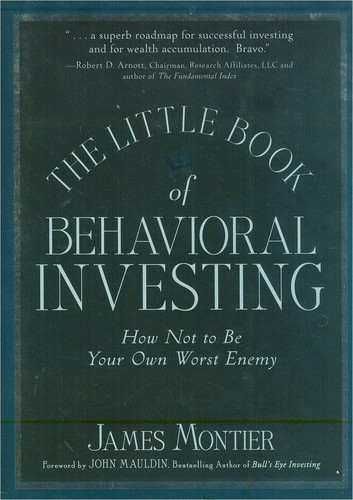
The Little Book of Behavioral Investing is James Montier's tour through the cognitive traps that cause intelligent, well-intentioned investors to consistently underperform.
James Montier · 2010 · 3h 15m
Full summary and key takeaways →The 12 questions
- 1.
Montier argues that more information can make decisions worse, not better. Where in your own life have you seen that pattern?
- 2.
What reference point anchors your thinking about a major financial decision you've made or are considering? How much does that anchor actually matter?
- 3.
Can you recall an investment or financial decision that looked obviously right in retrospect that wasn't actually obvious at the time? How has hindsight shaped how you remember it?
- 4.
Montier argues that even professional investors are systematically overconfident. How would you test whether you're overconfident in an area of expertise you care about?
- 5.
The book describes herding as rational at the individual level but destructive at the group level. Have you made a financial or professional decision primarily because it was the consensus view?
- 6.
Montier recommends pre-mortems before major decisions. Would you actually be willing to do one, and what would make you resist it?
- 7.
Which bias do you think affects your financial decisions most — overconfidence, anchoring, loss aversion, or herding? What evidence supports your answer?
- 8.
The book argues that process constraints work better than discipline. What's an area of your decision-making where you've successfully designed a process to fight a tendency you know you have?
- 9.
How do you distinguish between a conviction that is genuinely contrarian and one that is simply contrarian for its own sake?
- 10.
Montier notes that knowing about a bias doesn't prevent you from falling for it. What do you think is actually required to change a deep decision-making habit?
- 11.
The book treats emotion in investing primarily as a liability. Are there cases where emotional signals carry useful information?
- 12.
Which of Montier's proposed solutions — checklists, pre-mortems, explicit process rules — do you think would be most useful in your own financial decision-making?
How to run the discussion
- Pick six to eight, not all of them. An hour of real discussion covers fewer questions than anyone expects, and racing the list is what makes a book club feel like homework.
- Open with what people noticed, not what they concluded. Asking for a verdict first hardens opinions before anyone has heard each other.
- Let the disagreement run. The questions below that split a room are the ones worth the time; the ones everyone answers the same way can be skipped.
- Ask the quiet person a specific question. A direct, narrow question is far easier to answer than an open invitation to contribute.
Themes worth steering toward
If the conversation stalls, these are the threads that usually restart it.
Common questions
What are good book club questions for The Little Book of Behavioral Investing?
Here are 12 book club questions for The Little Book of Behavioral Investing by James Montier, ordered to open easily and end somewhere worth arguing about. The strongest openers ask what each reader noticed rather than what they concluded, and the discussion usually turns on behavioral finance, cognitive biases, investment psychology.
How long should a book club discussion of The Little Book of Behavioral Investing last?
Most groups run 60 to 90 minutes of actual discussion. That is roughly six to eight questions, not all of them, so pick the ones that suit your group rather than working down the list in order.
What are the main themes in The Little Book of Behavioral Investing?
Behavioral finance, Cognitive biases, Investment psychology, Decision-making, Self-awareness. Those are the threads most likely to divide a room, which makes them the useful places to steer a discussion that has gone quiet.
Picking the next one? See books like The Little Book of Behavioral Investing or questions for other book club picks.
