Economics · Book club
The Little Book of Common Sense Investing book club questions
Here are 12 book club questions for The Little Book of Common Sense Investing by John C. Bogle, ordered to open easily and end somewhere worth arguing about. Copy them, print them, or bring them up one at a time.
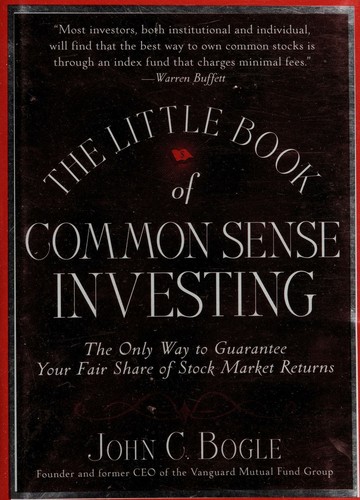
The Little Book of Common Sense Investing is John Bogle's concise case for why buying the entire stock market through a low-cost index fund is the most rational investment strategy available to most people.
John C. Bogle · 2007 · 3h 15m
Full summary and key takeaways →The 12 questions
- 1.
Bogle's arithmetic argument — that all investors collectively earn the market return before costs — is logically inescapable. Why do you think so many people remain convinced they can beat it?
- 2.
What are the actual total costs of your current investments, including management fees, advisor fees, and any transaction costs? Have you ever calculated the long-run impact of those costs?
- 3.
Bogle argues that the investment industry as a whole transfers wealth from investors to itself through fees. Do you think that's an accurate characterization, or is there genuine value being provided?
- 4.
The book was written in 2007. Has the index fund revolution Bogle advocated for actually changed the landscape, or is the industry still structured the same way?
- 5.
Stay the course is Bogle's central behavioral advice. Have you ever sold investments during a market downturn and then watched the market recover without you? What drove that decision?
- 6.
If the evidence for index funds is this clear, why do you think intelligent, educated people still choose active management for a significant portion of their investments?
- 7.
Bogle is dismissive of bond index funds in this book and recommends holding individual bonds. Does that position still make sense to you given current market conditions?
- 8.
The argument applies to most investors most of the time, but Bogle acknowledges exceptions. What characteristics would an investor need to have a genuine edge in active stock selection?
- 9.
How do you think about the role of your investment costs as part of your overall financial plan? Have you optimized costs, or have you focused mainly on returns and diversification?
- 10.
Bogle's approach produces the market return minus a very small cost. Is that satisfying to you emotionally, or does the possibility of beating the market exert a pull even when you intellectually accept the argument?
- 11.
What would change in your investment behavior if you fully accepted Bogle's thesis that identifying future outperforming fund managers is, for most people, not achievable?
- 12.
The book is built around public equity markets. How do Bogle's arguments apply or not apply to other asset classes — private equity, real estate, crypto, alternative investments?
How to run the discussion
- Pick six to eight, not all of them. An hour of real discussion covers fewer questions than anyone expects, and racing the list is what makes a book club feel like homework.
- Open with what people noticed, not what they concluded. Asking for a verdict first hardens opinions before anyone has heard each other.
- Let the disagreement run. The questions below that split a room are the ones worth the time; the ones everyone answers the same way can be skipped.
- Ask the quiet person a specific question. A direct, narrow question is far easier to answer than an open invitation to contribute.
Themes worth steering toward
If the conversation stalls, these are the threads that usually restart it.
Common questions
What are good book club questions for The Little Book of Common Sense Investing?
Here are 12 book club questions for The Little Book of Common Sense Investing by John C. Bogle, ordered to open easily and end somewhere worth arguing about. The strongest openers ask what each reader noticed rather than what they concluded, and the discussion usually turns on index investing, costs and fees, long-term returns.
How long should a book club discussion of The Little Book of Common Sense Investing last?
Most groups run 60 to 90 minutes of actual discussion. That is roughly six to eight questions, not all of them, so pick the ones that suit your group rather than working down the list in order.
What are the main themes in The Little Book of Common Sense Investing?
Index investing, Costs and fees, Long-term returns, Market efficiency, Investment simplicity. Those are the threads most likely to divide a room, which makes them the useful places to steer a discussion that has gone quiet.
Picking the next one? See books like The Little Book of Common Sense Investing or questions for other book club picks.
