Economics · Book club
The Little Book That Still Beats the Market book club questions
Here are 11 book club questions for The Little Book That Still Beats the Market by Joel Greenblatt, ordered to open easily and end somewhere worth arguing about. Copy them, print them, or bring them up one at a time.
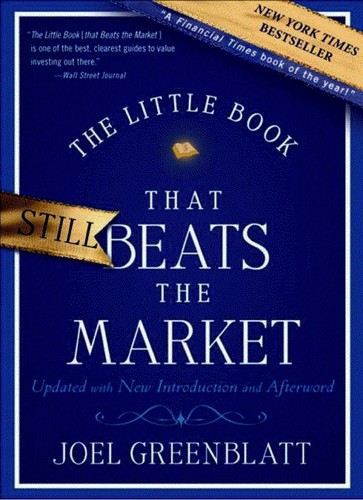
The Little Book That Still Beats the Market is Joel Greenblatt's attempt to distill value investing into a two-variable formula that any individual investor can run.
Joel Greenblatt · 2010 · 2h 15m
Full summary and key takeaways →The 11 questions
- 1.
Greenblatt admits the formula underperformed the market for years at a time in his back-test. Could you hold a mechanical strategy for three years of underperformance without abandoning it? What would make that possible?
- 2.
The magic formula ranks stocks by two variables — earnings yield and return on capital. What variables is it ignoring, and does that concern you?
- 3.
Greenblatt wrote the book partly to teach his children about investing. Does the simplicity he aimed for help or hurt the formula's credibility to you?
- 4.
If many investors use the magic formula, does the edge disappear? How should you think about a strategy that is documented in a bestselling book?
- 5.
Return on capital measures business quality. Can you think of industries where high return on capital is durable versus industries where it quickly attracts competition and erodes?
- 6.
The formula ignores qualitative factors like management quality or industry trends. Are there cases where those factors would clearly override what the formula says?
- 7.
Greenblatt's approach requires buying roughly 20-30 stocks per year and selling them a year later. What are the tax implications of that turnover rate for most investors?
- 8.
The book was written for retail investors, but institutional investors have more data and computing power. Does that change the calculus on whether the formula still works?
- 9.
Greenblatt says most investors can't maintain discipline through underperformance. What does that say about whether passive index investing is a better fit for most people than active formulas?
- 10.
How would you evaluate whether the magic formula is still working if you used it? What evidence would you need to see before abandoning it?
- 11.
The formula treats all companies with similar rankings equally regardless of sector. Does sector neutrality seem like a feature or a limitation to you?
How to run the discussion
- Pick six to eight, not all of them. An hour of real discussion covers fewer questions than anyone expects, and racing the list is what makes a book club feel like homework.
- Open with what people noticed, not what they concluded. Asking for a verdict first hardens opinions before anyone has heard each other.
- Let the disagreement run. The questions below that split a room are the ones worth the time; the ones everyone answers the same way can be skipped.
- Ask the quiet person a specific question. A direct, narrow question is far easier to answer than an open invitation to contribute.
Themes worth steering toward
If the conversation stalls, these are the threads that usually restart it.
Common questions
What are good book club questions for The Little Book That Still Beats the Market?
Here are 11 book club questions for The Little Book That Still Beats the Market by Joel Greenblatt, ordered to open easily and end somewhere worth arguing about. The strongest openers ask what each reader noticed rather than what they concluded, and the discussion usually turns on value investing, quantitative investing, stock screening.
How long should a book club discussion of The Little Book That Still Beats the Market last?
Most groups run 60 to 90 minutes of actual discussion. That is roughly six to eight questions, not all of them, so pick the ones that suit your group rather than working down the list in order.
What are the main themes in The Little Book That Still Beats the Market?
Value investing, Quantitative investing, Stock screening, Return on capital, Investment discipline. Those are the threads most likely to divide a room, which makes them the useful places to steer a discussion that has gone quiet.
Picking the next one? See books like The Little Book That Still Beats the Market or questions for other book club picks.
