Health · Book club
The Longevity Paradox book club questions
Here are 12 book club questions for The Longevity Paradox by Steven R. Gundry, ordered to open easily and end somewhere worth arguing about. Copy them, print them, or bring them up one at a time.
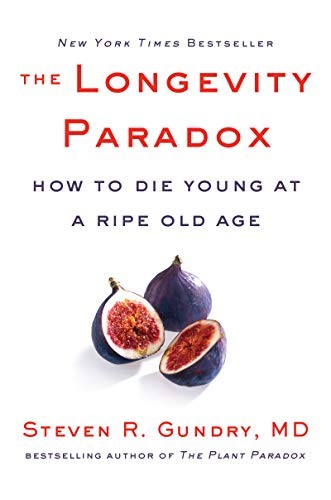
Steven Gundry is a cardiac surgeon turned functional medicine physician who built his practice around the hypothesis that gut microbiome health is the central driver of aging and age-related disease.
Steven R. Gundry · 2019 · 5h 0m
Full summary and key takeaways →The 12 questions
- 1.
Gundry's lectin hypothesis is contested within mainstream nutrition science. How do you evaluate a dietary theory that has clinical advocates but limited randomized trial evidence?
- 2.
The Blue Zones paradox — that populations eating what seem like lectin-rich diets have exceptional longevity — is central to Gundry's argument. Does his explanation for it satisfy you?
- 3.
How does framing aging as an inflammatory disease rather than simple cellular deterioration change what interventions seem worth pursuing?
- 4.
Gundry's dietary protocols are complex and exclusionary. At what point does the precision of a dietary intervention become impractical for most people?
- 5.
The gut microbiome research Gundry draws on is real and growing. Which parts of the microbiome-inflammation-longevity argument do you find most solidly supported?
- 6.
Gundry sells supplements and runs a clinical practice. How does that context affect how you weigh his recommendations?
- 7.
The book proposes that many common foods — legumes, tomatoes, whole grains — may be harmful in the way conventional wisdom has said they're beneficial. What standard of evidence would you need to actually change your diet based on that claim?
- 8.
Cold exposure, intermittent fasting, and specific supplements appear alongside the dietary recommendations. How do you prioritize which interventions to try first when the list is long?
- 9.
What's the difference between chronic low-grade inflammation and the acute inflammation that heals injuries? How does the distinction change how you think about anti-inflammatory diets?
- 10.
Traditional food preparation practices — fermenting, soaking, long-cooking — appear throughout the book as ways to neutralize harmful compounds. What was lost when industrial food processing replaced those methods?
- 11.
If gut microbiome health drives aging, what would a practical maintenance protocol look like over a lifetime — in your twenties, your forties, your sixties?
- 12.
How much weight do you give to Gundry's clinical experience with thousands of patients compared to published randomized controlled trials in evaluating his recommendations?
How to run the discussion
- Pick six to eight, not all of them. An hour of real discussion covers fewer questions than anyone expects, and racing the list is what makes a book club feel like homework.
- Open with what people noticed, not what they concluded. Asking for a verdict first hardens opinions before anyone has heard each other.
- Let the disagreement run. The questions below that split a room are the ones worth the time; the ones everyone answers the same way can be skipped.
- Ask the quiet person a specific question. A direct, narrow question is far easier to answer than an open invitation to contribute.
Themes worth steering toward
If the conversation stalls, these are the threads that usually restart it.
Common questions
What are good book club questions for The Longevity Paradox?
Here are 12 book club questions for The Longevity Paradox by Steven R. Gundry, ordered to open easily and end somewhere worth arguing about. The strongest openers ask what each reader noticed rather than what they concluded, and the discussion usually turns on longevity, gut microbiome, inflammation.
How long should a book club discussion of The Longevity Paradox last?
Most groups run 60 to 90 minutes of actual discussion. That is roughly six to eight questions, not all of them, so pick the ones that suit your group rather than working down the list in order.
What are the main themes in The Longevity Paradox?
Longevity, Gut microbiome, Inflammation, Diet, Aging. Those are the threads most likely to divide a room, which makes them the useful places to steer a discussion that has gone quiet.
Picking the next one? See books like The Longevity Paradox or questions for other book club picks.
