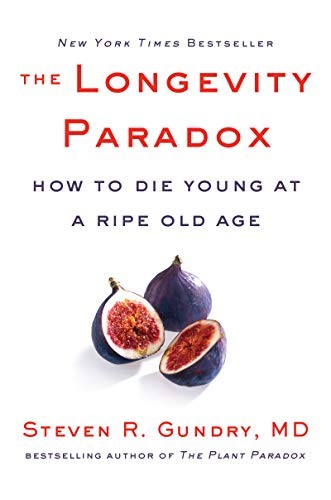
The Longevity Paradox by Steven R. Gundry is a 2019 health book about longevity, gut microbiome, inflammation. Aging and age-related disease, in Gundry's model, are primarily driven by gut microbiome disruption and the chronic systemic inflammation that results from it.
Summary
Steven Gundry is a cardiac surgeon turned functional medicine physician who built his practice around the hypothesis that gut microbiome health is the central driver of aging and age-related disease. The Longevity Paradox extends his earlier argument from The Plant Paradox — that certain plant compounds called lectins are harmful — into a theory of aging. The paradox in the title is his observation that the centenarians studied in Blue Zones and similar populations often eat diets that, by conventional measures, should be unhealthy, yet live unusually long lives. Gundry's explanation is that it's not what they eat but what their gut bacteria do with what they eat that matters.
The book's core argument is that aging is primarily driven by two interconnected processes: gut microbiome disruption and the resulting systemic inflammation. Gundry argues that the Western diet, particularly processed foods, sugar, and lectins, depletes beneficial gut bacteria and increases intestinal permeability — "leaky gut" in popular terminology — which allows bacterial fragments to enter the bloodstream and trigger chronic immune activation. Over decades, this sustained low-grade inflammation drives cardiovascular disease, cancer, cognitive decline, and the visible markers of aging. Conversely, maintaining a diverse, well-fed microbiome suppresses inflammation and extends healthy lifespan.
The dietary prescriptions are demanding and specific. Gundry recommends eliminating or preparing carefully to neutralize lectins (a category that includes legumes, many grains, and nightshades), minimizing processed foods and sugar, consuming plenty of leafy greens and prebiotic fiber to feed beneficial bacteria, and favoring specific foods like olive oil, certain cheeses, and fermented vegetables. He also discusses fasting, cold exposure, and specific supplements he prescribes in his clinical practice.
Readers should approach with awareness that Gundry's lectin hypothesis is controversial among nutrition researchers, and that some of his clinical claims outrun what the published evidence would support. The microbiome science he draws on is real and growing rapidly, but the specific dietary architecture he builds on it reflects his clinical judgment more than consensus evidence. The book is most useful as a framework for thinking about gut health and inflammation as longevity factors, read alongside more mainstream sources on the same topics.
Talk to The Longevity Paradox like its author wrote you back.
Get the ideas that fit your life — not generic summaries.
- Chat with the book
- Audiobook-style main ideas
- Adapts to your life and goals
- Helps you take action
Key takeaways
- 1.
Aging and age-related disease, in Gundry's model, are primarily driven by gut microbiome disruption and the chronic systemic inflammation that results from it.
- 2.
Intestinal permeability — increased passage of bacterial compounds through the gut wall — activates the immune system chronically and, over time, accelerates aging at the cellular level.
- 3.
Lectins, plant proteins found in legumes, grains, and nightshades, can disrupt gut barrier function and stimulate inflammatory pathways in susceptible individuals, according to Gundry's hypothesis.
- 4.
The centenarians in Blue Zones who appear to eat lectins do so with traditional preparation methods — long cooking, fermentation, soaking — that reduce lectin activity significantly.
- 5.
Prebiotic fiber — the kind found in chicory, onions, garlic, and leafy greens — feeds beneficial gut bacteria more reliably than probiotic supplements.
- 6.
Polyphenols in olive oil, berries, and dark chocolate act as prebiotics and have direct anti-inflammatory effects, which may partly explain the Mediterranean diet's apparent benefits.
- 7.
Short-chain fatty acids, produced when gut bacteria ferment fiber, serve as fuel for colonocytes and have systemic anti-inflammatory effects that extend well beyond the gut.
- 8.
Caloric restriction and time-restricted eating activate cellular cleanup processes (autophagy) and may reset the microbiome toward a less inflammatory composition.
Discussion questions
Use these on your own, with a book club, or as chat starters in Superbook. Book club version, ready to copy or print →
- 1.
Gundry's lectin hypothesis is contested within mainstream nutrition science. How do you evaluate a dietary theory that has clinical advocates but limited randomized trial evidence?
- 2.
The Blue Zones paradox — that populations eating what seem like lectin-rich diets have exceptional longevity — is central to Gundry's argument. Does his explanation for it satisfy you?
- 3.
How does framing aging as an inflammatory disease rather than simple cellular deterioration change what interventions seem worth pursuing?
- 4.
Gundry's dietary protocols are complex and exclusionary. At what point does the precision of a dietary intervention become impractical for most people?
- 5.
The gut microbiome research Gundry draws on is real and growing. Which parts of the microbiome-inflammation-longevity argument do you find most solidly supported?
- 6.
Gundry sells supplements and runs a clinical practice. How does that context affect how you weigh his recommendations?
- 7.
The book proposes that many common foods — legumes, tomatoes, whole grains — may be harmful in the way conventional wisdom has said they're beneficial. What standard of evidence would you need to actually change your diet based on that claim?
- 8.
Cold exposure, intermittent fasting, and specific supplements appear alongside the dietary recommendations. How do you prioritize which interventions to try first when the list is long?
- 9.
What's the difference between chronic low-grade inflammation and the acute inflammation that heals injuries? How does the distinction change how you think about anti-inflammatory diets?
- 10.
Traditional food preparation practices — fermenting, soaking, long-cooking — appear throughout the book as ways to neutralize harmful compounds. What was lost when industrial food processing replaced those methods?
- 11.
If gut microbiome health drives aging, what would a practical maintenance protocol look like over a lifetime — in your twenties, your forties, your sixties?
- 12.
How much weight do you give to Gundry's clinical experience with thousands of patients compared to published randomized controlled trials in evaluating his recommendations?
Themes
Frequently asked questions
-
Is The Longevity Paradox based on solid science?
The microbiome science Gundry draws on is real and actively researched. His specific lectin hypothesis is more controversial — it's based partly on his clinical observations and partly on animal and in-vitro studies, not large human trials. Readers should treat the framework as a useful lens, not established consensus, and read critical perspectives alongside it.
-
Do I have to give up tomatoes and beans to benefit from this book?
Not necessarily. Gundry's most extreme restrictions — eliminating all high-lectin foods — are his most contested recommendations. Many readers apply the book's emphasis on gut microbiome feeding, polyphenols, and reducing processed food without adopting the full lectin-avoidance protocol.
-
How long does The Longevity Paradox take to read?
Around five hours. The book is about 340 pages and is written accessibly for a general audience. The later chapters include detailed protocols and food lists that function as reference material.
-
Who should read The Longevity Paradox?
People interested in longevity science who want a gut-microbiome-centered framework, even if they ultimately reject some of Gundry's specific claims. Also useful for those who have tried conventional dietary advice without success and are looking for an alternative model. Read with appropriate skepticism.
-
What's the single most useful idea in The Longevity Paradox?
That feeding gut bacteria through prebiotic fiber is more reliably beneficial than taking probiotic supplements, and that the diversity and abundance of gut bacteria decline predictably on a Western diet in ways that measurably increase inflammation. That part of the argument has strong supporting evidence regardless of where you land on lectins.
Similar books
Lifespan: Why We Age—and Why We Don't Have To
David A. Sinclair
Outlive: The Science and Art of Longevity
Peter Attia
The Circadian Code
Satchin Panda
The Blue Zones
Dan Buettner
