Fantasy · Book club
The Fellowship of the Ring book club questions
Here are 12 book club questions for The Fellowship of the Ring by J.R.R. Tolkien, ordered to open easily and end somewhere worth arguing about. Copy them, print them, or bring them up one at a time.
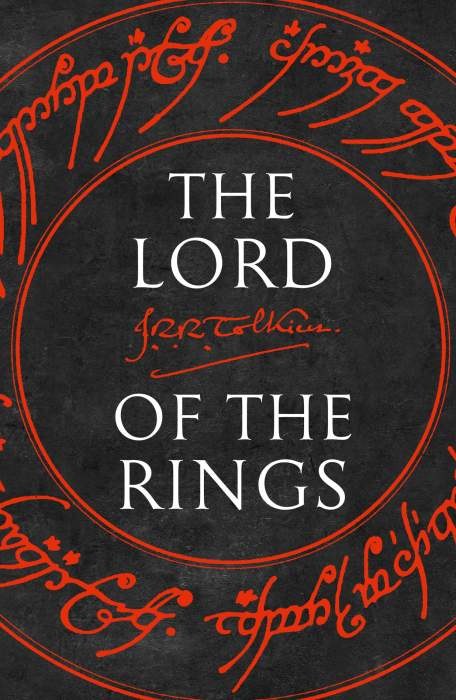
The Fellowship of the Ring is the first volume of The Lord of the Rings, following Frodo Baggins from the safety of the Shire into a world of accelerating danger.
J.R.R. Tolkien · 1954 · 12h 20m
Full summary and key takeaways →The 12 questions
- 1.
Tolkien's Ring is dangerous specifically because it amplifies the desire to do good. Boromir wants it to save his people; Gandalf refuses it because he knows he would use it well. Is that a coherent theory of how power corrupts?
- 2.
The hobbits' virtue is their ordinariness — their love of comfort and food and the familiar. Is the book romanticizing ordinary life, or is it actually making an argument about what kind of courage matters most?
- 3.
Tolkien was a devout Catholic, and the book's moral framework has roots in Christian theology. How visible is that framework? Does it require Christian belief to work, or does it function independently?
- 4.
The Council of Elrond gives the Ring's history through argument and testimony rather than straight narration. Is that an effective way to deliver backstory, or does it feel like an information dump with dramatic framing?
- 5.
The Shire chapters at the beginning are deliberately paced slowly. What does that slowness do for the rest of the book? Could the story begin at a faster pace and still work?
- 6.
Galadriel's temptation scene — where she is offered the Ring and refuses it — is one of the book's most intense passages. What does her vision of what she would become tell you about what she actually is?
- 7.
The Fellowship breaks because Boromir's attempt to take the Ring drives Frodo to act alone. Is Boromir a villain, a tragic figure, or something the book doesn't have a category for?
- 8.
Middle-earth is populated by elves who are fading and going West, a world that is literally losing its magic. Why does Tolkien make his world elegiac? What does that mood do to the story?
- 9.
Tolkien was criticized by some contemporaries (C.S. Lewis's circle included) for writing fantasy that lacked allegory. Is The Lord of the Rings allegorical? If not, what is it doing with its moral architecture?
- 10.
The appendices to the full novel run to nearly a hundred pages of history, genealogy, and language. Does knowing that material is there change how you read the main text?
- 11.
Almost every fantasy written after 1954 is responding to Tolkien — either emulating him or reacting against him. What specific elements of this book became the genre's defaults, and which are specifically Tolkienian?
- 12.
The women in The Fellowship of the Ring — Arwen, Galadriel, Goldberry — are powerful but distant. Does their limited presence diminish the book, or is it consistent with its mythological register?
How to run the discussion
- Pick six to eight, not all of them. An hour of real discussion covers fewer questions than anyone expects, and racing the list is what makes a book club feel like homework.
- Open with what people noticed, not what they concluded. Asking for a verdict first hardens opinions before anyone has heard each other.
- Let the disagreement run. The questions below that split a room are the ones worth the time; the ones everyone answers the same way can be skipped.
- Ask the quiet person a specific question. A direct, narrow question is far easier to answer than an open invitation to contribute.
Themes worth steering toward
If the conversation stalls, these are the threads that usually restart it.
Common questions
What are good book club questions for The Fellowship of the Ring?
Here are 12 book club questions for The Fellowship of the Ring by J.R.R. Tolkien, ordered to open easily and end somewhere worth arguing about. The strongest openers ask what each reader noticed rather than what they concluded, and the discussion usually turns on temptation and power, fellowship and loyalty, the weight of small lives.
How long should a book club discussion of The Fellowship of the Ring last?
Most groups run 60 to 90 minutes of actual discussion. That is roughly six to eight questions, not all of them, so pick the ones that suit your group rather than working down the list in order.
What are the main themes in The Fellowship of the Ring?
Temptation and power, Fellowship and loyalty, The weight of small lives, Mortality and time, Evil as corruption. Those are the threads most likely to divide a room, which makes them the useful places to steer a discussion that has gone quiet.
Picking the next one? See books like The Fellowship of the Ring or questions for other book club picks.
