Literary fiction · Book club
The Luminaries book club questions
Here are 12 book club questions for The Luminaries by Eleanor Catton, ordered to open easily and end somewhere worth arguing about. Copy them, print them, or bring them up one at a time.
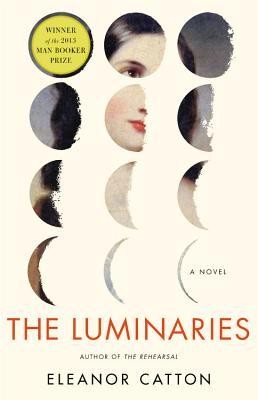
The Luminaries is set in Hokitika, a New Zealand gold-rush town, in 1866.
Eleanor Catton · 2013 · 17h 20m
Full summary and key takeaways →The 12 questions
- 1.
The novel's chapters halve in length as it moves forward. Did you notice that structure as you read, and did it affect your experience of the final sections?
- 2.
The twelve men in the Crown Hotel are divided by the novel into zodiacal types. Did you find yourself matching characters to their signs, or did that framework remain background noise?
- 3.
Anna Wetherell is read and interpreted by almost every other character. Does the novel ever give her a perspective that escapes their readings, or is she permanently defined by how others see her?
- 4.
The period pastiche is sustained for nearly five hundred pages. Did it feel authentic and transporting, or did you find it exhausting as a register to sustain?
- 5.
Alistair Lauderback is a politician whose vanity drives several of the novel's complications. Does the novel satirize political ambition, or treat it as just another form of human vulnerability?
- 6.
The gold rush economy is presented as a kind of controlled chaos — everyone is seeking transformation through luck, and luck is distributed randomly. Is that a critique of capitalism, or a neutral description of it?
- 7.
The Maori characters are not central to the novel's mystery but are given real presence. Did Catton handle the colonial context in a way that felt substantive, or backgrounded in a way that felt evasive?
- 8.
The novel won the Booker despite its extraordinary length and formal difficulty. Does prestige affect how you approach a novel — do you work harder at it?
- 9.
Compared to The Name of the Rose, which also uses a genre framework (medieval mystery) to carry philosophical weight, where does The Luminaries succeed and where does it feel like the formal game overcomes the human story?
- 10.
The ending refuses complete resolution — the final section is so compressed that we get events rather than explanations. Was that satisfying or frustrating?
- 11.
Catton has said the novel is about how we read other people, not just about the gold rush. Do you think that thematic argument is legible in the reading experience, or does the formal architecture obscure it?
- 12.
The Luminaries is very long. If you were recommending it, what would you tell a prospective reader about what to expect?
How to run the discussion
- Pick six to eight, not all of them. An hour of real discussion covers fewer questions than anyone expects, and racing the list is what makes a book club feel like homework.
- Open with what people noticed, not what they concluded. Asking for a verdict first hardens opinions before anyone has heard each other.
- Let the disagreement run. The questions below that split a room are the ones worth the time; the ones everyone answers the same way can be skipped.
- Ask the quiet person a specific question. A direct, narrow question is far easier to answer than an open invitation to contribute.
Themes worth steering toward
If the conversation stalls, these are the threads that usually restart it.
Common questions
What are good book club questions for The Luminaries?
Here are 12 book club questions for The Luminaries by Eleanor Catton, ordered to open easily and end somewhere worth arguing about. The strongest openers ask what each reader noticed rather than what they concluded, and the discussion usually turns on fortune and fate, truth and deception, gold rush society.
How long should a book club discussion of The Luminaries last?
Most groups run 60 to 90 minutes of actual discussion. That is roughly six to eight questions, not all of them, so pick the ones that suit your group rather than working down the list in order.
What are the main themes in The Luminaries?
Fortune and fate, Truth and deception, Gold rush society, Gender and power, Astrology as structure. Those are the threads most likely to divide a room, which makes them the useful places to steer a discussion that has gone quiet.
Picking the next one? See books like The Luminaries or questions for other book club picks.
