Science fiction · Book club
The Man in the High Castle book club questions
Here are 12 book club questions for The Man in the High Castle by Philip K. Dick, ordered to open easily and end somewhere worth arguing about. Copy them, print them, or bring them up one at a time.
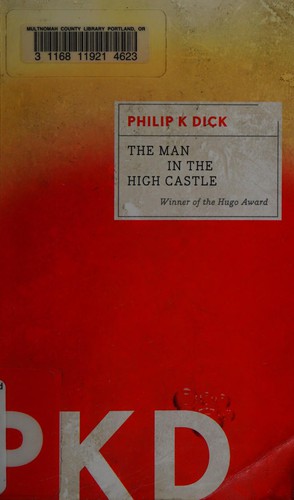
It is 1962, fifteen years after the Axis won World War II.
Philip K. Dick · 1962 · 5h 0m
Full summary and key takeaways →The 12 questions
- 1.
Childan sells American artifacts to Japanese collectors as prestige objects. What does Dick seem to be saying about the relationship between conquest and cultural nostalgia?
- 2.
The Grasshopper Lies Heavy imagines an Allied victory, but it's not our history — Britain remains powerful, the US doesn't. Why do you think Dick made that choice rather than writing the actual outcome?
- 3.
Several characters consult the I Ching to make decisions. Does the novel seem to endorse this practice, mock it, or treat it with genuine ambiguity?
- 4.
Tagomi has a breakdown in the park and seems to briefly see another reality. What is Dick doing with that scene, and how does it change your reading of everything that comes before?
- 5.
Juliana kills a man she believes is a Nazi assassin. Do the events around that killing support her interpretation, or is the novel more ambiguous about what she did?
- 6.
Frank Frink is hiding that he is Jewish, relying on a forged identity. How does his situation comment on the novel's larger themes about authenticity and constructed selfhood?
- 7.
The Nazi characters who appear in the novel are not cartoons. How did Dick handle that, and did it work for you?
- 8.
Compare The Man in the High Castle to 1984: both imagine political nightmares, but Dick's is domestic and fractured rather than totalizing. Which feels more frightening, and why?
- 9.
The novel won the Hugo Award in 1963. Reading it now, what feels dated and what feels eerily current?
- 10.
Dick said the I Ching was the true author of the novel — he used it to make plot decisions. Does knowing that change how you read the story?
- 11.
The ending is deliberately open. Does that feel like artistic integrity or like a book that didn't know how to finish?
- 12.
If you had to identify one character whose perspective the novel most endorses, who would it be? Is there one?
How to run the discussion
- Pick six to eight, not all of them. An hour of real discussion covers fewer questions than anyone expects, and racing the list is what makes a book club feel like homework.
- Open with what people noticed, not what they concluded. Asking for a verdict first hardens opinions before anyone has heard each other.
- Let the disagreement run. The questions below that split a room are the ones worth the time; the ones everyone answers the same way can be skipped.
- Ask the quiet person a specific question. A direct, narrow question is far easier to answer than an open invitation to contribute.
Themes worth steering toward
If the conversation stalls, these are the threads that usually restart it.
Common questions
What are good book club questions for The Man in the High Castle?
Here are 12 book club questions for The Man in the High Castle by Philip K. Dick, ordered to open easily and end somewhere worth arguing about. The strongest openers ask what each reader noticed rather than what they concluded, and the discussion usually turns on alternate history, authenticity and forgery, power and occupation.
How long should a book club discussion of The Man in the High Castle last?
Most groups run 60 to 90 minutes of actual discussion. That is roughly six to eight questions, not all of them, so pick the ones that suit your group rather than working down the list in order.
What are the main themes in The Man in the High Castle?
Alternate history, Authenticity and forgery, Power and occupation, Identity under oppression, Reality as construction. Those are the threads most likely to divide a room, which makes them the useful places to steer a discussion that has gone quiet.
Picking the next one? See books like The Man in the High Castle or questions for other book club picks.
