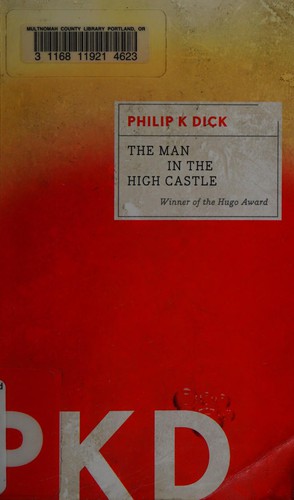
The Man in the High Castle by Philip K. Dick is a 1962 science fiction book about alternate history, authenticity and forgery, power and occupation. Authenticity is the novel's central obsession — Childan's forgery subplot and the I Ching's role both ask whether anything is what it claims to be.
Summary
It is 1962, fifteen years after the Axis won World War II. The eastern United States is controlled by Nazi Germany, the western Pacific States by Imperial Japan. Dick follows several characters through this occupied America: Robert Childan, an antiques dealer in San Francisco who sells Americana to Japanese collectors; Frank Frink, a Jewish craftsman hiding his identity while trying to make a living; Juliana Frink, his ex-wife who falls in with a mysterious man in Colorado; and Nobusuke Tagomi, a Japanese trade official whose moral universe is quietly disintegrating. A novel called The Grasshopper Lies Heavy circulates underground — it depicts a world where the Allies won. But this imagined alternate reality isn't quite our own history either.
The book is about authenticity in every sense. What makes an American antique genuine? What makes a person's identity real under an occupying power? What makes a historical narrative true? Dick uses the I Ching — which several characters consult throughout — to foreground the idea that reality may be less fixed than it appears. The nested fiction, a novel within a novel about a different counterfactual, introduces an unsettling recursion: we are reading an alternate history that contains its own alternate history, and neither one is our world.
Dick won the Hugo Award for this novel in 1963, and it remains the most formally ambitious thing he wrote. The prose is spare and slightly defamiliarized — characters think and speak in ways that reflect the cultural imposition of Japanese sensibility on American consciousness. The effect is subtle but cumulative. Tagomi's chapters, in particular, are among the finest things Dick ever wrote: a man trying to hold onto moral integrity inside a system designed to grind it away.
Readers who like alternate history with philosophical depth will find this essential. It is not a thriller; pacing is slow and the plot secondary to atmosphere and idea. Those expecting the kind of world-building detail that later alternate histories deliver will be surprised by how much Dick leaves unspecified. The Amazon Prime adaptation (2015–2019) is significantly different in plot but captures the novel's paranoid mood reasonably well.
Talk to The Man in the High Castle like its author wrote you back.
Get the ideas that fit your life — not generic summaries.
- Chat with the book
- Audiobook-style main ideas
- Adapts to your life and goals
- Helps you take action
Key takeaways
- 1.
Authenticity is the novel's central obsession — Childan's forgery subplot and the I Ching's role both ask whether anything is what it claims to be.
- 2.
The nested fiction, The Grasshopper Lies Heavy, introduces a counterfactual within a counterfactual, suggesting that 'what really happened' may be an unstable category.
- 3.
Tagomi's moral crisis — acting against his own self-interest to protect others — is the novel's emotional and ethical core, presented quietly and without resolution.
- 4.
Japanese occupation of the Pacific States is depicted with genuine ambivalence: the occupiers are neither monsters nor liberators, which makes the power dynamic harder to hold.
- 5.
The I Ching functions not just as plot device but as a philosophical argument: if chance structures meaning, what counts as truth or fate?
- 6.
Frank Frink's Jewish identity, hidden for survival, gives the novel its most direct engagement with what Nazi victory would have meant for individuals on the ground.
- 7.
Dick refuses to make his alternate America simply a mirror-image horror. Some things are worse; some are different but not worse. That refusal of easy inversion is what gives the book its lasting unease.
- 8.
The ending is deliberately incomplete. Dick spent years planning a sequel and never finished it. The open ending isn't failure — it's the point.
Discussion questions
Use these on your own, with a book club, or as chat starters in Superbook. Book club version, ready to copy or print →
- 1.
Childan sells American artifacts to Japanese collectors as prestige objects. What does Dick seem to be saying about the relationship between conquest and cultural nostalgia?
- 2.
The Grasshopper Lies Heavy imagines an Allied victory, but it's not our history — Britain remains powerful, the US doesn't. Why do you think Dick made that choice rather than writing the actual outcome?
- 3.
Several characters consult the I Ching to make decisions. Does the novel seem to endorse this practice, mock it, or treat it with genuine ambiguity?
- 4.
Tagomi has a breakdown in the park and seems to briefly see another reality. What is Dick doing with that scene, and how does it change your reading of everything that comes before?
- 5.
Juliana kills a man she believes is a Nazi assassin. Do the events around that killing support her interpretation, or is the novel more ambiguous about what she did?
- 6.
Frank Frink is hiding that he is Jewish, relying on a forged identity. How does his situation comment on the novel's larger themes about authenticity and constructed selfhood?
- 7.
The Nazi characters who appear in the novel are not cartoons. How did Dick handle that, and did it work for you?
- 8.
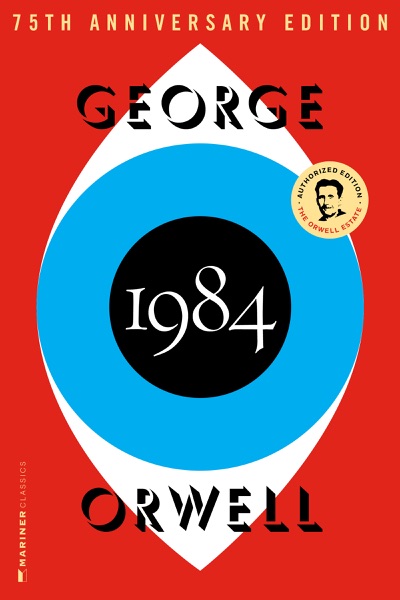
Compare The Man in the High Castle to 1984: both imagine political nightmares, but Dick's is domestic and fractured rather than totalizing. Which feels more frightening, and why?
- 9.
The novel won the Hugo Award in 1963. Reading it now, what feels dated and what feels eerily current?
- 10.
Dick said the I Ching was the true author of the novel — he used it to make plot decisions. Does knowing that change how you read the story?
- 11.
The ending is deliberately open. Does that feel like artistic integrity or like a book that didn't know how to finish?
- 12.
If you had to identify one character whose perspective the novel most endorses, who would it be? Is there one?
Themes
Frequently asked questions
-
Is The Man in the High Castle worth reading?
Yes, especially if you want alternate history that works philosophically rather than just as a what-if thriller. It's Dick's most controlled and formally ambitious novel. The slow pace and elliptical plotting put some readers off, but those willing to meet it on its own terms will find a book that sticks.
-
How does the book compare to the Amazon TV show?
The show borrows the premise and a few character names but tells a substantially different story over four seasons. The novel is more interior and philosophical; the show adds plot mechanics and thriller elements Dick left out. Both are worth experiencing but they're not interchangeable.
-
Is The Man in the High Castle hard to read?
It's not dense in terms of language, but the plotting is deliberately underpowered and the ending refuses resolution. Readers expecting a thriller structure will find it frustrating. As a meditation on reality and identity in a world where everything is forged, it repays patience.
-
What is the significance of the I Ching in the novel?
Dick used the actual I Ching to make plot decisions during writing. Within the story it functions as a decision-making tool for multiple characters, and philosophically it suggests that if randomness structures meaningful outcomes, the line between fate and chance is unclear.
-
Who should skip this book?
Readers wanting action, resolution, or a fully realized alternate-history world. Dick deliberately leaves large portions of the Axis-victory scenario unspecified, and the book ends in a way that deliberately withholds closure. If you need answers, this isn't the right novel.