Science · Book club
Is God a Mathematician? book club questions
Here are 12 book club questions for Is God a Mathematician? by Mario Livio, ordered to open easily and end somewhere worth arguing about. Copy them, print them, or bring them up one at a time.
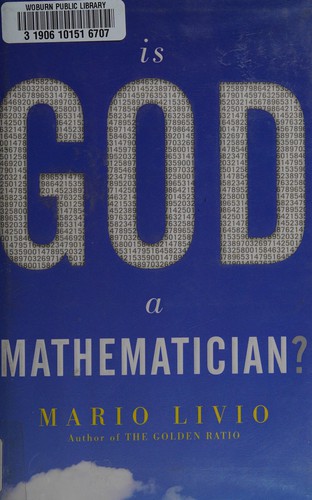
Mario Livio is an astrophysicist who has spent decades studying galaxies and supernovae, and who has been persistently haunted by a question that comes up whenever mathematics meets physics: why does abstract math, invented centuries before anyone knew it would be needed, keep turning out to perfectly describe physical reality?
Mario Livio · 2009 · 6h 0m
Full summary and key takeaways →The 12 questions
- 1.
Livio asks whether mathematics is discovered or invented. Before reading the book, which did you believe? Did his argument change your intuition?
- 2.
Non-Euclidean geometry was developed with no physical application in mind and then turned out to be exactly what general relativity needed. What does that suggest about the relationship between pure and applied research?
- 3.
Wigner's puzzle assumes that the match between mathematics and physics is surprising. Is it? What would it mean for the match to be expected rather than unreasonable?
- 4.
Livio draws on the Pythagorean belief that number is the fundamental nature of reality. Where do you see that worldview alive in modern science?
- 5.
The book suggests that mathematical beauty has been a guide to physical truth. Does that make you more or less comfortable with aesthetic judgments in science?
- 6.
If mathematics is a human invention, how do you explain that independent civilizations — Greek, Indian, Chinese — converged on many of the same mathematical results?
- 7.
Noether's theorem connects symmetry to conservation laws, implying that the physical laws we have are constrained by what mathematical symmetries are possible. Does that change how you think about the laws of nature?
- 8.
Livio says the question 'Is God a mathematician?' is really asking whether mathematical objects are real. How would you answer that?
- 9.
The history of mathematics shows many ideas developed for their internal elegance that later found physical applications. Does that suggest we should fund more pure mathematics research?
- 10.
How does your relationship to mathematics — whether you find it beautiful, useful, or intimidating — affect your intuitions about these philosophical questions?
- 11.
Livio traces how different historical eras understood the relationship between mathematics and the physical world. How does your own era understand that relationship?
- 12.
The book raises the question of whether a sufficiently different mind could develop a completely different mathematics. What do you think?
How to run the discussion
- Pick six to eight, not all of them. An hour of real discussion covers fewer questions than anyone expects, and racing the list is what makes a book club feel like homework.
- Open with what people noticed, not what they concluded. Asking for a verdict first hardens opinions before anyone has heard each other.
- Let the disagreement run. The questions below that split a room are the ones worth the time; the ones everyone answers the same way can be skipped.
- Ask the quiet person a specific question. A direct, narrow question is far easier to answer than an open invitation to contribute.
Themes worth steering toward
If the conversation stalls, these are the threads that usually restart it.
Common questions
What are good book club questions for Is God a Mathematician??
Here are 12 book club questions for Is God a Mathematician? by Mario Livio, ordered to open easily and end somewhere worth arguing about. The strongest openers ask what each reader noticed rather than what they concluded, and the discussion usually turns on mathematics, philosophy of science, patterns in nature.
How long should a book club discussion of Is God a Mathematician? last?
Most groups run 60 to 90 minutes of actual discussion. That is roughly six to eight questions, not all of them, so pick the ones that suit your group rather than working down the list in order.
What are the main themes in Is God a Mathematician??
Mathematics, Philosophy of science, Patterns in nature, History of mathematics, Existence. Those are the threads most likely to divide a room, which makes them the useful places to steer a discussion that has gone quiet.
Picking the next one? See books like Is God a Mathematician? or questions for other book club picks.
