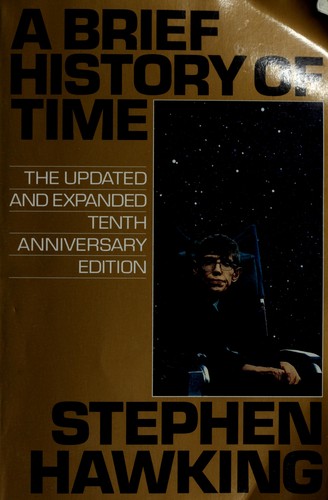
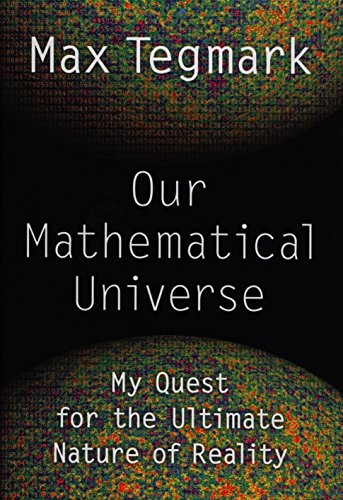
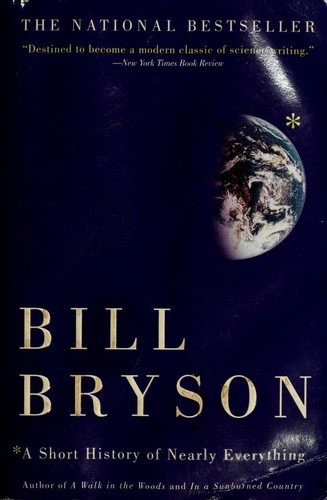
Is God a Mathematician? by Mario Livio is a 2009 science book about mathematics, philosophy of science, patterns in nature. Wigner's 'unreasonable effectiveness of mathematics' — the fact that abstract math keeps describing physical reality — is one of the deepest unsolved puzzles in the philosophy of science.
Summary
Mario Livio is an astrophysicist who has spent decades studying galaxies and supernovae, and who has been persistently haunted by a question that comes up whenever mathematics meets physics: why does abstract math, invented centuries before anyone knew it would be needed, keep turning out to perfectly describe physical reality? Physicist Eugene Wigner called this "the unreasonable effectiveness of mathematics," and Livio has written a book-length attempt to understand it.
The first half of the book is a history of mathematical ideas and the people who developed them: the Pythagoreans and their mystical relationship to number, Archimedes and the foundations of calculus, Galileo's decision to describe the world in mathematical language, and the 19th-century development of non-Euclidean geometry, which seemed like pure abstraction until Einstein used it to describe spacetime. Livio traces how mathematics developed partly to describe the world and partly from purely internal concerns — from mathematicians following logical necessity rather than physical observation — and how both strands kept turning out to be useful.
The book's central question is philosophical: is mathematics discovered or invented? Platonists believe mathematical truths exist independently of any mind and we merely uncover them. Formalists believe mathematics is a human construction — a system of symbols and rules that we define and play by. Livio surveys the arguments with care and concludes that neither extreme is satisfying. His preferred answer is that mathematics is a human invention that evolved in close contact with physical reality, which explains why it describes that reality so well while also leaving room for purely abstract mathematics that only later turns out to be useful.
The writing is clear and the history is genuinely interesting, though readers looking for a decisive answer to the title question will be mildly disappointed. Livio is more comfortable raising the question carefully than resolving it. The book is best read as an extended meditation on a genuinely open question in the philosophy of science, one that most scientists don't pause to ask even though it underlies everything they do.
Talk to Is God a Mathematician? like its author wrote you back.
Get the ideas that fit your life — not generic summaries.
- Chat with the book
- Audiobook-style main ideas
- Adapts to your life and goals
- Helps you take action
Key takeaways
- 1.
Wigner's 'unreasonable effectiveness of mathematics' — the fact that abstract math keeps describing physical reality — is one of the deepest unsolved puzzles in the philosophy of science.
- 2.
The history of mathematics shows repeated cases where purely abstract systems developed for internal mathematical reasons later became the exact language needed for new physics.
- 3.
Non-Euclidean geometry was developed by mathematicians exploring what would happen if Euclid's parallel postulate were denied — and became the mathematical framework for general relativity decades later.
- 4.
The discovered-vs-invented debate has been running since Plato. Platonism (math exists independently of minds) and formalism (math is a human construction) both capture something real but neither is fully satisfying.
- 5.
Symmetry appears throughout both mathematics and physics, and the deep connection between symmetry groups and conservation laws (Noether's theorem) is one of the most striking examples of mathematical structure predicting physical reality.
- 6.
Fibonacci numbers and the golden ratio appear in biological growth patterns not because nature is mystical but because certain growth algorithms produce these patterns as stable attractors.
- 7.
Mathematical beauty — the feeling among mathematicians that an elegant proof is more likely to be right — has been a surprisingly reliable guide to physical truth, though the reasons why are unclear.
- 8.
Livio's synthesis is that mathematics is a human invention shaped by evolution and experience, which explains its effectiveness without requiring that mathematical objects exist in a Platonic realm.
Discussion questions
Use these on your own, with a book club, or as chat starters in Superbook. Book club version, ready to copy or print →
- 1.
Livio asks whether mathematics is discovered or invented. Before reading the book, which did you believe? Did his argument change your intuition?
- 2.
Non-Euclidean geometry was developed with no physical application in mind and then turned out to be exactly what general relativity needed. What does that suggest about the relationship between pure and applied research?
- 3.
Wigner's puzzle assumes that the match between mathematics and physics is surprising. Is it? What would it mean for the match to be expected rather than unreasonable?
- 4.
Livio draws on the Pythagorean belief that number is the fundamental nature of reality. Where do you see that worldview alive in modern science?
- 5.
The book suggests that mathematical beauty has been a guide to physical truth. Does that make you more or less comfortable with aesthetic judgments in science?
- 6.
If mathematics is a human invention, how do you explain that independent civilizations — Greek, Indian, Chinese — converged on many of the same mathematical results?
- 7.
Noether's theorem connects symmetry to conservation laws, implying that the physical laws we have are constrained by what mathematical symmetries are possible. Does that change how you think about the laws of nature?
- 8.
Livio says the question 'Is God a mathematician?' is really asking whether mathematical objects are real. How would you answer that?
- 9.
The history of mathematics shows many ideas developed for their internal elegance that later found physical applications. Does that suggest we should fund more pure mathematics research?
- 10.
How does your relationship to mathematics — whether you find it beautiful, useful, or intimidating — affect your intuitions about these philosophical questions?
- 11.
Livio traces how different historical eras understood the relationship between mathematics and the physical world. How does your own era understand that relationship?
- 12.
The book raises the question of whether a sufficiently different mind could develop a completely different mathematics. What do you think?
Themes
Frequently asked questions
-
Is Is God a Mathematician? a religious book?
No. The title is a provocation borrowed from physicist James Jeans. The book is a history of mathematical thought and a philosophical inquiry into why mathematics describes physical reality so well. Livio's argument is secular and grounded in the history of science.
-
How long does it take to read Is God a Mathematician?
About six hours at an average reading pace. The book is around 300 pages and moves through history at a reasonable clip. Some chapters on philosophy of mathematics are denser and may need rereading.
-
Does the book answer its own title question?
Not definitively — and Livio is upfront about that. His conclusion is nuanced: mathematics is a human invention shaped by physical experience, which explains its effectiveness without requiring a Platonic mathematical universe. Readers wanting a cleaner answer may find the ending unsatisfying.
-
Who should read this book?
Readers curious about the philosophy of science and the history of mathematics, particularly those who have noticed the uncanny precision of mathematical models and wondered why they work so well. It's suitable for general readers with no technical background.
-
How does this compare to other popular books on mathematics?
It's more philosophical and historically oriented than How Not to Be Wrong or The Art of Statistics. Those books are about applying mathematical thinking; this book is about what mathematics is. It pairs well with books on the history of physics, like The Elegant Universe or A Brief History of Time.