Self-help · Book club
The Miracle Morning book club questions
Here are 11 book club questions for The Miracle Morning by Hal Elrod, ordered to open easily and end somewhere worth arguing about. Copy them, print them, or bring them up one at a time.
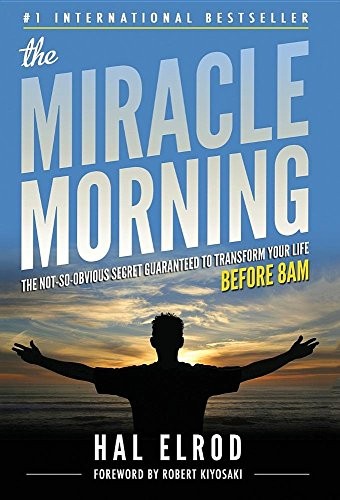
The Miracle Morning is Hal Elrod's account of how a structured early-morning routine transformed his life after a near-fatal car accident left him with brain damage at age twenty, and subsequently saved him from near-bankruptcy during the 2008 financial crisis.
Hal Elrod · 2012 · 3h 20m
Full summary and key takeaways →The 11 questions
- 1.
What does your current morning look like? Is it designed intentionally or does it happen to you?
- 2.
Which of the SAVERS six practices is most absent from your current life? Which would have the highest impact if you added it consistently?
- 3.
Elrod's backstory — recovering from brain damage, then from financial collapse — is central to the book's persuasiveness. Does the personal testimony make the framework more or less credible to you?
- 4.
The affirmations and visualization practices lack strong research support compared to mindfulness and exercise. Does that change how you think about including them in a routine?
- 5.
He claims you can do a Miracle Morning in six minutes if necessary. What would an honest six-minute version look like for you? Could you actually start tomorrow?
- 6.
What would need to change about your evenings or sleep schedule to make an intentional morning routine sustainable?
- 7.
Journaling is one of the six practices. If you've tried journaling and stopped, what specific obstacle ended the habit? What would a more sustainable version look like?
- 8.
The book argues that most mediocrity comes from absence of intentional practice rather than lack of talent. Do you agree with that premise in your own experience?
- 9.
Elrod describes his community of Miracle Morning practitioners as a significant support structure. How important is community to habit change in your experience?
- 10.
What single thirty-minute morning practice, if you did it consistently for ninety days, would most change an area of your life you want to improve?
- 11.
What's the honest version of what prevents you from starting your days more intentionally? Is it structural (schedule, children, commute) or psychological?
How to run the discussion
- Pick six to eight, not all of them. An hour of real discussion covers fewer questions than anyone expects, and racing the list is what makes a book club feel like homework.
- Open with what people noticed, not what they concluded. Asking for a verdict first hardens opinions before anyone has heard each other.
- Let the disagreement run. The questions below that split a room are the ones worth the time; the ones everyone answers the same way can be skipped.
- Ask the quiet person a specific question. A direct, narrow question is far easier to answer than an open invitation to contribute.
Themes worth steering toward
If the conversation stalls, these are the threads that usually restart it.
Common questions
What are good book club questions for The Miracle Morning?
Here are 11 book club questions for The Miracle Morning by Hal Elrod, ordered to open easily and end somewhere worth arguing about. The strongest openers ask what each reader noticed rather than what they concluded, and the discussion usually turns on morning routines, habits, personal development.
How long should a book club discussion of The Miracle Morning last?
Most groups run 60 to 90 minutes of actual discussion. That is roughly six to eight questions, not all of them, so pick the ones that suit your group rather than working down the list in order.
What are the main themes in The Miracle Morning?
Morning routines, Habits, Personal development, Mindfulness, Goal setting. Those are the threads most likely to divide a room, which makes them the useful places to steer a discussion that has gone quiet.
Picking the next one? See books like The Miracle Morning or questions for other book club picks.
