Talk to The Miracle of Mindfulness like its author wrote you back.
Get the ideas that fit your life — not generic summaries.
- Chat with the book
- Audiobook-style main ideas
- Adapts to your life and goals
- Helps you take action
What it argues
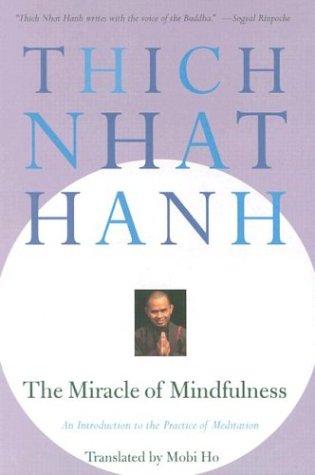
The Miracle of Mindfulness is Thich Nhat Hanh's introduction to mindfulness practice, originally written in Vietnamese as a letter to a fellow monk. The English translation, published in 1975, became one of the most widely read introductions to Buddhist meditation in the West. Hanh's central claim is deceptively simple: that mindfulness — the practice of remaining fully present in each moment — is not a technique to apply during a dedicated meditation session but a quality of attention that can permeate every activity of daily life.
The book uses ordinary tasks as its teaching ground: washing dishes, peeling a tangerine, drinking tea, taking a walk. Hanh argues that the mistake most people make is to treat these activities as obstacles separating them from something more important. When washing dishes, most minds are already in the future — planning, rehearsing, worrying. Hanh's instruction is to wash dishes in order to wash dishes, not in order to have clean dishes. The present moment is not a means to an end; it is the only place where life actually occurs.
What it gets right
- 1.
Mindfulness is not limited to formal meditation. It can be practiced in any activity — eating, walking, washing dishes — if the activity receives full, undivided attention.
- 2.
The present moment is the only location where life happens. Most mental suffering arises from dwelling in the past or projecting into the future.
- 3.
Breathing is the most accessible anchor for attention. Conscious attention to the breath can return scattered awareness to the present at any moment.
What it covers
Who wrote it
Thich Nhat Hanh was a Vietnamese Zen Buddhist monk, teacher, and peace activist who became one of the most widely read spiritual teachers in the world. Exiled from Vietnam in 1966 for his opposition to the war, he lived for decades in France where he founded Plum Village, an internationally attended meditation community. He wrote more than 100 books on mindfulness, Buddhism, and peaceful living. He was nominated for the Nobel Peace Prize by Martin Luther King Jr. in 1967. He died in 2022 in Vietnam.
