The Monster of Florence by Douglas Preston is a 2008 memoir book about true crime, italian justice, obsession. The Monster of Florence murdered sixteen victims over eleven years and was never definitively identified. Multiple investigations produced different suspects, and the case remains officially unsolved.
Summary
Between 1974 and 1985, a serial killer known as the Monster of Florence murdered sixteen people — couples parked in cars in the hills outside the city — and was never conclusively identified. Douglas Preston, an American thriller writer who moved to Florence with his family in 2000, became fascinated by the case and began investigating it with Mario Spezi, the Italian journalist who had covered the murders from the beginning. The Monster of Florence is their joint account — part true crime, part memoir of an investigation that eventually turned on its authors.
The Italian prosecution of the Monster case became increasingly bizarre over the decades. After several likely suspects died in prison or were acquitted, prosecutors developed a theory that the murders were committed for a Satanic cult of wealthy Florentines who used the victims' body parts in rituals. The theory was supported by almost no evidence. Preston and Spezi's investigation challenged it, and the consequences were severe: Spezi was arrested and charged with being the Monster himself, and Preston was interrogated by Italian police who suggested he was a suspect as well. Preston was told to leave the country. He did.
The book is at its strongest in two places. The historical reconstruction of the murders and the investigation's early years — conducted largely through Spezi's decades of reporting — is genuinely gripping, with real suspects, missed connections, and the kind of procedural detail that makes narrative nonfiction work. The second strength is the portrait of Giuliano Mignini, the Perugian prosecutor who ran the Satanic cult theory and later prosecuted Amanda Knox for a separate murder under similarly contested circumstances. Preston's account of Mignini reads as a profile of a specific kind of institutional overreach: a prosecutor who had invested so much in a theory that disconfirming evidence became threatening rather than instructive.
The Monster case was never conclusively solved. Several suspects remain plausible. The book ends with Preston and Spezi's best theory, which they present as probable but not proven. For readers accustomed to crime narratives that resolve, that ending can be frustrating. But it accurately represents where the case actually stands, and that honesty is more useful than a false closure.
Talk to The Monster of Florence like its author wrote you back.
Get the ideas that fit your life — not generic summaries.
- Chat with the book
- Audiobook-style main ideas
- Adapts to your life and goals
- Helps you take action
Key takeaways
- 1.
The Monster of Florence murdered sixteen victims over eleven years and was never definitively identified. Multiple investigations produced different suspects, and the case remains officially unsolved.
- 2.
Italian prosecutors developed a Satanic cult theory to explain the murders that was not supported by credible evidence. The pursuit of that theory derailed the investigation for years and eventually ensnared the journalists covering it.
- 3.
Giuliano Mignini, the prosecutor behind the cult theory, later prosecuted Amanda Knox in a separate case. Preston's portrait of him is one of the book's lasting contributions — a case study in how prosecutorial conviction becomes self-reinforcing.
- 4.
Mario Spezi, Preston's Italian collaborator, was arrested and charged with being the Monster while investigating the case. He was eventually cleared, but the arrest demonstrated how dangerous it can be to contradict an official theory in the Italian justice system.
- 5.
The geography and culture of the Tuscan hills are woven through the murders and the investigation. The book argues that the case is partly a product of a specific place and its particular combination of beauty, history, and insularity.
- 6.
Preston and Spezi identify a primary suspect — Pietro Pacciani, who was convicted and then acquitted, and whose associates remain the most plausible perpetrators in their reconstruction — but stop short of certainty.
- 7.
The book is partly a memoir of what happens when a writer gets too close to a story. Preston's personal jeopardy in the investigation shifts it from reportage to something more uncomfortable and more honest.
- 8.
The Monster case fed decades of conspiracy theorizing in Florence, and Preston traces how a genuine unsolved crime can be colonized by increasingly elaborate theories as each simpler explanation fails.
Discussion questions
Use these on your own, with a book club, or as chat starters in Superbook. Book club version, ready to copy or print →
- 1.
Preston became personally implicated in the investigation he was reporting. Does his stake in the outcome make the book more compelling or less reliable?
- 2.
The Satanic cult theory survived for years despite weak evidence. What institutional pressures keep a false prosecutorial theory alive after the evidence against it has accumulated?
- 3.
Giuliano Mignini pursued both the Monster cult theory and the Amanda Knox prosecution. Is there a pattern in the two cases, or is it unfair to connect them?
- 4.
The Monster case was never solved. How does an unresolved ending change how you read a true crime book?
- 5.
Spezi was arrested while investigating the case he had covered for decades. What does that suggest about the implicit limits of investigative journalism?
- 6.
The book presents Pietro Pacciani and his associates as the most likely perpetrators. How much weight do you give a journalist's conclusion when the courts did not reach the same one?
- 7.
Florence is depicted as a place where the past and present coexist in ways that shaped both the crimes and the response to them. Does place determine crime in the way the book implies?
- 8.
Preston is an American writing about Italian institutions. Does that outsider perspective sharpen or distort his analysis of what went wrong with the investigation?
- 9.
The victims received little individual attention in decades of media coverage that focused on the killer. Does the book correct that imbalance, and should it have tried harder?
- 10.
How do you distinguish between legitimate pattern-recognition in a complex investigation and motivated reasoning by investigators who have committed to a theory?
- 11.
If the Monster had been caught and convicted, would the Italian prosecution's methods be scrutinized as much? What does that say about how we evaluate justice systems?
- 12.
What obligations does a journalist owe to the families of victims when reporting on an unsolved case?
Themes
Frequently asked questions
-
Was the Monster of Florence ever caught?
Pietro Pacciani was convicted in 1994 and then acquitted on appeal in 1996. He died before a retrial could take place. His associates were later convicted of being accomplices, but the case remains officially unsolved. Preston and Spezi consider Pacciani and his group the most likely perpetrators.
-
How long does it take to read The Monster of Florence?
Around five to six hours at average reading pace. The book moves quickly, alternating between the historical investigation and Preston's personal story.
-
Is this book connected to the Amanda Knox case?
Indirectly. The same prosecutor, Giuliano Mignini, ran both the Monster's Satanic cult theory and the original Amanda Knox prosecution. Preston's portrait of Mignini in this book became a reference point in coverage of the Knox case.
-
Is The Monster of Florence scary?
The murders are disturbing, but the book's primary tone is investigative rather than sensational. The most unsettling sections are those describing the prosecution's behavior rather than the crimes themselves.
-
Who should read The Monster of Florence?
True crime readers, people interested in comparative criminal justice systems, and anyone who followed the Amanda Knox case and wants context on the Italian legal system. It's also a good choice for readers who find unsolved mysteries more compelling than tidy resolutions.
Similar books
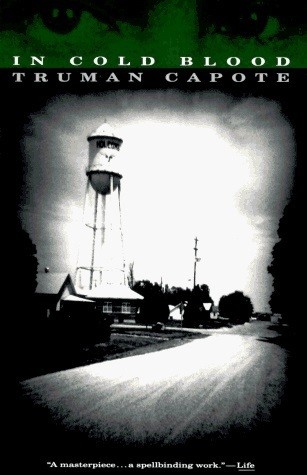
In Cold Blood
Truman Capote

The Devil in the White City
Erik Larson
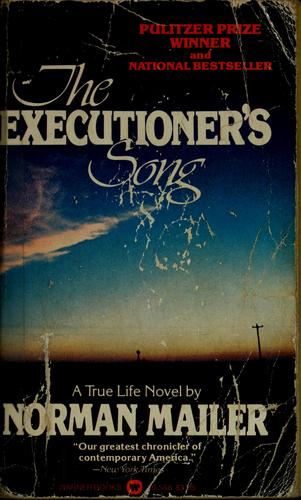
The Executioner's Song
Norman Mailer
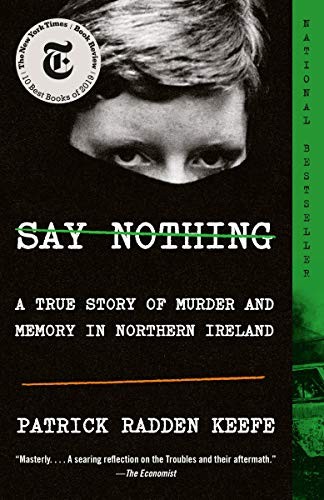
Say Nothing: A True Story of Murder and Memory in Northern Ireland
Patrick Radden Keefe
