Self-help · Book club
The Mountain Is You book club questions
Here are 11 book club questions for The Mountain Is You by Brianna Wiest, ordered to open easily and end somewhere worth arguing about. Copy them, print them, or bring them up one at a time.
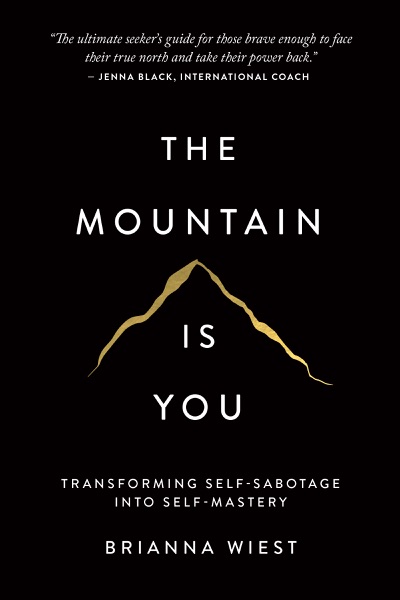
Brianna Wiest's argument in The Mountain Is You is that most people's obstacles aren't external — they are the person themselves.
Brianna Wiest · 2020 · 3h 45m
Full summary and key takeaways →The 11 questions
- 1.
Wiest argues that self-sabotage is always trying to protect something. What do you think your own most persistent patterns of self-defeat have been protecting?
- 2.
The book reframes repeated self-undermining from moral failure to diagnostic information. Does that reframe feel freeing, or does it risk becoming an excuse?
- 3.
What's the gap between what you say you want in a particular area of life and what you actually do? What does that gap suggest about competing motivations?
- 4.
Wiest says comfort is one of the most effective forms of self-sabotage because it removes urgency. Where in your own life are you settled into 'comfortable enough' rather than pursuing something genuinely satisfying?
- 5.
The book argues that emotional avoidance is the core mechanism behind most self-defeating behavior. What are you currently avoiding, and what are you protecting yourself from by avoiding it?
- 6.
Wiest distinguishes between understanding a pattern intellectually and actually processing the emotional experience beneath it. Have you found that intellectual understanding is enough to change behavior, or does it require something more?
- 7.
People-pleasing is one of the patterns the book discusses in detail. If you've struggled with it, what specifically drives it for you — fear of rejection, conflict avoidance, something else?
- 8.
The title is a metaphor: the mountain you need to climb is yourself. When did you last encounter your own resistance to something that mattered to you, and what form did that resistance take?
- 9.
The book is oriented toward individual change rather than systemic causes. Does that feel adequate, or does it place too much responsibility on the individual for circumstances that are also shaped by external factors?
- 10.
Wiest argues that the patterns we need to change developed for a reason. Does knowing the reason change your relationship to a pattern you've been trying to change?
- 11.
Which of the book's specific diagnoses — procrastination, people-pleasing, emotional avoidance, comfort-seeking — resonated most with your own experience, and why?
How to run the discussion
- Pick six to eight, not all of them. An hour of real discussion covers fewer questions than anyone expects, and racing the list is what makes a book club feel like homework.
- Open with what people noticed, not what they concluded. Asking for a verdict first hardens opinions before anyone has heard each other.
- Let the disagreement run. The questions below that split a room are the ones worth the time; the ones everyone answers the same way can be skipped.
- Ask the quiet person a specific question. A direct, narrow question is far easier to answer than an open invitation to contribute.
Themes worth steering toward
If the conversation stalls, these are the threads that usually restart it.
Common questions
What are good book club questions for The Mountain Is You?
Here are 11 book club questions for The Mountain Is You by Brianna Wiest, ordered to open easily and end somewhere worth arguing about. The strongest openers ask what each reader noticed rather than what they concluded, and the discussion usually turns on self-sabotage, emotional healing, self-awareness.
How long should a book club discussion of The Mountain Is You last?
Most groups run 60 to 90 minutes of actual discussion. That is roughly six to eight questions, not all of them, so pick the ones that suit your group rather than working down the list in order.
What are the main themes in The Mountain Is You?
Self-sabotage, Emotional healing, Self-awareness, Personal growth, Inner conflict. Those are the threads most likely to divide a room, which makes them the useful places to steer a discussion that has gone quiet.
Picking the next one? See books like The Mountain Is You or questions for other book club picks.
