History · Book club
The Muqaddimah book club questions
Here are 11 book club questions for The Muqaddimah by Ibn Khaldun, ordered to open easily and end somewhere worth arguing about. Copy them, print them, or bring them up one at a time.
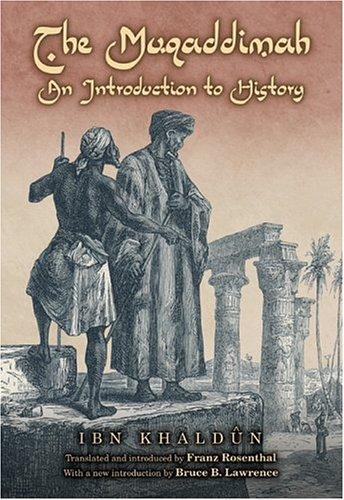
The Muqaddimah, written by the North African historian and statesman Ibn Khaldun in 1377, is the introduction to a projected universal history of the world.
Ibn Khaldun · 1958 · 20h 0m
Full summary and key takeaways →The 11 questions
- 1.
Ibn Khaldun argues that the prosperity a dynasty creates inevitably erodes the solidarity that built it. Do you see this pattern in organizations, movements, or communities you know?
- 2.
His concept of asabiyya — group cohesion — is central but contested. What creates strong asabiyya in a contemporary organization or community? What destroys it?
- 3.
He was writing about fourteenth-century North Africa and the Islamic world. How well does the model translate to contemporary political and business cycles?
- 4.
His skepticism about miraculous or implausible historical reports was methodologically radical for his time. What are the equivalents of implausible reports in contemporary media and information?
- 5.
The Laffer Curve — the idea that excessive taxation reduces total revenue — is often associated with twentieth-century American conservatism. Does knowing Ibn Khaldun anticipated it change how you think about the argument?
- 6.
He argues that groups from the margins, with less exposure to comfort and luxury, tend to have stronger asabiyya than established elites. Is that pattern visible in contemporary business or politics?
- 7.
Ibn Khaldun was himself a statesman who served multiple competing dynasties and was held prisoner by Tamerlane. How does that biography shape your reading of his arguments?
- 8.
He emphasizes the role of geography and climate in shaping political culture. How much do you think physical environment shapes civilization compared to human choices?
- 9.
The complete Muqaddimah is one of the longest books in this catalog. Is depth of a single thinker's systematic argument more valuable to you than reading multiple shorter books on related themes?
- 10.
His model of historical cycles is deterministic in outline but not in detail — the timing and shape vary. Does a cyclical model of history feel more or less truthful to you than progressive or linear models?
- 11.
What modern institution or organization do you think is currently in which phase of Ibn Khaldun's dynasty cycle?
How to run the discussion
- Pick six to eight, not all of them. An hour of real discussion covers fewer questions than anyone expects, and racing the list is what makes a book club feel like homework.
- Open with what people noticed, not what they concluded. Asking for a verdict first hardens opinions before anyone has heard each other.
- Let the disagreement run. The questions below that split a room are the ones worth the time; the ones everyone answers the same way can be skipped.
- Ask the quiet person a specific question. A direct, narrow question is far easier to answer than an open invitation to contribute.
Themes worth steering toward
If the conversation stalls, these are the threads that usually restart it.
Common questions
What are good book club questions for The Muqaddimah?
Here are 11 book club questions for The Muqaddimah by Ibn Khaldun, ordered to open easily and end somewhere worth arguing about. The strongest openers ask what each reader noticed rather than what they concluded, and the discussion usually turns on civilization, political cycles, social cohesion.
How long should a book club discussion of The Muqaddimah last?
Most groups run 60 to 90 minutes of actual discussion. That is roughly six to eight questions, not all of them, so pick the ones that suit your group rather than working down the list in order.
What are the main themes in The Muqaddimah?
Civilization, Political cycles, Social cohesion, Historical method, Economics. Those are the threads most likely to divide a room, which makes them the useful places to steer a discussion that has gone quiet.
Picking the next one? See books like The Muqaddimah or questions for other book club picks.
