Philosophy · Book club
The Myth of Sisyphus book club questions
Here are 11 book club questions for The Myth of Sisyphus by Albert Camus, ordered to open easily and end somewhere worth arguing about. Copy them, print them, or bring them up one at a time.
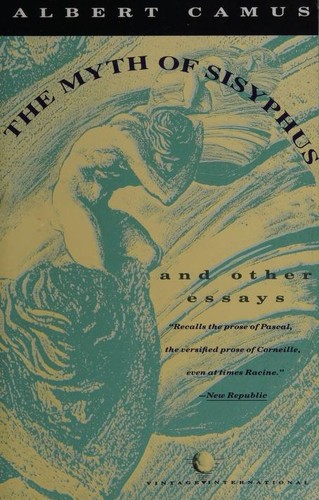
The Myth of Sisyphus begins with what Camus calls the only truly serious philosophical question: why not commit suicide?
Albert Camus · 1942 · 3h 40m
Full summary and key takeaways →The 11 questions
- 1.
Camus opens with the claim that suicide is the only serious philosophical question. Do you find that framing genuinely provocative, or does it seem like deliberate provocation for its own sake?
- 2.
Have you ever experienced something that felt like the absurd — the collision between your need for meaning and the world's indifference? What was the context?
- 3.
Camus distinguishes physical suicide from philosophical suicide. Which is more common in your experience of how people respond to meaninglessness?
- 4.
He argues that religious faith is a form of 'philosophical suicide.' Is that a fair characterization of faith, or does it miss something important about what faith actually is?
- 5.
The four absurd men — Don Juan, the conqueror, the actor, the creator — each pursue quantity over quality. Which of them feels most like a genuine model for living?
- 6.
Camus says we must imagine Sisyphus happy. Is that a genuine insight or a forced resolution — a literary trick that doesn't survive contact with actual suffering?
- 7.
What is the difference between revolt as Camus defines it and simple resignation or stoic acceptance?
- 8.
If meaning is not inherent but created through engagement, does the quality of what you engage with matter? Or is all engagement equal under absurdism?
- 9.
Camus wrote this essay during the Nazi occupation of France, under conditions of real political absurdity. Does knowing that change how you read the philosophical argument?
- 10.
The essay ends with a claim about happiness that many readers find either inspiring or hollow. What determines which it is for a given reader?
- 11.
Absurdism, existentialism, and nihilism are often confused. How would you explain the difference between all three to someone who hadn't read any of them?
How to run the discussion
- Pick six to eight, not all of them. An hour of real discussion covers fewer questions than anyone expects, and racing the list is what makes a book club feel like homework.
- Open with what people noticed, not what they concluded. Asking for a verdict first hardens opinions before anyone has heard each other.
- Let the disagreement run. The questions below that split a room are the ones worth the time; the ones everyone answers the same way can be skipped.
- Ask the quiet person a specific question. A direct, narrow question is far easier to answer than an open invitation to contribute.
Themes worth steering toward
If the conversation stalls, these are the threads that usually restart it.
Common questions
What are good book club questions for The Myth of Sisyphus?
Here are 11 book club questions for The Myth of Sisyphus by Albert Camus, ordered to open easily and end somewhere worth arguing about. The strongest openers ask what each reader noticed rather than what they concluded, and the discussion usually turns on absurdity, meaning, suicide.
How long should a book club discussion of The Myth of Sisyphus last?
Most groups run 60 to 90 minutes of actual discussion. That is roughly six to eight questions, not all of them, so pick the ones that suit your group rather than working down the list in order.
What are the main themes in The Myth of Sisyphus?
Absurdity, Meaning, Suicide, Rebellion, Freedom. Those are the threads most likely to divide a room, which makes them the useful places to steer a discussion that has gone quiet.
Picking the next one? See books like The Myth of Sisyphus or questions for other book club picks.
