Literary fiction · Book club
The Namesake book club questions
Here are 12 book club questions for The Namesake by Jhumpa Lahiri, ordered to open easily and end somewhere worth arguing about. Copy them, print them, or bring them up one at a time.
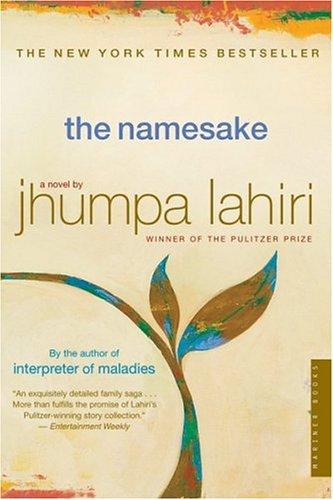
The Namesake follows the Ganguli family across three decades, beginning with Ashoke and Ashima's arranged marriage and their immigration from Calcutta to Cambridge, Massachusetts, and extending into the American adulthood of their son, Gogol.
Jhumpa Lahiri · 2003 · 6h 0m
Full summary and key takeaways →The 12 questions
- 1.
Gogol hates his name throughout his adolescence and changes it as an adult. By the novel's end, does the name feel like a burden, a gift, or both? What shifts?
- 2.
Ashoke never fully explains to Gogol the story behind the name until late in the novel. Why do you think he waited? Was that the right choice?
- 3.
Ashima's homesickness for Calcutta is a constant undercurrent. How does Lahiri distinguish her experience of immigration from Ashoke's? Does either of them seem at peace?
- 4.
Gogol repeatedly chooses American partners — Ruth, Maxine, Moushumi — each of whom represents a different relationship to his Indian identity. What do those choices say about where he's trying to land?
- 5.
Maxine's family represents a certain ease with class and belonging that Gogol craves. Is the novel sympathetic to that craving, or is it critical?
- 6.
After Ashoke's death, Gogol begins to read the Gogol stories his father loved. Do you think he would have made different choices had he understood the name's significance earlier?
- 7.
The novel ends with Gogol alone, about to read the book his father gave him. Is that an ending about grief, about continuity, or about something else?
- 8.
How does the novel treat arranged marriage? Is Ashoke and Ashima's marriage presented as a model, a contrast to Gogol's relationships, or something more neutral?
- 9.
Lahiri has said she felt neither fully Indian nor fully American growing up. Does The Namesake resolve that tension, or leave it unresolved intentionally?
- 10.
The Gangulis' American suburb is rendered with affectionate precision — the colonial houses, the sari-wearing mothers, the potluck dinners. Does that specificity make the novel feel universal or particular to one community?
- 11.
Moushumi's affair late in the novel has a different quality to it than her marriage. What does Lahiri seem to be saying about the paths we choose versus the ones we feel we've escaped?
- 12.
The novel moves very quickly through time in some sections. Did that pace work for you, or did you wish Lahiri had dwelt longer in particular moments?
How to run the discussion
- Pick six to eight, not all of them. An hour of real discussion covers fewer questions than anyone expects, and racing the list is what makes a book club feel like homework.
- Open with what people noticed, not what they concluded. Asking for a verdict first hardens opinions before anyone has heard each other.
- Let the disagreement run. The questions below that split a room are the ones worth the time; the ones everyone answers the same way can be skipped.
- Ask the quiet person a specific question. A direct, narrow question is far easier to answer than an open invitation to contribute.
Themes worth steering toward
If the conversation stalls, these are the threads that usually restart it.
Common questions
What are good book club questions for The Namesake?
Here are 12 book club questions for The Namesake by Jhumpa Lahiri, ordered to open easily and end somewhere worth arguing about. The strongest openers ask what each reader noticed rather than what they concluded, and the discussion usually turns on identity, immigration and belonging, generational conflict.
How long should a book club discussion of The Namesake last?
Most groups run 60 to 90 minutes of actual discussion. That is roughly six to eight questions, not all of them, so pick the ones that suit your group rather than working down the list in order.
What are the main themes in The Namesake?
Identity, Immigration and belonging, Generational conflict, Naming and selfhood, Assimilation. Those are the threads most likely to divide a room, which makes them the useful places to steer a discussion that has gone quiet.
Picking the next one? See books like The Namesake or questions for other book club picks.
