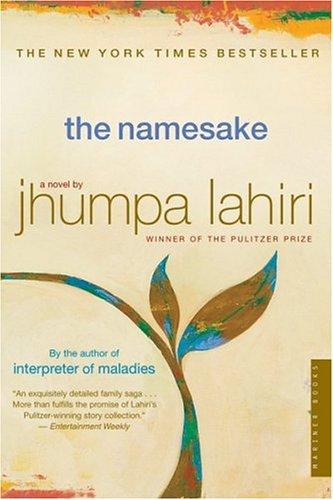
Talk to The Namesake like its author wrote you back.
Get the ideas that fit your life — not generic summaries.
- Chat with the book
- Audiobook-style main ideas
- Adapts to your life and goals
- Helps you take action
What it argues
The Namesake follows the Ganguli family across three decades, beginning with Ashoke and Ashima's arranged marriage and their immigration from Calcutta to Cambridge, Massachusetts, and extending into the American adulthood of their son, Gogol. Gogol — named after the Russian writer Nikolai Gogol in a story rooted in Ashoke's near-death experience — grows up resenting the name that marks him as different, eventually legally changing it to Nikhil. The novel is structured around that act and everything it costs him.
The book is ultimately about what we inherit and what we try to shed. Lahiri traces how Gogol oscillates between the Bengali world of his parents — rice and fish, faded photographs, the smell of a Calcutta kitchen in a Massachusetts suburb — and an American life of girlfriends, Manhattan apartments, and a career that has little to do with his roots. His parents' sacrifice is real but unspoken; the cost of their displacement is registered in small humiliations and persistent homesickness that Gogol cannot yet recognize as such. The title is a double meaning: the name is burden and gift, the name is also what the parents carry forward.
What it gets right
- 1.
The novel frames identity as something built over decades through small daily choices, not declared at a single moment of self-discovery.
- 2.
Names carry the accumulated weight of others' love, expectation, and longing. Changing your name is never a clean break.
- 3.
First-generation immigrants grieve their home in ways they often don't articulate to their children, and the children absorb the grief without understanding it.
What it covers
Who wrote it
Jhumpa Lahiri is an American-British author born in London to Bengali immigrant parents and raised in Rhode Island. Her debut short story collection Interpreter of Maladies won the Pulitzer Prize for Fiction in 2000. The Namesake, her first novel, was adapted into a film by Mira Nair in 2006. Her later work includes the story collection Unaccustomed Earth and the novel The Lowland. She has also written In Other Words, a memoir about learning Italian written entirely in that language. She is widely regarded as one of the defining chroniclers of the South Asian diaspora experience.
